



Education Cannot Wait: A Lifeline for 14 Million Children in Crises Globally
Investing in Futures: Education Cannot Wait
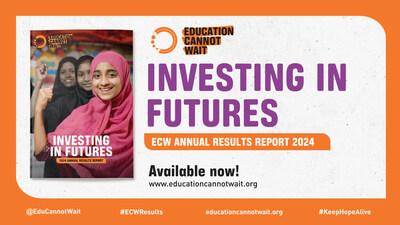
Education Cannot Wait (ECW) has emerged as a beacon of hope for millions of children caught in the turmoil of crises. On September 18, 2025, the organization released its annual report, "Investments in Futures," which highlights the transformative impact of education in emergency situations. It details how over a two-year period from 2023 to 2024, ECW, alongside strategic partners, provided inclusive and quality education to 8.3 million children and adolescents across 33 countries, bringing the total to an impressive 14 million since its inception. This crucial support was delivered even as the need for education amidst conflict and catastrophe continues to grow.
Despite some progress, education remains critically underfunded in humanitarian responses. Surprisingly, only 30% of educational funding requirements were met in humanitarian appeals for 2024, with educational needs representing a mere 5.4% of total humanitarian requirements as outlined in the Global Humanitarian Overview. This fact underscores the ongoing challenges that children in crisis face in accessing the education they deserve.
The report showcases important strides made in promoting equality and inclusion in education, noting that 51% of the children served are girls, and nearly 43% are refugees or internally displaced persons. ECW's efforts have led to measurable improvements, including increased school enrollment and retention rates. Positive shifts in gender norms are also fostering greater participation among girls, a significant achievement that can pave the way for a brighter future.
Sigrid Kaag, the chairwoman of ECW’s governing board, emphasized the strength of the strategic model employed by ECW and the unwavering commitment of the global coalition of partners. She remarked, "This progress reflects the unique strength of the ECW's strategic framework and our collective commitment for action against the backdrop of shared goals." More than 100 partners including host governments, UN agencies, NGOs, philanthropic foundations, and leaders from the private sector united in 2024 to ensure that education remains a priority even amidst the most debilitating global crises.
The ECW model enhances coordination and partnerships within humanitarian aid, development, and peace efforts. Significant support is also directed towards local partners and national accountability. In 2024, 39% of the $202 million disbursed by ECW was allocated to countries classified as “forgotten crises,” including Bangladesh, Burkina Faso, Cameroon, the Democratic Republic of the Congo, Haiti, Lebanon, Mali, Myanmar, Nigeria, and South Sudan. Such allocations emphasize ECW's unwavering commitment to assist children in the most overlooked and severely underfunded emergency situations.
Moreover, the report reveals a growing emphasis on tackling the intersection between the climate crisis and the education crisis, with 41% of the children receiving aid involved in programs aimed at climate change adaptation from 2023 to 2024. This reflects a proactive approach that brings together pressing global issues.
However, the report does not shy away from cautioning about the increasing financial shortfall. As of the end of 2024, ECW had mobilized $934 million for its strategic plan for 2023 to 2026, which accounts for approximately two-thirds of the target. Alarmingly, $113 million of the pledged contributions remain unpaid, highlighting a critical funding gap at a time when escalated conflicts, forced displacement, and climate-induced disasters create unprecedented humanitarian needs.
Currently, 234 million children and adolescents affected by crises urgently need educational support -- an 18% increase from three years ago. This stark reality underscores that education remains one of the most underfunded sectors in humanitarian assistance. To ensure that education does not fall by the wayside, ECW calls for renewed financial contributions from both the public and private sectors to safeguard the significant outcomes achieved to date.
Kaag also expressed hope for expanding commitments through innovative partnerships, emphasizing that education is not just a commodity; it’s a necessity. ECW aims to secure an additional $567 million by the end of 2026 to reach its target of $1.5 billion. This funding will empower ECW and its partners to provide quality education to 20 million of the most vulnerable children. Without immediate and decisive action, millions of children risk being left behind due to a chronic lack of investment, not due to a lack of effective solutions.
Key Highlights from the Report:
- - Since its establishment, ECW has reached 14 million children, with 8.3 million served during the first two years of the 2023-2024 strategic plan.
- - 51% of affected children are girls, and over 40% are forcibly displaced children, the highest percentages recorded by ECW.
- - 96% of programs have seen increased participation in education, with 74% reporting improvements in gender equality during 2023-2024.
- - Among multi-year programs that have reported data, 88% showed enhanced literacy and/or numeracy outcomes, while 78% reported improvements in socio-emotional learning during the same period.
- - 155,000 children with disabilities were reached in 2023-2024.
- - 6% of the children reached were of preschool age, and 20% were of secondary school age, with notable advancements in secondary education for girls.
- - Almost a third (29%) of funds allocated in 2024 were directed to local and national organizations.
To learn more about their impactful work, download the complete report and summary from Education Cannot Wait.
Access Media Resources:
- - Downloadable b-roll, high-resolution images, and impact stories are available
- -
It is critical for us to advocate for continued support of the education of children in emergencies to ensure a promising future for those who need it most.
Topics People & Culture)

【About Using Articles】
You can freely use the title and article content by linking to the page where the article is posted.
※ Images cannot be used.
【About Links】
Links are free to use.