



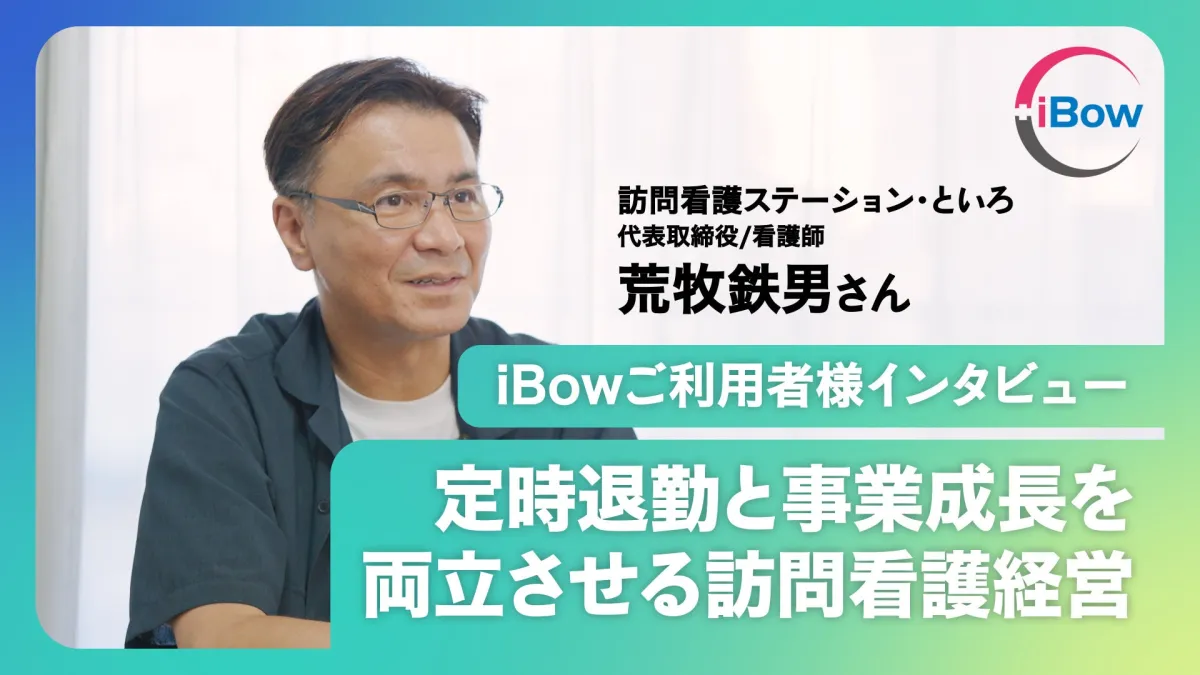
Revolutionizing Home Nursing: The Zero Overtime Reality of iBow Users
Revolutionizing Home Nursing: The Zero Overtime Reality of iBow Users
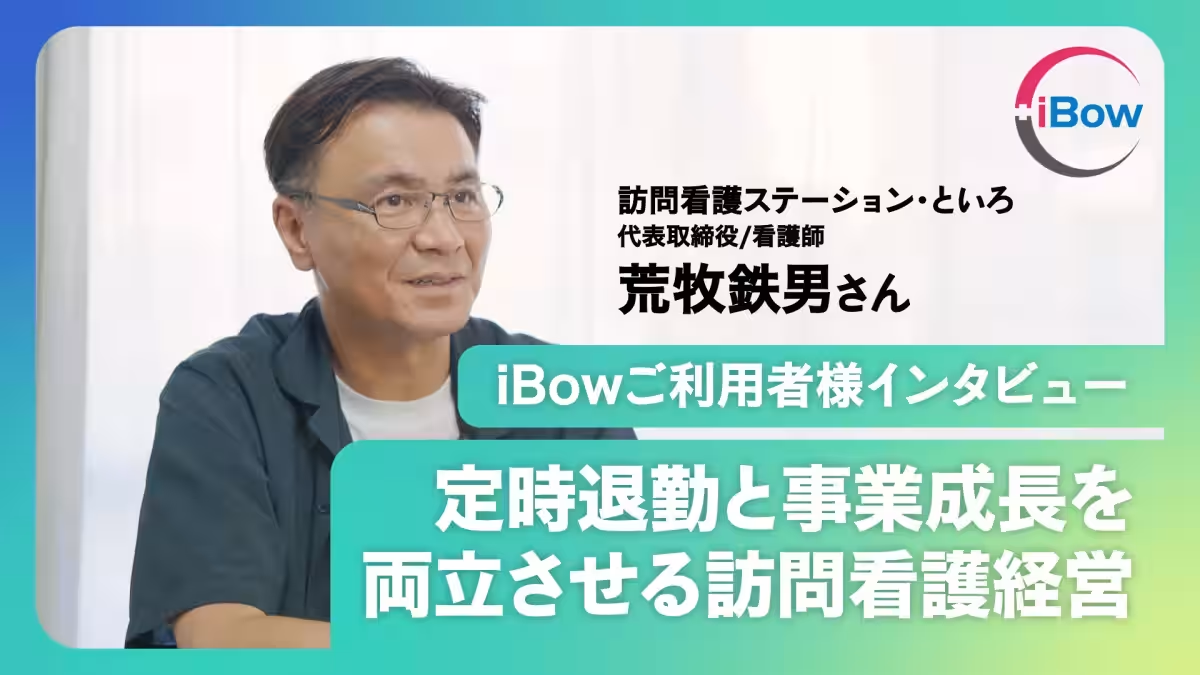
In the field of home nursing, the expectation of working endless hours is often the norm. However, a revolutionary model is emerging in Osaka where the idea of a zero-overtime work environment is not only a dream but a reality. This transformation is led by Tetsuo Aramaki, the CEO of Toiro, a mental health home care station that has maintained its operations for over a decade.
Aramaki advocates a balance between quality care and organizational efficiency, underpinning his philosophy with a clear operational standard, which specifies the number of home visits per day. This approach has led to consistent business growth without the burden of overtime. The success of such a model raises a significant question: What is the secret behind this logical management style that cultivates both employee retention and business expansion?
The Importance of Data-Driven Management
The essence of Aramaki's strategy lies in his background in hospital bed management, where efficiency is key. By combining thorough patient care with the necessity of maintaining staff well-being, he established the standard of handling a fixed number of visits per day. This model, supported by logical, data-driven decision-making, diverges from traditional emotional approaches to nursing management. Instead of relying solely on instincts, Aramaki bases his management decisions on concrete data that demonstrates how this logical approach leads to steady business growth and staff retention.
Transitioning to iBow: A Game Changer
In the pursuit of efficient management, Aramaki decided to switch from a previous electronic health record system to iBow, a platform developed by eWeLL. This shift was motivated by the need to address inefficiencies caused by information fragmentation. iBow's design facilitates quick access to essential information, significantly reducing the number of clicks needed to navigate to necessary data.
Aramaki states, "With iBow, I can go directly to the patient's side without unnecessary delays." This efficiency not only stabilizes the workflow for staff but also allows them to increase the number of visits they can handle, thus enhancing patient care without extending working hours. As a result, it becomes possible to adhere to a regular working schedule and still enjoy the benefits of a thriving business.
Integrating Digital Tools in Daily Operations
The impact of digital transformation tools like iBow on the workflows of home nursing providers is substantial. With the capabilities provided by eWeLL, home care staff report increased efficiency in their daily operations. This also positively influences job satisfaction among employees, as they are able to focus more on patient care rather than being bogged down by administrative processes.
The company's mission is clear: to enhance the quality of home health care through digital innovation while supporting healthcare professionals. With services such as iBow and their matching platform, Care Log, eWeLL has democratized access to quality medical resources across Japan, ensuring that over 63,000 nursing professionals and 920,000 patients benefit from their systems.
eWeLL’s Vision and Achievements
eWeLL’s efforts to improve home health care through technology have not gone unnoticed. The company has received numerous awards, including the prestigious Econom Minister Award for Excellence at the Nippon New Business Creation Awards in 2021, and accolades for its entrepreneurial spirit. Their commitment to enhancing the home care environment continues to evolve as they strive to support professionals and improve patient quality of life.
In conclusion, the innovative model implemented by Tetsuo Aramaki and supported by iBow is paving the way for a new paradigm in home nursing. By fostering a zero-overtime culture, they are proving that enhancing efficiency and maintaining high-quality care can coexist harmoniously in the home health care sector.
Topics Health)
【About Using Articles】
You can freely use the title and article content by linking to the page where the article is posted.
※ Images cannot be used.
【About Links】
Links are free to use.