



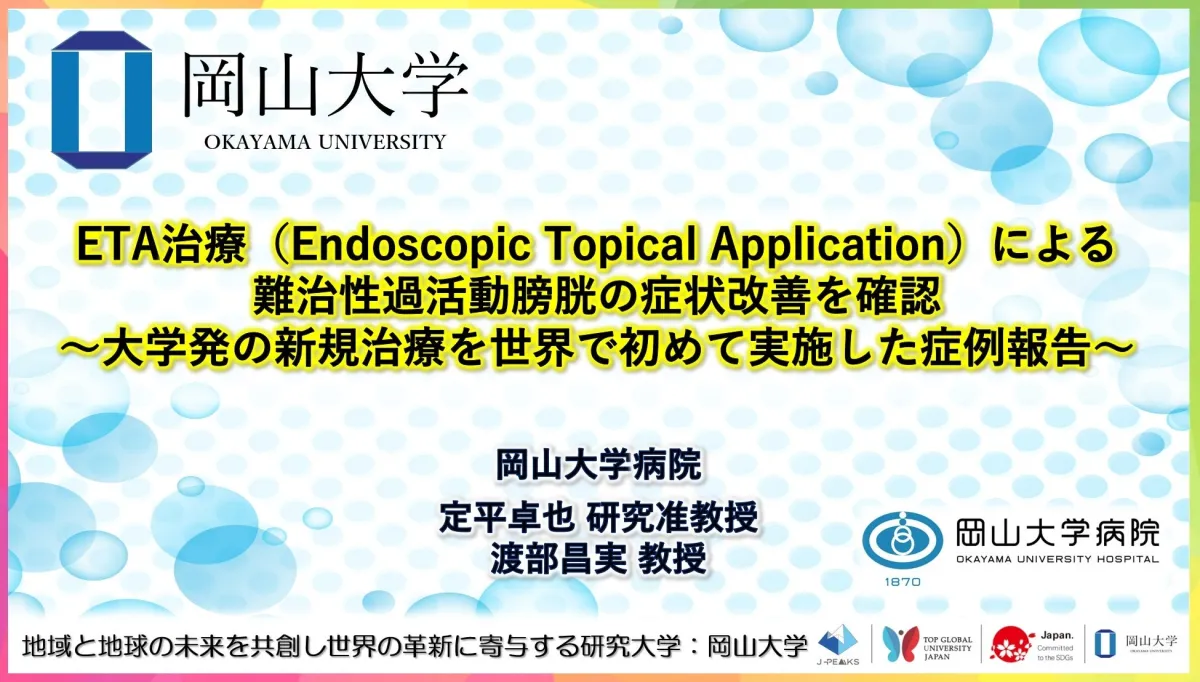
Okayama University Pioneers Innovative ETA Treatment for Overactive Bladder Symptoms
On February 8, 2026, Okayama University made a significant advancement in the treatment of refractory overactive bladder (OAB) with the introduction of an innovative therapeutic method known as Endoscopic Topical Application (ETA). This groundbreaking approach was implemented in a clinical setting for the first time in the world, aiming to alleviate symptoms associated with chronic bladder conditions.
ETA treatment focuses on directly applying botulinum toxin to the bladder's mucosal surface using an endoscope. This localized application bypasses traditional methods, which often result in limited efficacy, especially for patients where conventional therapies do not yield satisfactory results. By targeting the bladder neck and trigonal area, where sensory nerve networks responsible for urgency are densely packed, the researchers hope to reshape the treatment landscape for patients facing debilitating symptoms like nocturia and urinary urgency.
Dr. Takuya Sadahira, a pioneering researcher at Okayama University, explains that the clinical application of the ETA treatment stems from a persistent issue faced by many patients: despite utilizing pharmacological therapies and existing invasive treatments, significant symptoms often prevail, severely impacting daily life. This was the impetus for developing a therapeutic approach that directly addresses the sensory input associated with urinary urgency.
The ETA methodology distinguishes itself by providing sustained action at the targeted site without being diluted by urine, which could lead to improved control over sensation related to urination and bladder storage. This novel strategy not only shows promise for enhancing the quality of life for patients but also has the potential to shift the paradigm in overactive bladder treatment.
In a report published online on January 9, 2026, in the journal 'Cureus,' the research team outlined their findings from this first-in-human application, highlighting the effectiveness of this innovative treatment. In clinical practices where traditional botulinum toxin injections have not provided sufficient improvement in symptoms, the ETA treatment could offer a much-needed solution.
Dr. Masahiro Sugihara, who collaborated on this research, emphasizes the significance of recognizing the sensory mechanisms contributing to symptoms such as strong urinary urgency and nocturia. The concept of pinpointing the sensory nerve networks in the bladder was pivotal in realizing tangible improvements in patients’ daily lives.
Looking ahead, the Okayama University research team is optimistic about the broader application of ETA treatment within clinical settings and aims to continue gathering data on patient outcomes. This ongoing data collection will accelerate the practical expansion of this treatment approach, potentially benefitting patients suffering from refractory OAB globally.
Professor Toyohiko Watanabe added that the introduction of ETA treatment marks a transformative moment in the management of OAB, moving from merely suppressing muscle contractions to directly addressing sensory perceptions related to frequent urination. This fundamental change could ultimately provide lasting relief for many who have struggled with inadequate treatment options.
Dr. Motoo Araki, another leading researcher involved in these trials, expressed pride in sharing the success of ETA treatment with the world, considering it a pioneering example of an innovative, minimally invasive strategy that opens new doors for patient care.
With such promising initial results, it is anticipated that ETA will soon become a standard alternative for those impacted by refractory overactive bladder, paving the way for improved treatment strategies in urology and enhancing patient quality of life worldwide. Those interested in this treatment can learn more through the official channels provided by Okayama University Healthcare System, which continues to strive for excellence in medical research and patient care.






ETA treatment focuses on directly applying botulinum toxin to the bladder's mucosal surface using an endoscope. This localized application bypasses traditional methods, which often result in limited efficacy, especially for patients where conventional therapies do not yield satisfactory results. By targeting the bladder neck and trigonal area, where sensory nerve networks responsible for urgency are densely packed, the researchers hope to reshape the treatment landscape for patients facing debilitating symptoms like nocturia and urinary urgency.
Dr. Takuya Sadahira, a pioneering researcher at Okayama University, explains that the clinical application of the ETA treatment stems from a persistent issue faced by many patients: despite utilizing pharmacological therapies and existing invasive treatments, significant symptoms often prevail, severely impacting daily life. This was the impetus for developing a therapeutic approach that directly addresses the sensory input associated with urinary urgency.
The ETA methodology distinguishes itself by providing sustained action at the targeted site without being diluted by urine, which could lead to improved control over sensation related to urination and bladder storage. This novel strategy not only shows promise for enhancing the quality of life for patients but also has the potential to shift the paradigm in overactive bladder treatment.
In a report published online on January 9, 2026, in the journal 'Cureus,' the research team outlined their findings from this first-in-human application, highlighting the effectiveness of this innovative treatment. In clinical practices where traditional botulinum toxin injections have not provided sufficient improvement in symptoms, the ETA treatment could offer a much-needed solution.
Dr. Masahiro Sugihara, who collaborated on this research, emphasizes the significance of recognizing the sensory mechanisms contributing to symptoms such as strong urinary urgency and nocturia. The concept of pinpointing the sensory nerve networks in the bladder was pivotal in realizing tangible improvements in patients’ daily lives.
Looking ahead, the Okayama University research team is optimistic about the broader application of ETA treatment within clinical settings and aims to continue gathering data on patient outcomes. This ongoing data collection will accelerate the practical expansion of this treatment approach, potentially benefitting patients suffering from refractory OAB globally.
Professor Toyohiko Watanabe added that the introduction of ETA treatment marks a transformative moment in the management of OAB, moving from merely suppressing muscle contractions to directly addressing sensory perceptions related to frequent urination. This fundamental change could ultimately provide lasting relief for many who have struggled with inadequate treatment options.
Dr. Motoo Araki, another leading researcher involved in these trials, expressed pride in sharing the success of ETA treatment with the world, considering it a pioneering example of an innovative, minimally invasive strategy that opens new doors for patient care.
With such promising initial results, it is anticipated that ETA will soon become a standard alternative for those impacted by refractory overactive bladder, paving the way for improved treatment strategies in urology and enhancing patient quality of life worldwide. Those interested in this treatment can learn more through the official channels provided by Okayama University Healthcare System, which continues to strive for excellence in medical research and patient care.
Topics Health)
【About Using Articles】
You can freely use the title and article content by linking to the page where the article is posted.
※ Images cannot be used.
【About Links】
Links are free to use.