




AI Experiment by Ad-Dice and Kokuyo Reveals Office Environment Impact on Workers
Impact of Office Environment on Employee Well-being through AI
In a groundbreaking collaboration, Ad-Dice Co., Ltd. and Kokuyo Co., Ltd. have embarked on an experimental project utilizing advanced predictive AI technology to investigate how changes in the office environment affect employees. This initiative seeks to provide a clear understanding of the correlation between workspace alterations and the well-being of workers, combining health metrics and AI analytics for an unprecedented insight.
1. Purpose and Background
Ad-Dice, led by CEO Daisuke Ito, specializes in innovative AI solutions designed to capture risks hidden within human activities and physical environments. The company's patented technology, Predictive Control AI® (予兆制御AI), is instrumental in enhancing health care applications and industrial climate control systems.
On the other hand, Kokuyo’s Work Style Innovation Department, under the leadership of President Hidetaka Kuroda, focuses on integrating various elements of work styles—like workplace design, regulations, tools, and operations—to construct efficient work environments. With a commitment to backing organizations from strategy development to practical implementation, Kokuyo aims to leverage data and scientific methods to deepen the understanding of the relationship between work and workspaces.
2. Experiment Overview
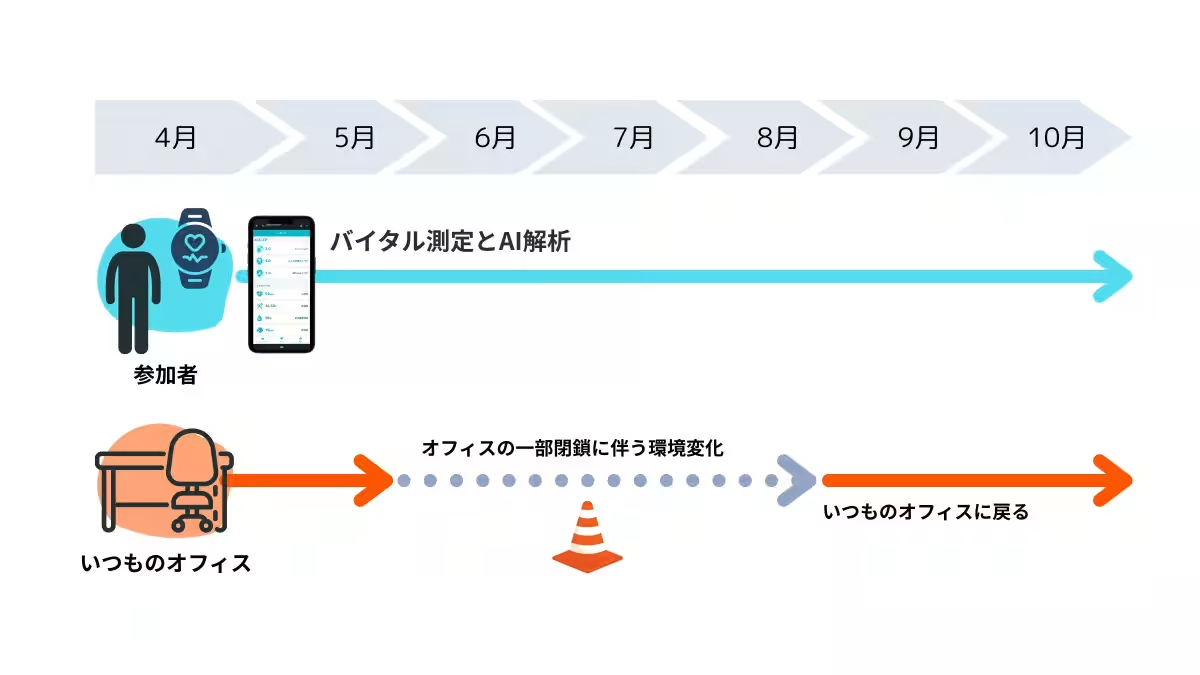
To quantitatively assess how office changes affect employees, Ad-Dice and Kokuyo's teams conducted a proof-of-concept (PoC) experiment from April to October 2025. This collaboration specifically looked at the impact of office closures due to renovation activities between June and August of that year.
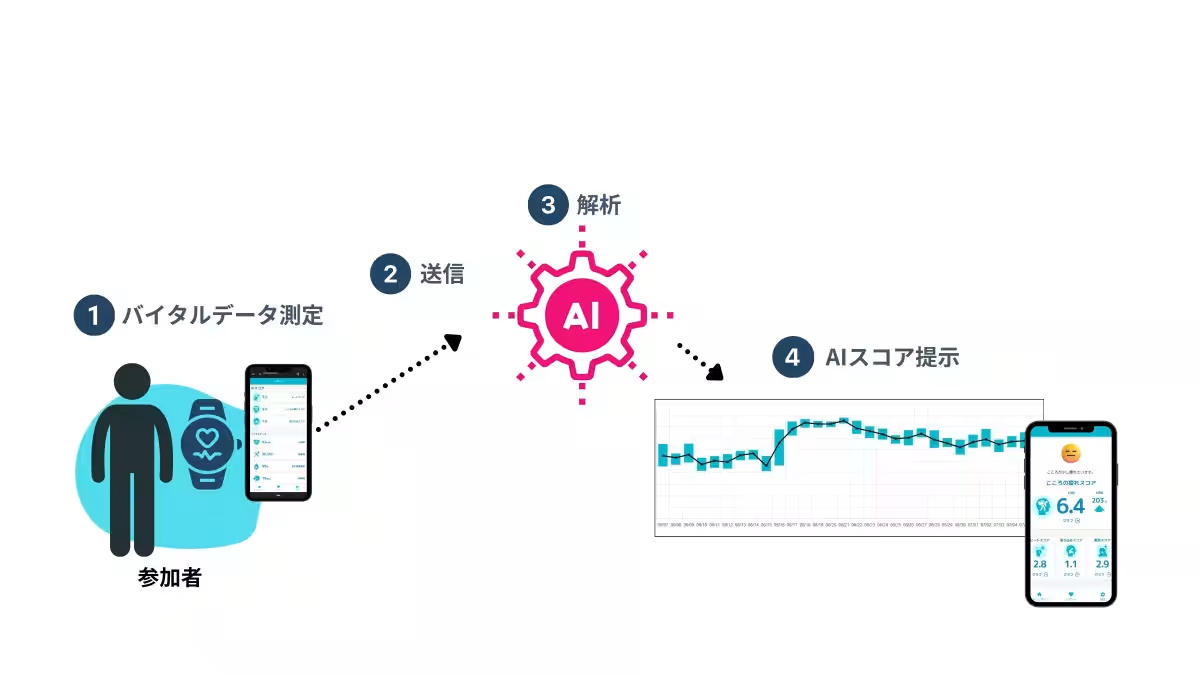
Throughout this period, participants from Kokuyo’s team, totaling 24 members, wore smartwatches to monitor vital metrics such as heart rate and skin temperature, sending this data to AI systems for analysis. The healthcare AI processed the information and produced scores reflecting participants' physical and mental states.
3. Results Summary
While the overall findings did not reveal significant differences in AI scores across the entire group when comparing pre- and post-office closure periods, individual assessments indicated several instances where scores did vary. The analysis suggested that the average values of the two AI scores could be categorized into three distinct groups, highlighting individual variations in response to the changing office conditions.
For a deeper dive into the experiment's findings, detailed reports can be accessed here.
4. Future Directions
Research conducted by the International WELL Building Institute (IWBI) underscores the financial benefits of investing in employee health and well-being, asserting that such strategic investments yield measurable returns including enhanced productivity and lower turnover rates. Such findings align with a growing recognition that workplace health is not merely an expense but a strategic asset crucial for cultivating competitive advantages and fostering long-term organizational value.
To truly promote employee well-being, visualizing the interplay between workplace environments and human health is essential. Ad-Dice remains dedicated to advancing these efforts through ongoing developments in healthcare AI, continually striving for better well-being for all.
5. Company Profiles
Kokuyo Co., Ltd.
- - Address: 6-1-1 Oimazato Minami, Higashinari-ku, Osaka, 537-8686, Japan.
- - Leader: Hidetaka Kuroda, President.
- - Business Scope: Manufacturing, purchasing, and selling office supplies and furniture, along with spatial design and consultation.
- - Established: October 1905.
Ad-Dice Co., Ltd.
- - Address: 3F MK Building, 6-3-6 Sotokanda, Chiyoda-ku, Tokyo, 101-0021, Japan.
- - Leader: Daisuke Ito, CEO.
- - Business Scope: Provision and consulting support for AI-driven business management services.
- - Established: January 24, 2005.

Topics People & Culture)


【About Using Articles】
You can freely use the title and article content by linking to the page where the article is posted.
※ Images cannot be used.
【About Links】
Links are free to use.