



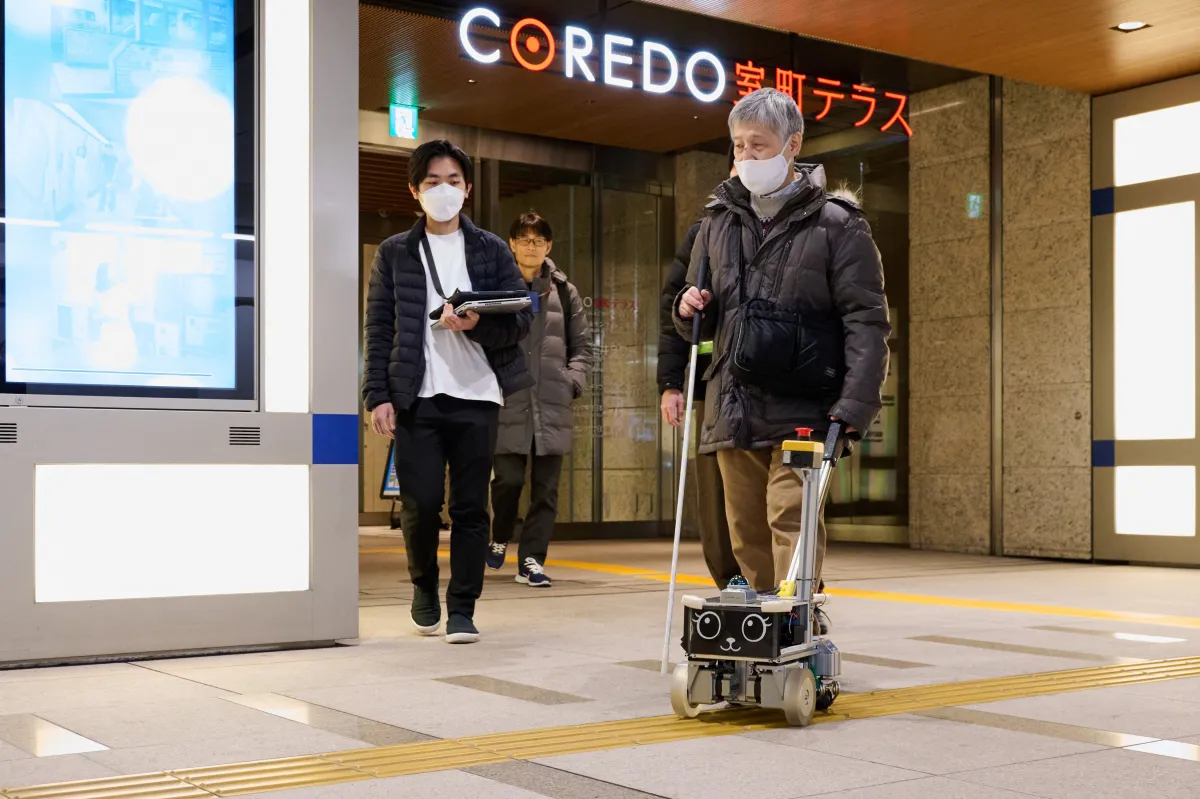
Toyota Mobility Foundation and Mitsui Fudosan Showcase Mobility Solutions for Visually Impaired in Nihonbashi
New Mobility Solutions for the Visually Impaired in Nihonbashi
On February 7 and 8, 2026, the Toyota Mobility Foundation (TMF) and Mitsui Fudosan co-hosted a significant demonstration project aimed at testing and validating advanced mobility tools designed for visually impaired individuals in the Nihonbashi area of Tokyo. This project, dubbed the "Waku Waku Project," aims to create an exciting world where visually impaired people can confidently embark on journeys and navigate their destinations with ease.
Project Background
Initiated in 2023, the Waku Waku Project focuses on solving issues faced by visually impaired individuals as they move through urban environments. During an earlier demonstration in 2025, it became clear that high-rise buildings in densely populated areas posed significant challenges regarding accurate navigation, with common issues including misdirection and timing of turns. To address these concerns, the recent experiment brought together six companies specializing in the development of walking support tools.
Experiment Objectives and Procedures
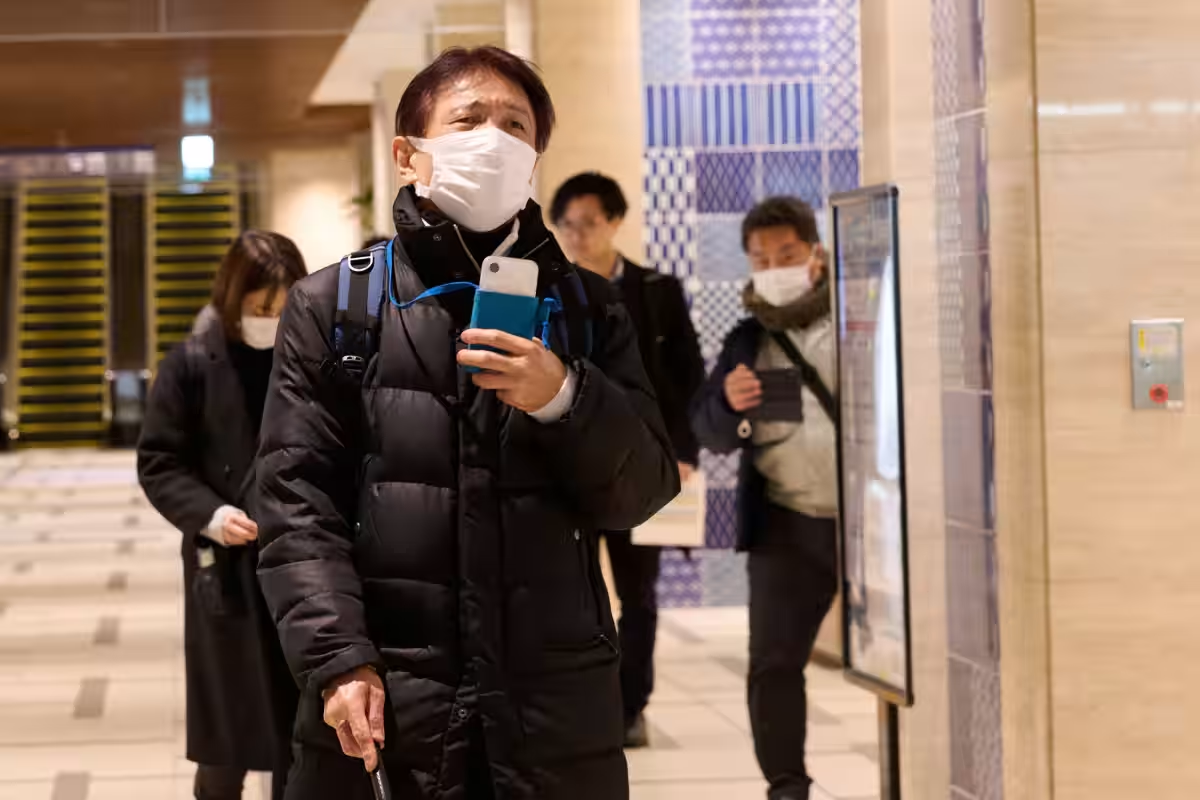
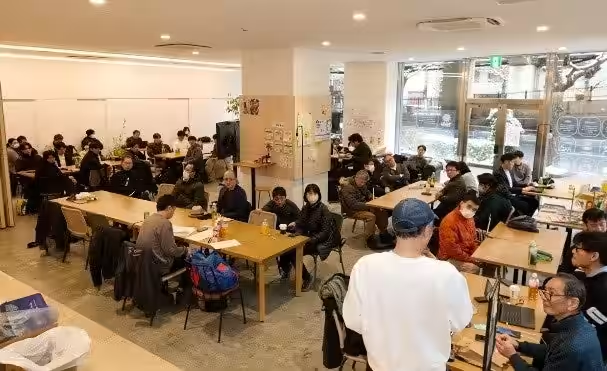
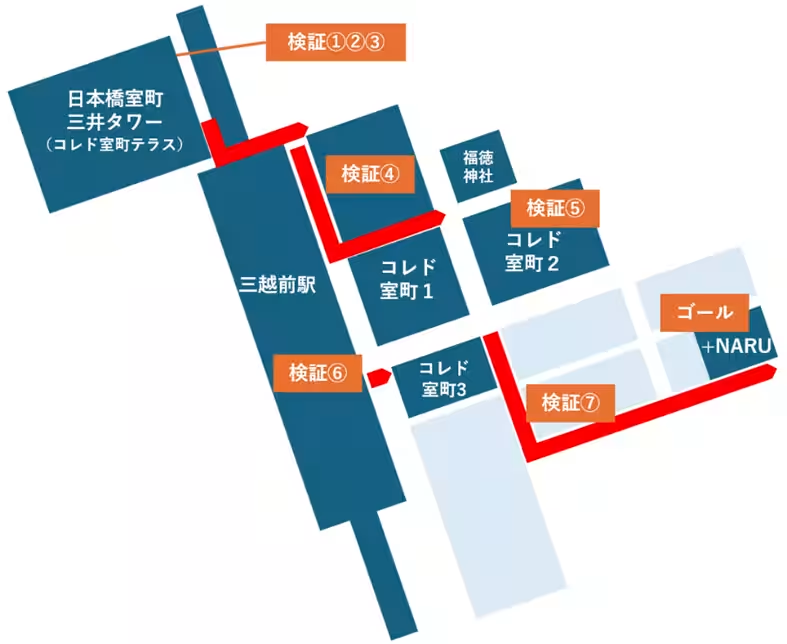
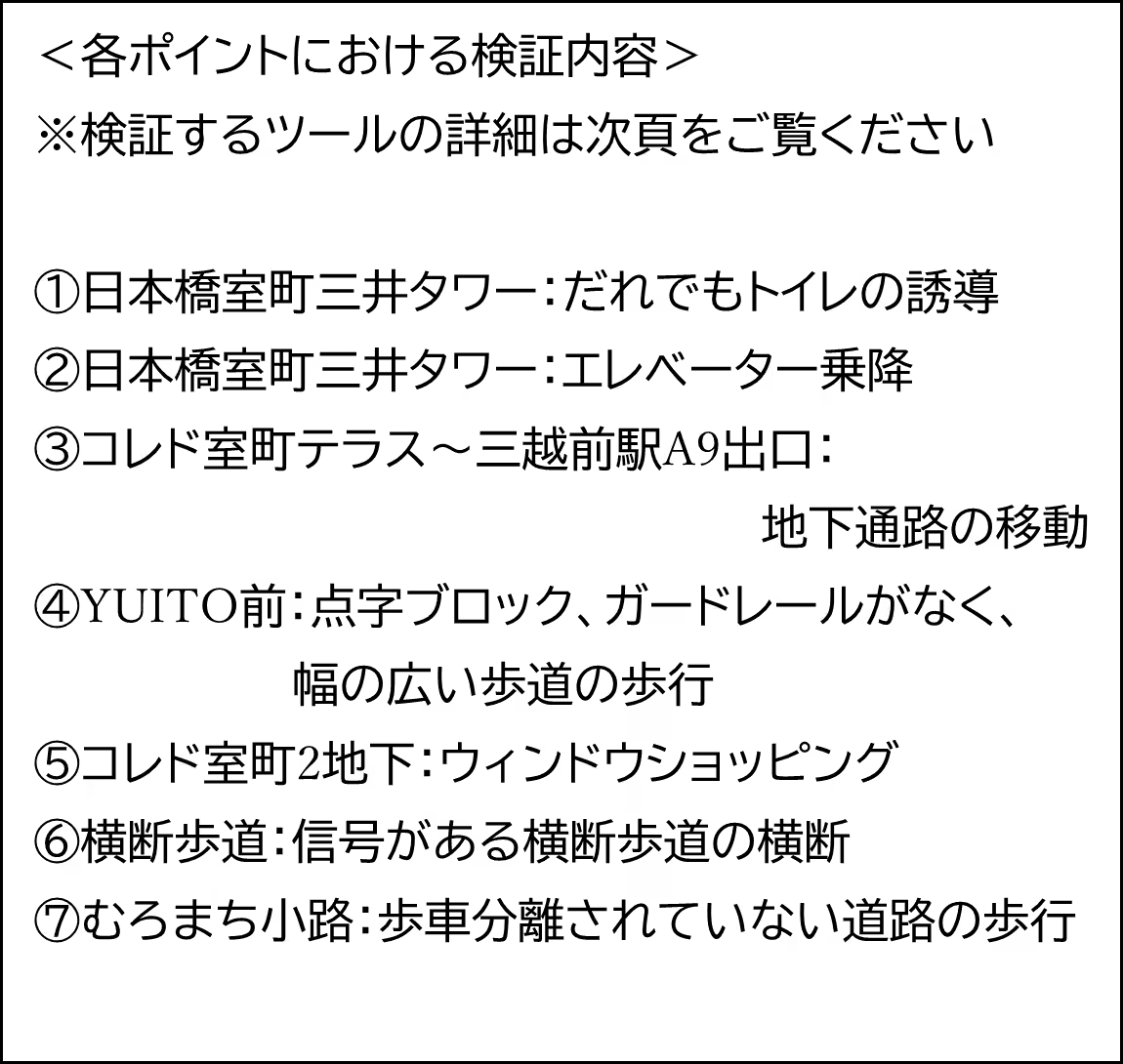
The primary goal of the demonstration was to assess the user experience of various walking aids while collecting feedback directly from visually impaired participants. Eleven individuals were invited to navigate through a challenging urban setting filled with tall buildings and navigate using different technologies. Key aspects of their experience were recorded to evaluate usability and identify potential improvements regarding societal implementation.
Key Focus Areas of the Demonstration:
1. Collaboration Across Companies: Participants investigated the strengths and capabilities of each tool while considering how they could work together to enhance mobility options for the visually impaired.
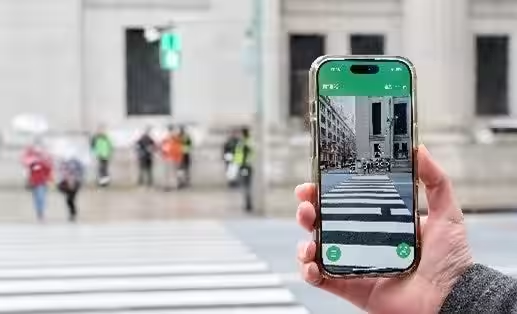
2. Real-World Testing: Using a combination of AI-powered smartphone applications and smart navigation robots that act as guide dogs, participants were able to test walking aid effectiveness in real-world conditions.
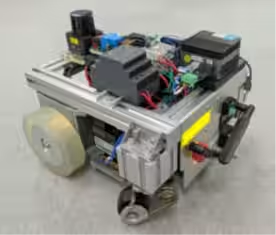
3. Innovation in Technology: New technology such as robot guides, which mimic the role of guide dogs, were deployed to assist in the navigation of the urban landscape safely.
Participating Companies and Their Innovations
The initiative saw collaboration among notable companies, each contributing unique technologies:
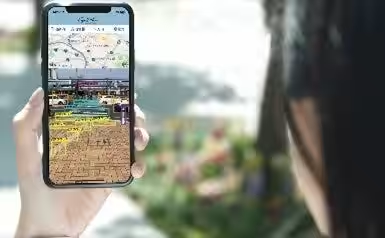
- - Computer Science Research Institute's app "EyeNavi" provides audio guidance and obstacle detection through AI, helping users find their way with precise turn and route notifications.
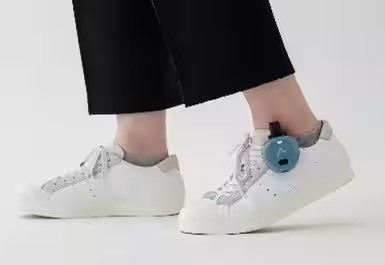
- - Ashirase developed a system employing vibration feedback in shoes to enhance directional guidance and spatial awareness.
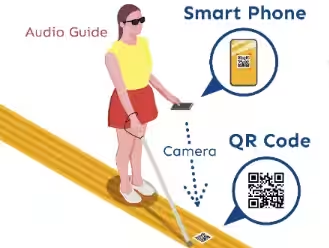
- - Linkx Co. implemented a QR code navigation system that feeds audio information about surroundings through smartphone cameras.
- - Prime Assistance offered a remote service enabling support personnel to assist visually impaired users in various scenarios by accessing live camera feeds.
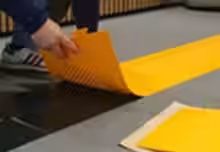
- - Kinjogomu provided tactile navigation aids like guiding mats specifically designed to assist visually disabled individuals in public spaces.
- - Panasonic Advanced Technology introduced a navigation robot equipped with autonomous navigation software that guides users by recognizing and responding to their environment.
Findings and Future Directions
Feedback from the visually impaired participants revealed valuable insights regarding interface usability, clarity of audio guidance, and the overall user experience of each tool. Through advanced methods like image recognition and sensor integration, the project has demonstrated possibilities for effective navigation aids tailored to urban settings. Notably, the experiment showed how multiple technologies could converge to provide enhanced direction precision in challenging environments.
Following this successful pilot project, the Waku Waku Project will continue to refine these tools, using the feedback received to optimize designs and address mobility issues. The ultimate goal is to create an inclusive society where everyone can travel safely and confidently, irrespective of their physical limitations.
Conclusion
The collaboration between TMF and Mitsui Fudosan serves as a valuable model for leveraging technology to enhance mobility for those who face significant challenges in navigating urban spaces. By prioritizing inclusivity and accessibility, the Waku Waku Project is set to make a meaningful difference in the lives of many and revolutionize how society approaches mobility solutions for the visually impaired.

Topics Consumer Products & Retail)
【About Using Articles】
You can freely use the title and article content by linking to the page where the article is posted.
※ Images cannot be used.
【About Links】
Links are free to use.