




Majority of Companies Are Pursuing Digital Transformation Strategies
Insights on Digital Transformation Strategies in Japan
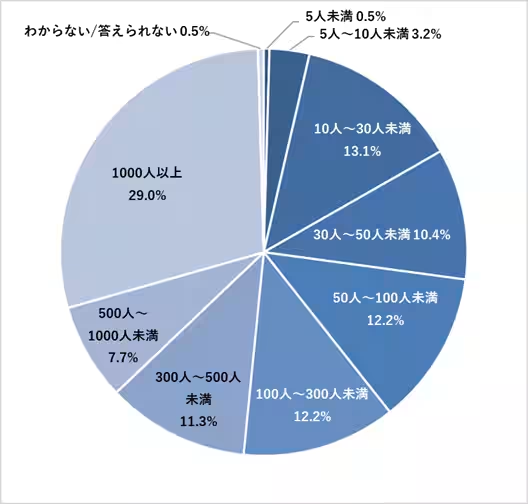
In a recently conducted survey by NTT Data Business Brains, which sells the expense management cloud solution Slopebase, the realities of digital transformation (DX) strategies among organizations were brought to light through responses from 221 IT management professionals across Japan. This investigation comes against the backdrop of a growing urgency for firms to embrace DX since the Ministry of Economy, Trade, and Industry released the 'DX Promotion Guidelines' in 2018. As concerns about legacy systems arise, particularly what is referred to as the '2025 cliff,' the push for digital transformation has become essential for corporate sustainability.
Survey Overview
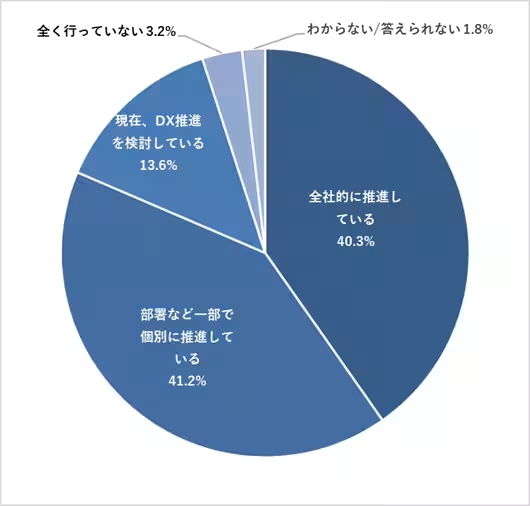
The following data set includes feedback collected between October 6 and October 7, 2025, responding only to valid survey answers. A significant 81.5% of participants confirmed that their organizations are engaging in DX initiatives, whether company-wide or within specific departments. Notably, 40.3% indicated full-scale advancement in DX efforts, while 41.2% reported that it is being pursued in certain departments. This distribution indicates two primary pathways of DX implementation: a top-down approach, where unified strategies emerge from leadership, and a more grassroots, bottom-up model, which may inevitably lead to fragmented outcomes.
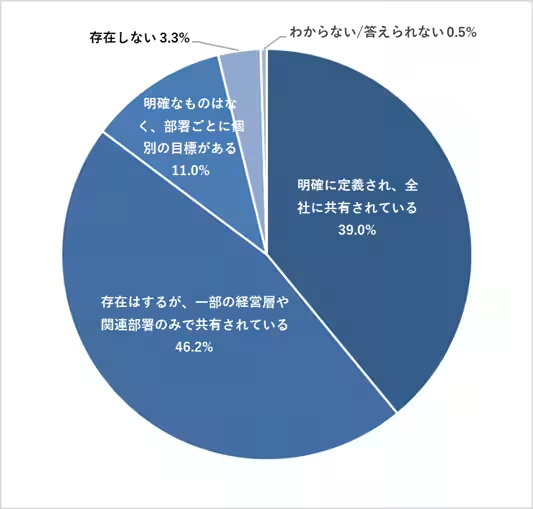
The absence of a cohesive DX vision shared across the organization adds another layer of complexity. Only 39.0% of companies reported having a clear and broadly communicated DX strategy, while a more significant portion—46.2%—acknowledged that their DX vision is confined to some executives or relevant departments. This discrepancy poses considerable challenges, as strategic insights fail to permeate the entire organization, suggesting that DX initiatives may lack impactful coherence.
Objectives and Challenges of DX
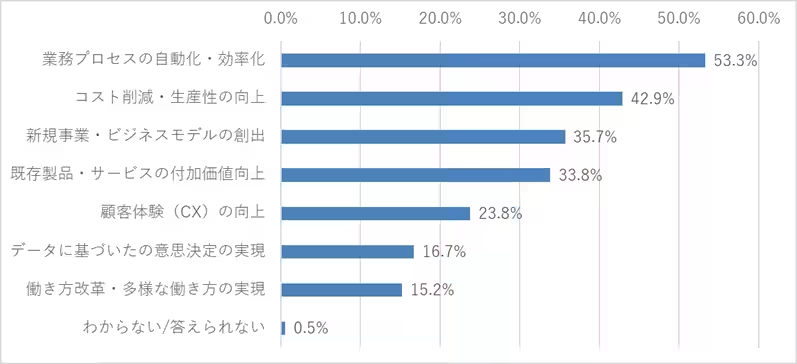
When asked about the principal goals behind their DX efforts, over half of the organizations cited process automation and efficiency enhancement (53.3%). Following this, 42.9% acknowledged cost reduction and productivity improvements as key objectives. However, the focus remains heavily tilted towards defensive strategies, ensuring existing operations are streamlined rather than exploiting DX for innovative business model evolution. Such a mindset points to a critical concern: numerous firms still view DX merely as a mechanism for cost control instead of as an opportunity to spark transformation and value creation.
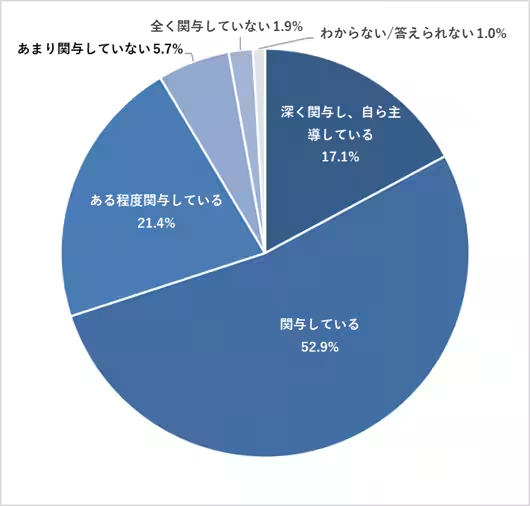
In terms of executive involvement in these initiatives, a positive note emerged from the survey. Approximately 70.0% of respondents felt that their leadership is actively engaged in DX journeys, with 52.9% acknowledging a general commitment from management. This statistic underscores that DX is recognized as an integral aspect of corporate strategy rather than relegated merely to IT departments.
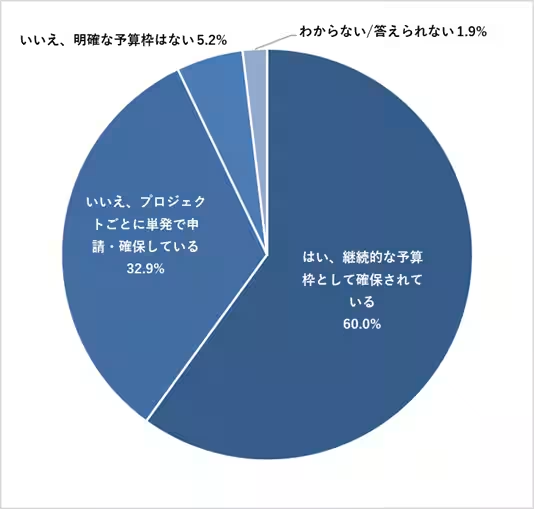
Another reveal from the survey is related to budget allocations. An impressive 60.0% of companies reported having a sustained, dedicated budget for ongoing DX efforts. This trend highlights a strategic approach opposed to ad-hoc funding practices for projects, aligning DX closely with long-term corporate visions. However, there is a pressing need to examine the distribution of budgetary allocations to ensure that focus remains balanced and not skewed towards 'defensive IT'.
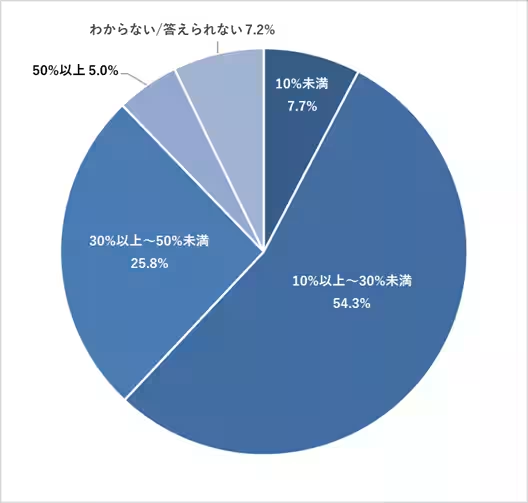
When reviewing IT budgets, it emerged that 62.0% of companies allocate less than 30% to offensive IT investments—those tied to new business ventures or service innovations. This underlines the risk that prevalent defensive strategies could stifle future growth and opportunities within DX frameworks.
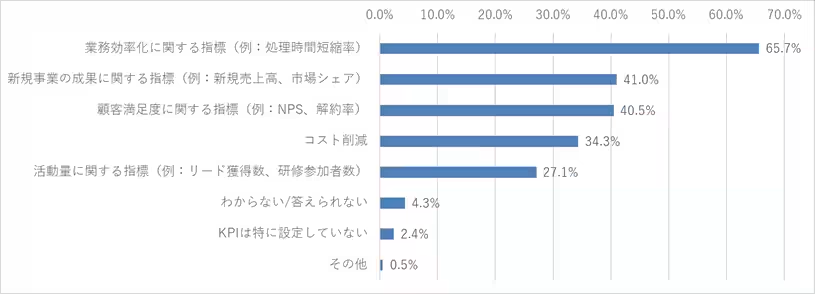
Moreover, the evaluation of performance through Key Performance Indicators (KPIs) shows that 65.7% track efficiency-related indicators, and cost reduction accounts for 34.3%. This trend suggests a short-sighted definition of DX success, wherein organizations are focused on immediate efficiencies rather than transformative outcomes that signify tangible business shifts.
Conclusion
The survey paints a picture of an organization poised to embrace DX, primarily visible through the wide engagement seen in 81.5% of firms. However, it also reveals structural weaknesses within these initiatives due to inadequate vision-sharing and heavily insular focus on process improvement. A mere 39.0% of firms have a shared DX vision, while many prioritize inward enhancements over outward revolutionary opportunities. This indicates a reluctance to leverage DX as an avenue for comprehensive business model shifts that could unlock new value propositions.
As firms endeavor to overcome the hurdles presented in the findings, the focus must shift towards cultivating a robust vision that is endorsed organization-wide and encourages a mindset that embraces innovation for sustainable development in an ever-evolving market landscape.
For further insights into the survey results, please visit: Survey Results
For inquiries regarding Slopebase, contact NTT Data Business Brains at [email protected].


Topics Business Technology)
【About Using Articles】
You can freely use the title and article content by linking to the page where the article is posted.
※ Images cannot be used.
【About Links】
Links are free to use.