



Drone and Flying Car Operations Management System Tested at Osaka Kansai Expo
Experience Cutting-Edge Air Mobility at the Osaka Kansai Expo
The Osaka Kansai Expo, set to take place from August 16 to October 13, 2025, is not just a venue for global cultural exchange; it will also serve as a testing ground for revolutionary technologies such as drones and flying cars. The collaboration between Intent Exchange, NEC, and NTT Data aims to introduce a unified operations management system that will enhance the safety and efficiency of aerial vehicles in the expo area.
Understanding Air Mobility Management
As drones and flying cars gain traction as the next wave of air mobility, the need for comprehensive operational management in low-altitude airspace has become paramount. Existing aircraft continue to share this airspace, necessitating a well-structured approach to ensure safe operations. Currently, international organizations are advancing the standardization of Unmanned Aircraft System Traffic Management (UTM), while Japan is actively developing a framework for the management of unmanned aerial vehicles through its Drone Information Platform System (DIPS 2.0) and the establishment of private UTM service provider certification.
The three companies—Intent Exchange, NEC, and NTT Data—are participating in the ReAMo Project (Realization of Advanced Air Mobility) promoted by NEDO, focusing on technology development, verification, and regulatory recommendations related to UTM.
Operational Features of the Management System
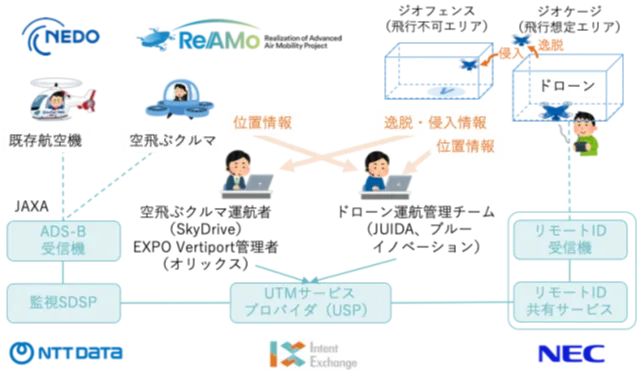
Though drone flights are generally prohibited at the expo, select UAVs approved by the Expo Association will be permitted to operate. Additionally, flying cars will also be functioning within the venue, making real-time awareness of each other’s operations essential for safety. The new operations management system developed by the three firms will facilitate this crucial status monitoring, providing several key functionalities:
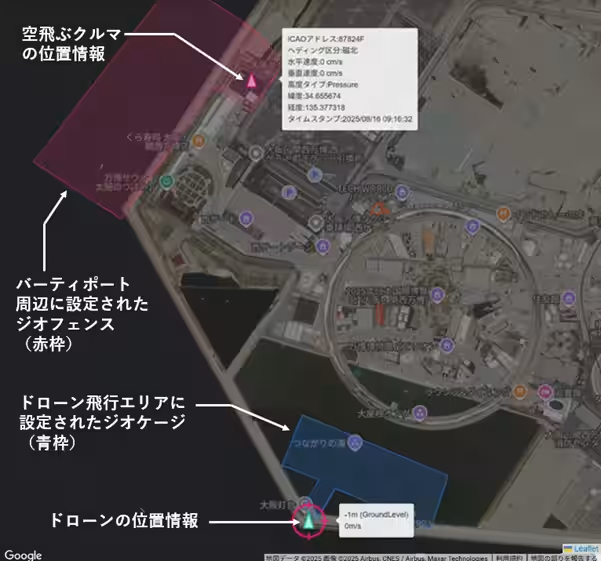
1. Geo-fencing: The Expo Vertiport manager will use the system to establish no-fly zones in a virtual space. This feature will help drone operators understand which areas are restricted while enabling real-time positioning to prevent unauthorized access.
2. Geo-caging: A designated flight area, or geo-cage, will be created based on the flight plans submitted to DIPS 2.0 or those set using Intent Exchange’s UTM services. This will help in monitoring compliance with flight plans.
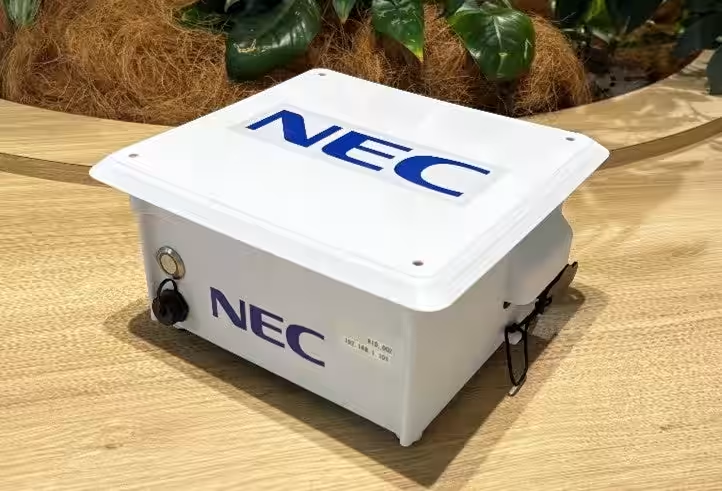
3. Real-time Positioning via Remote ID: The Remote ID system will ensure drones transmit identification and location information. NEC will install receivers at the venue to track drone positions and relay this data to other involved parties.
4. Real-time Positioning for Manned Aircraft: The system will utilize signal reception from the Automatic Dependent Surveillance-Broadcast (ADS-B) system installed on existing aircraft and flying cars to share their locations with drone operators, enhancing safety during concurrent operations.
5. Intrusion Detection & Notification: The system will also be capable of detecting any unauthorized drone movements into geo-fenced areas or out of geo-caged zones, sending relevant notifications to all stakeholders, including operators and management teams.
Future Implications
Through this pilot initiative, Intent Exchange, NEC, and NTT Data seek to refine the operational aspects of the drone management system that can later inform requirements for the UTM service provider certification program led by the Ministry of Land, Infrastructure, Transport and Tourism (MLIT). The gathered insights will be instrumental in shaping a comprehensive architecture for managing new aerial mobility solutions like drones and flying cars, ensuring that they can coexist safely and efficiently in shared airspace.
With substantial efforts focused on integrating cutting-edge technologies and improving operational protocols, the Osaka Kansai Expo is poised to showcase not only cultural innovations but also the future of aerial transportation, marking a significant step forward in urban air mobility.
Topics Entertainment & Media)
【About Using Articles】
You can freely use the title and article content by linking to the page where the article is posted.
※ Images cannot be used.
【About Links】
Links are free to use.