



2026 Year-End and New Year Activities Survey Results for Single Livers
Insights from the 2026 Year-End and New Year Activities Survey
Able Holdings, a Tokyo-based company, operates the "Hitogura" brand that supports those living alone, and has conducted an extensive study through its dedicated research lab, "Hitogura Living Lab." This survey, carried out from January 3 to 4, 2026, gathered insights into how individuals spend their year-end and new year holidays.
Survey Overview
- - Survey Period: January 3-4, 2026
- - Valid Responses: 1,004 individuals, varying by question
- - Methodology: Online research
- - Demographic: Men and women aged 20 to 49 living in Japan
Key Findings
High Rates of Return Home
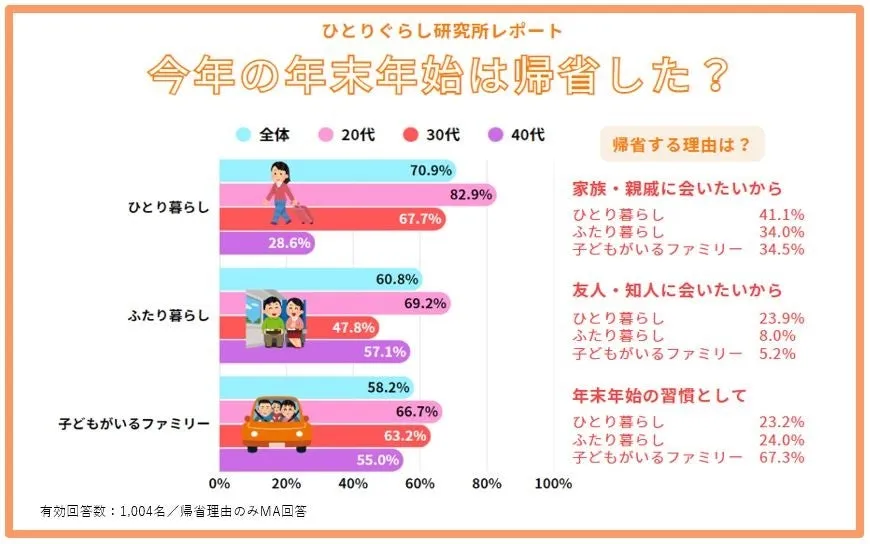
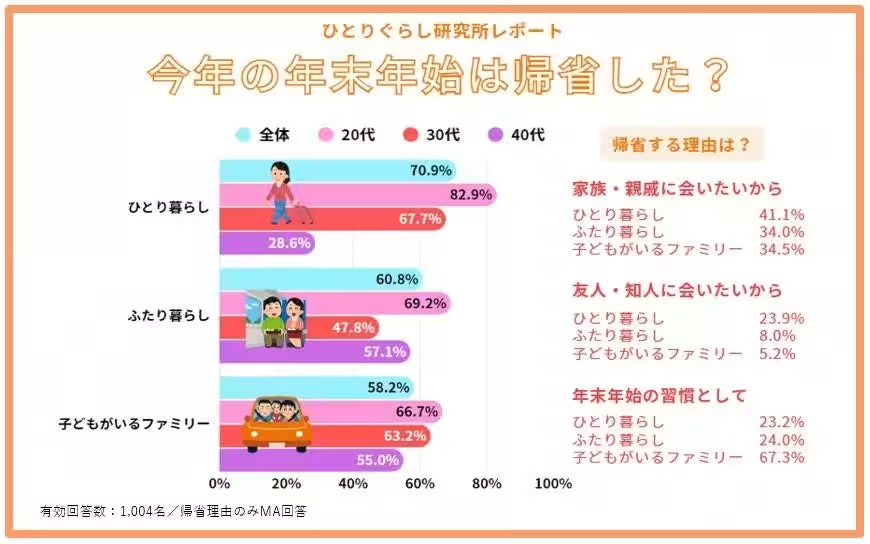
The survey found that 70.9% of those living alone returned home for the holidays, with this number soaring to 82.9% among individuals in their 20s. However, as age increases, the likelihood of returning home declines significantly, dropping to just 28.6% for those in their 40s. This reflects a growing diversity in how people choose to celebrate the year-end and new year holidays across various life stages.
Among single livers, the primary reasons for returning home included the desire to connect with family and relatives (41.1%) and friends (23.9%). In contrast, families with children cited traditional year-end practices (67.3%) as the main reason for returning, indicating that for these families, such trips hold more significance as cultural traditions rather than just personal desires.
Differences in Return Duration
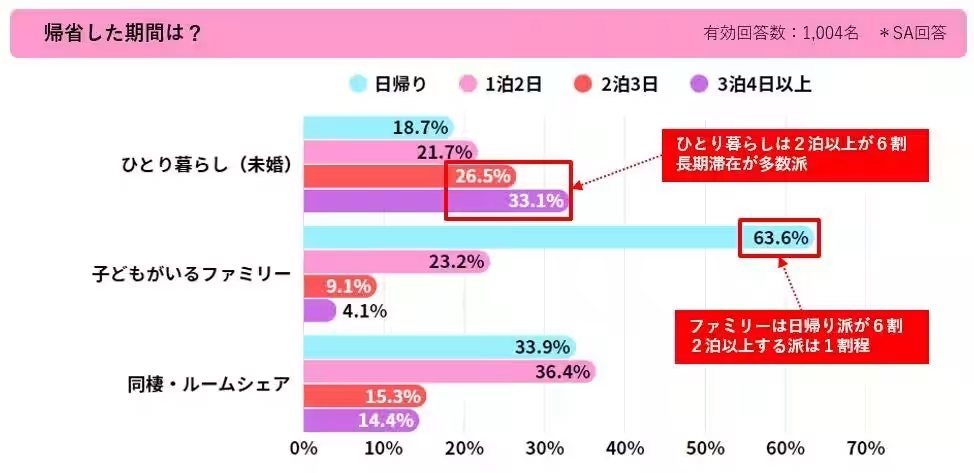
The study revealed that the majority of families (63.6%) opted for day trips, with only 13.2% spending two nights or more. This preference suggests a desire to minimize travel burdens and time away from home, particularly for families with children. Conversely, among single livers, only 18.7% traveled home for just a day, while 59.6% stayed for two nights or longer. This likely indicates a conscious effort to spend quality time with family and friends made possible through extended time off.
Geographical Trends in Homecoming
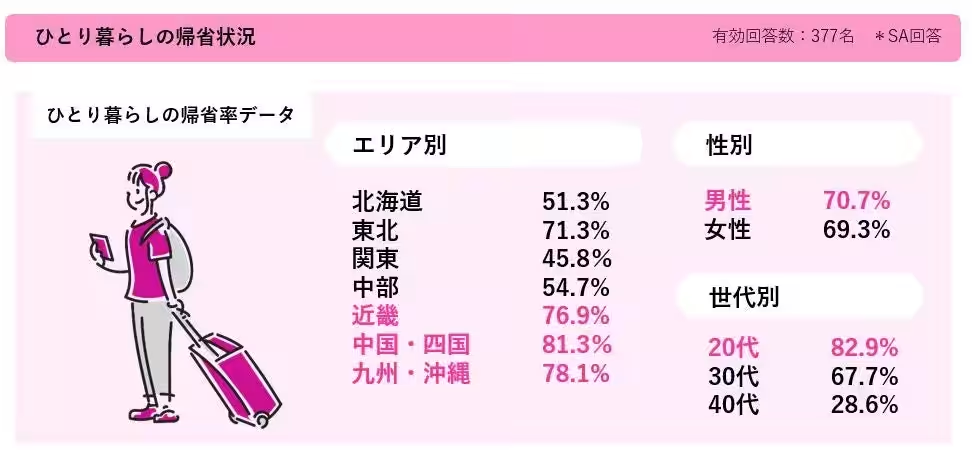
The survey's results varied by region. In western Japan, including areas such as Kansai, Chugoku and Shikoku, and Kyushu and Okinawa, return rates soared to around 80%. Previous surveys echoed this trend, suggesting that residents in western Japan tend to be more proactive about returning home. On the other hand, the Kanto region (45.8%) and Hokkaido (51.3%) exhibited lower return rates, likely due to urban congestion during the holiday season and the higher cost of travel.
Different Trends in Year-End Celebrations
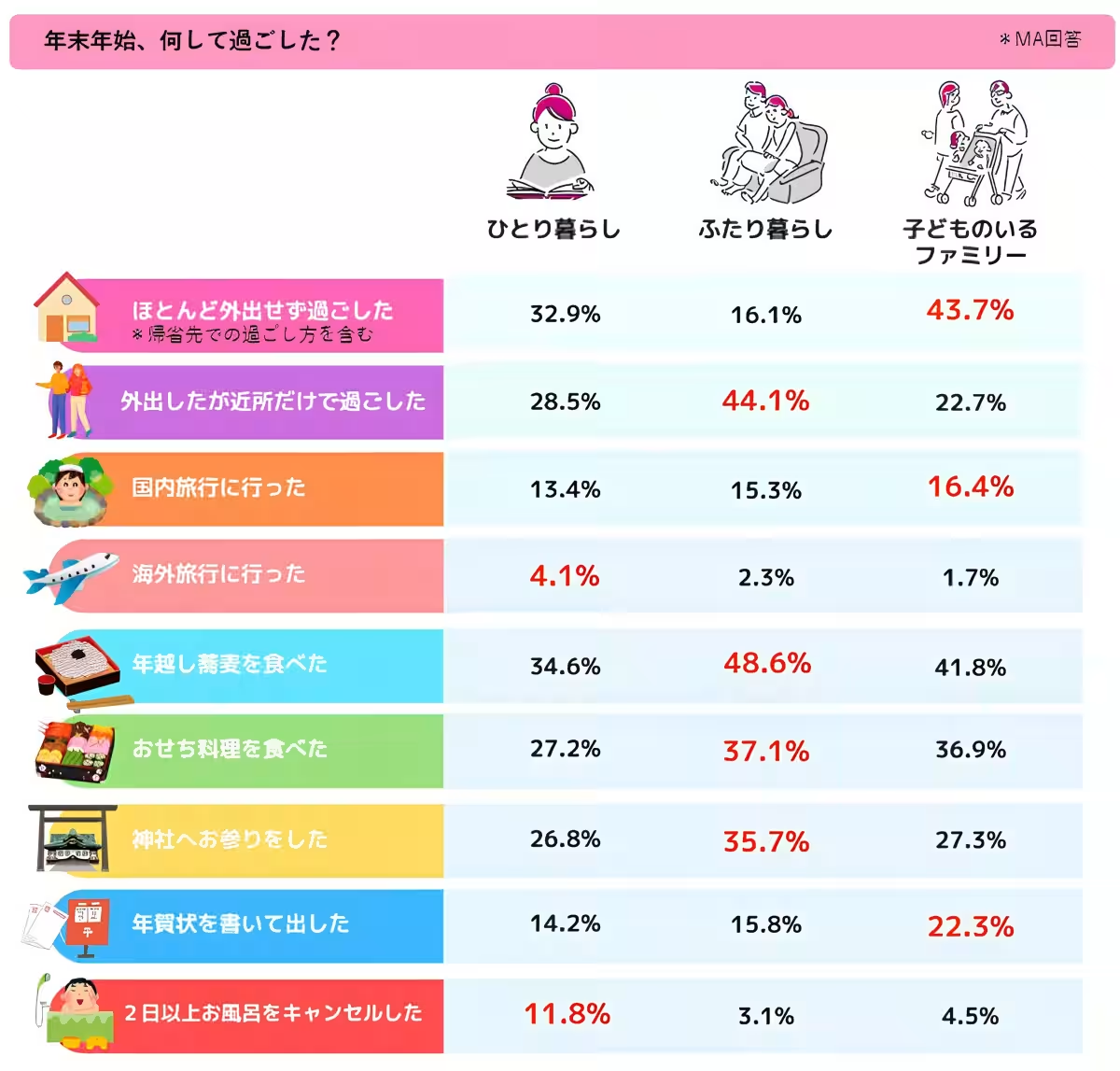
The findings revealed distinct trends in how households celebrated the holidays. A notable percentage of both families and singles (around 30-40%) reported spending New Year’s largely at home, with families showing particularly high rates of limited outings (43.7%). Additionally, while approximately 10% of respondents engaged in travel, domestic trips were most common among families (16.4%), whereas single livers showed a higher tendency towards overseas travel (4.1%).
Traditions such as year-end soba, osechi dishes, and visits to shrines were less actively participated in by single livers, whereas couples and families placed a greater emphasis on these customs. Moreover, families also made extensive use of New Year's cards as a means of communication to share information about their children’s growth, reveling in that tradition more than single livers did.
Interestingly, the survey noted that 11.8% of single livers canceled their bath reservations for over two days, a significantly higher rate. This statistic seems to reflect their inclination to spend the holiday period without scheduled plans, allowing for a more relaxed approach.
Conclusion
This year saw another remarkable “miraculous nine-day break” over the New Year, and the prevailing trend indicates that many chose to spend this time at home or nearby. The survey clearly illustrates how individuals in their 20s are the most likely to return home, while those in their 40s exhibit a clear decline in return rates. Additionally, families primarily engaged in day trips, contrasting with single livers who tended to stay longer, highlighting differing perspectives on familial ties and individual leisure time during the holidays.
For more detailed findings from the survey, visit the Hitogura Living Lab website.
About Hitogura Living Lab
Operated by Able Holdings, Hitogura Living Lab transcends conventional real estate services to research and analyze the multi-faceted realities and challenges of living alone. The lab aims to enhance the comfort, safety, and fulfillment of single living through ongoing exploration and insightful findings.
- - Established: July 4, 2025
- - Director: Akihiro Akaboshi
- - Website: Hitogura Lab

Topics People & Culture)

【About Using Articles】
You can freely use the title and article content by linking to the page where the article is posted.
※ Images cannot be used.
【About Links】
Links are free to use.