



The Rising Role of AI in Job Changes: Opportunities and Concerns
The Rising Role of AI in Job Changes: Opportunities and Concerns
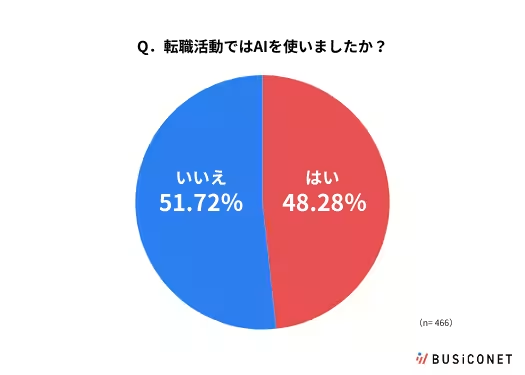
In a rapidly changing job market, AI has emerged as a significant tool for job seekers, according to a recent survey conducted by Biziconet, a Tokyo-based company. Their media outlet, EvoWork, gathered insights from individuals who have undergone job changes in the last two years, revealing that nearly half of them have harnessed artificial intelligence (AI) in their application processes. This marks a striking increase in AI adoption compared to the previous year, where the number stood at just 9.1%. The figures indicate a growing reliance on AI services to streamline the job search experience.
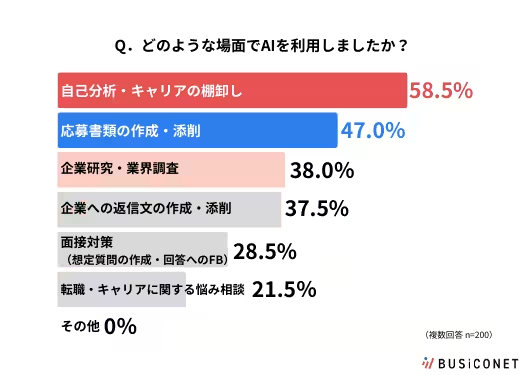
The survey conducted from December 16 to 29, 2025, involved 200 former job seekers who acknowledged AI usage while searching for employment. Highlighted key findings show that 58.5% of respondents utilized AI for self-analysis and career assessments, which implies a profound shift in how individuals perceive their professional value and potential. This shift encourages candidates to consider AI as an aid in identifying strengths and experiences, shifting away from purely personal introspection.
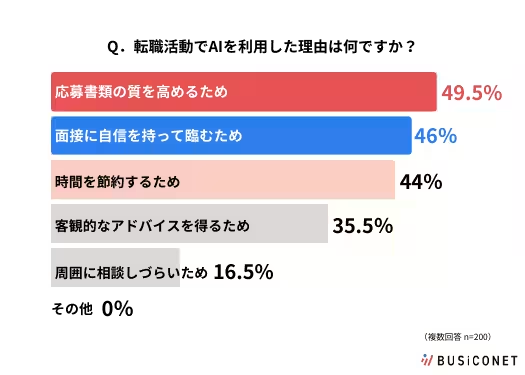
Furthermore, the research indicates that 49.5% of participants used AI primarily to improve the quality of their application materials. This is significant as it challenges the perception of AI merely as a convenient tool; rather, it acts as an essential partner in maximizing an individual's chance of success through polished outputs. Another important factor is that individuals have reported enhanced confidence during interviews due to AI assistance, with 46% emphasizing this reason for AI integration in their job search.
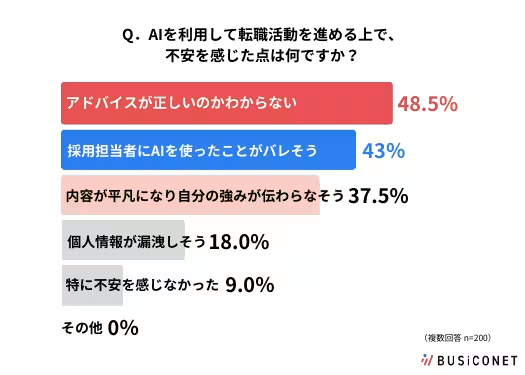
However, despite the growing acceptance of AI, the survey also unveils notable concerns about the reliability of AI-generated advice. Nearly 48.5% of participants expressed uncertainty regarding the validity of AI’s recommendations. This highlights an emerging dilemma for candidates who are leveraging AI—balancing the efficiency gains it offers against the risk of following potentially flawed guidance. Additionally, more than 40% fear that recruiters might discover their use of AI, suggesting a level of unease about authenticity versus technological aid in the hiring process.
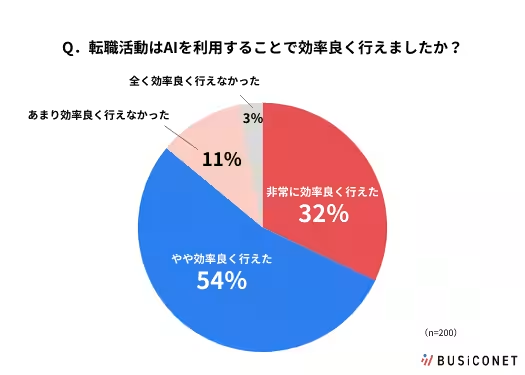
Eighty percent of the respondents attributed the perceived effectiveness of AI to increased efficiency during their job search. With many emphasizing the time-consuming nature of self-analysis, document preparation, and company research, it is evident that AI is reshaping how job seekers conduct their outreach and applications. When combining responses indicating 'very efficient' and 'somewhat efficient,' a significant 86% of participants reported a positive impact on their job search dynamics.
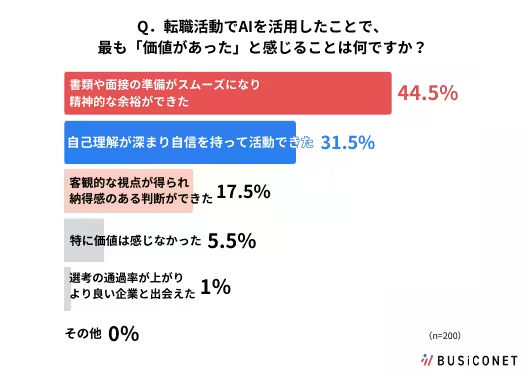
Interestingly, personal feedback indicates that 44.5% of job seekers valued the psychological relief AI provided, helping them navigate stressful preparation for applications and interviews more comfortably. Furthermore, feedback showed that while AI significantly supports the transactional aspects of job searching, merely 1% attributed their improved selection rates to AI involvement. The emphasis remains on personal qualities, passions, and genuine communication in securing a desirable role.
In conclusion, the survey conducted by EvoWork indicates a substantial integration of AI within the job searching landscape, with almost half of all job seekers embracing this technology. This raises essential questions about the nature of human interaction versus AI assistance. Individuals are navigating their professional journeys armed with AI, benefiting from heightened efficiency while grappling with novel anxieties about authenticity.
EvoWork remains committed to providing individuals with valuable insights and support in their career transitions, shedding light on how they can best utilize AI while maintaining the essence of what makes them unique candidates in a competitive job market.
Topics People & Culture)



【About Using Articles】
You can freely use the title and article content by linking to the page where the article is posted.
※ Images cannot be used.
【About Links】
Links are free to use.