



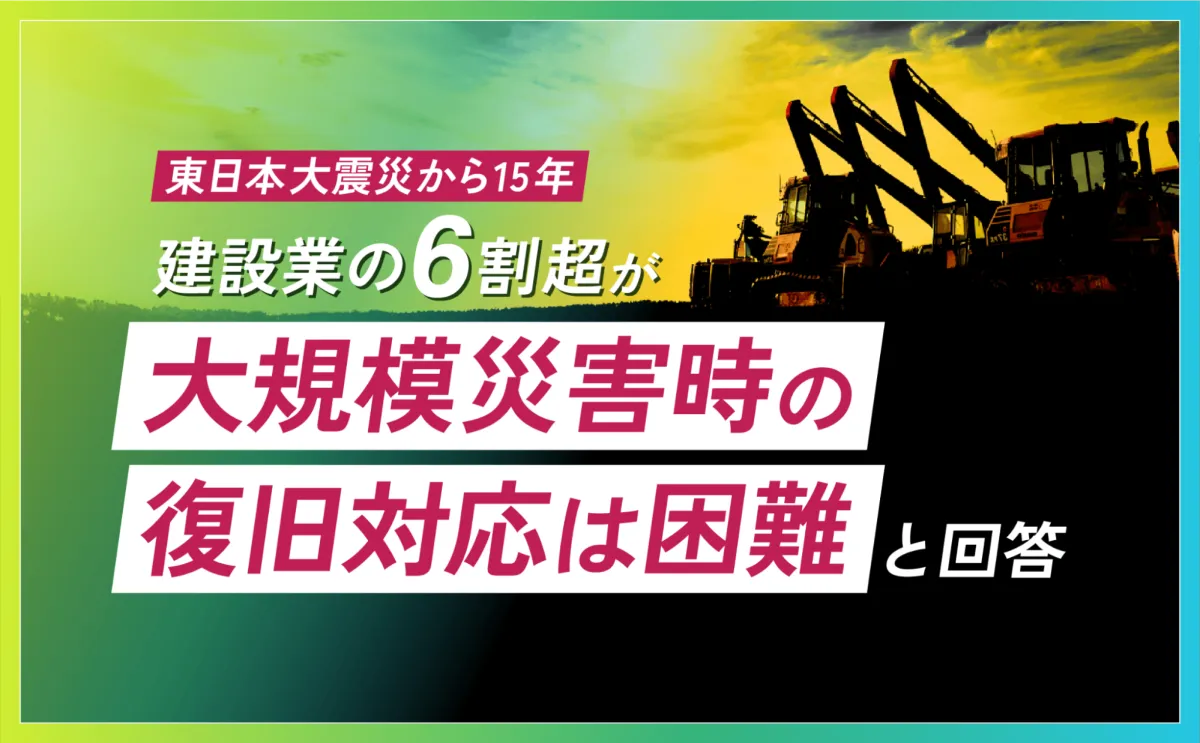
Construction Industry Faces Severe Labor Shortages 15 Years After the Great East Japan Earthquake
Assessing the Construction Industry 15 Years Post-Disaster
March 11 marks the 15th anniversary of the Great East Japan Earthquake, reminding the nation of the critical role the construction industry plays in rebuilding and recovery efforts following natural disasters. Recent research conducted by World Corporation, which specializes in recruiting technicians for the construction sector, has revealed troubling insights regarding the industry's preparedness for future calamities. In a survey of 600 executives and management personnel from the construction industry, it was found that over 62% are pessimistic about their ability to respond adequately to large-scale disasters. This concerning statistic highlights a deeper structural issue—it indicates that the ongoing shortage of skilled workers in the construction field could undermine Japan's entire societal infrastructure.
Key Findings from the Survey
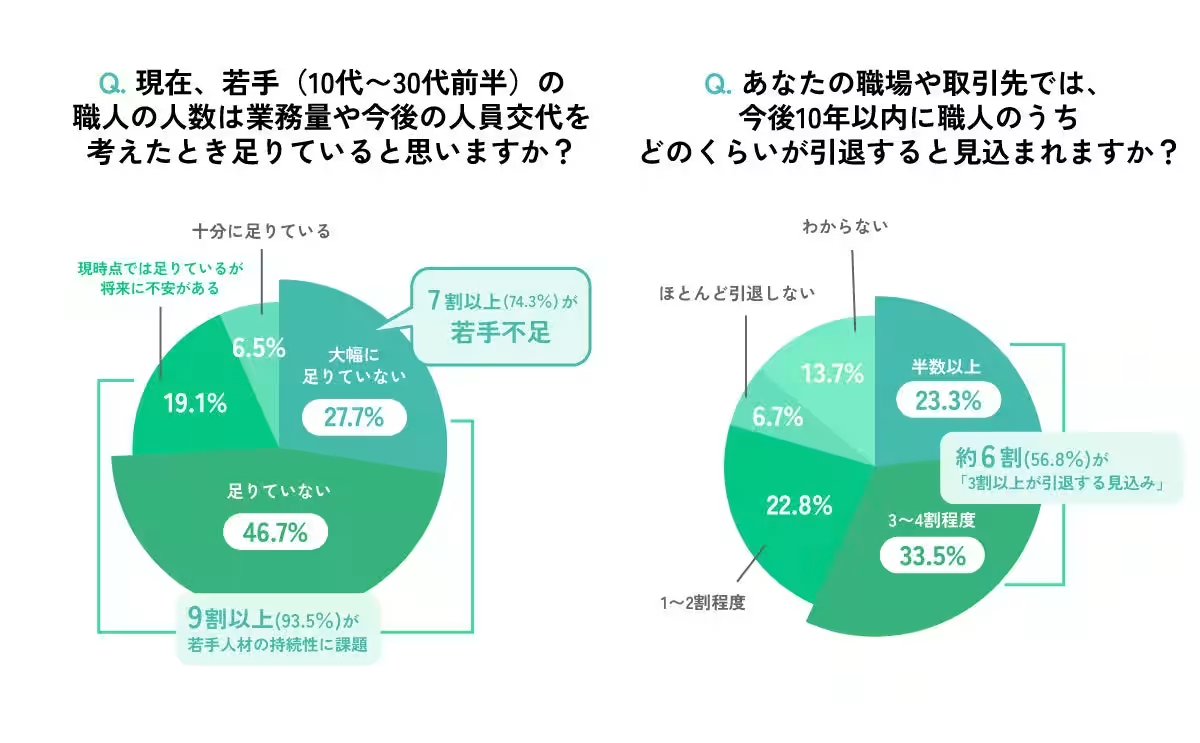
- - A staggering 74.3% of respondents indicated that there is a significant lack of young craftsmen in the workforce. Additionally, nearly 56.8% anticipate that over 30% of current workers will retire within the next decade.
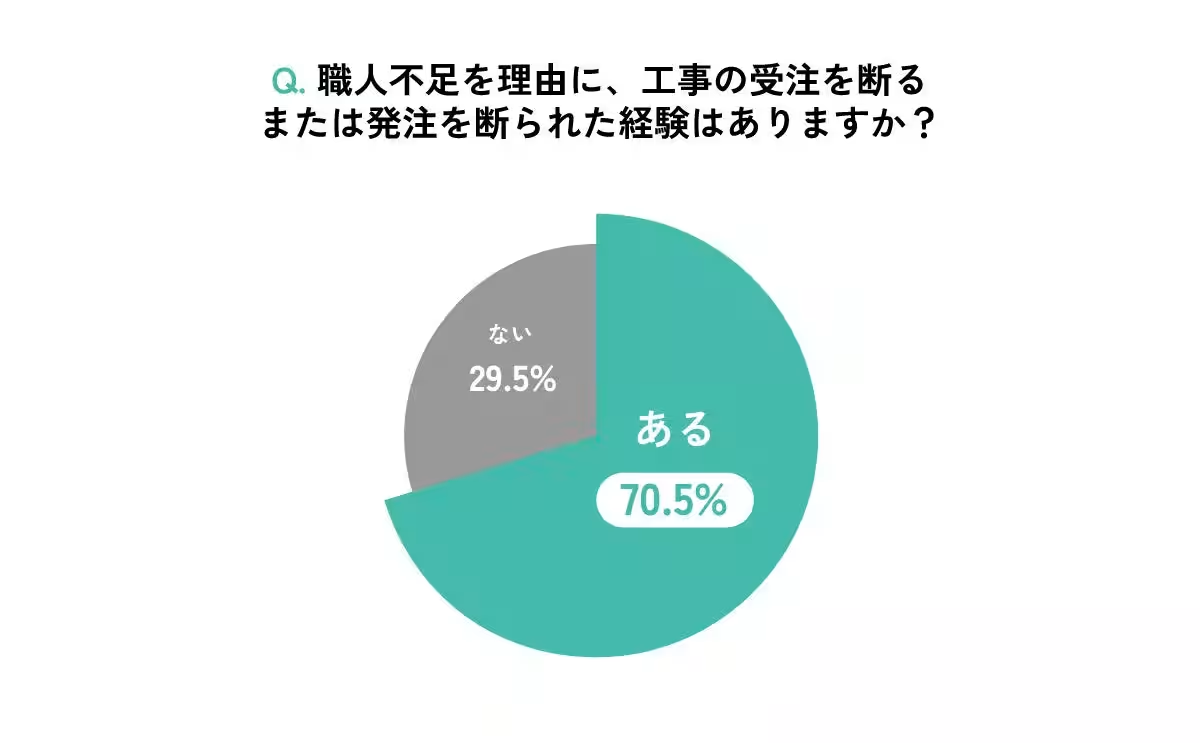
- - More than 70.5% of participants reported having to turn down job contracts or orders due to the shortage of skilled workers.
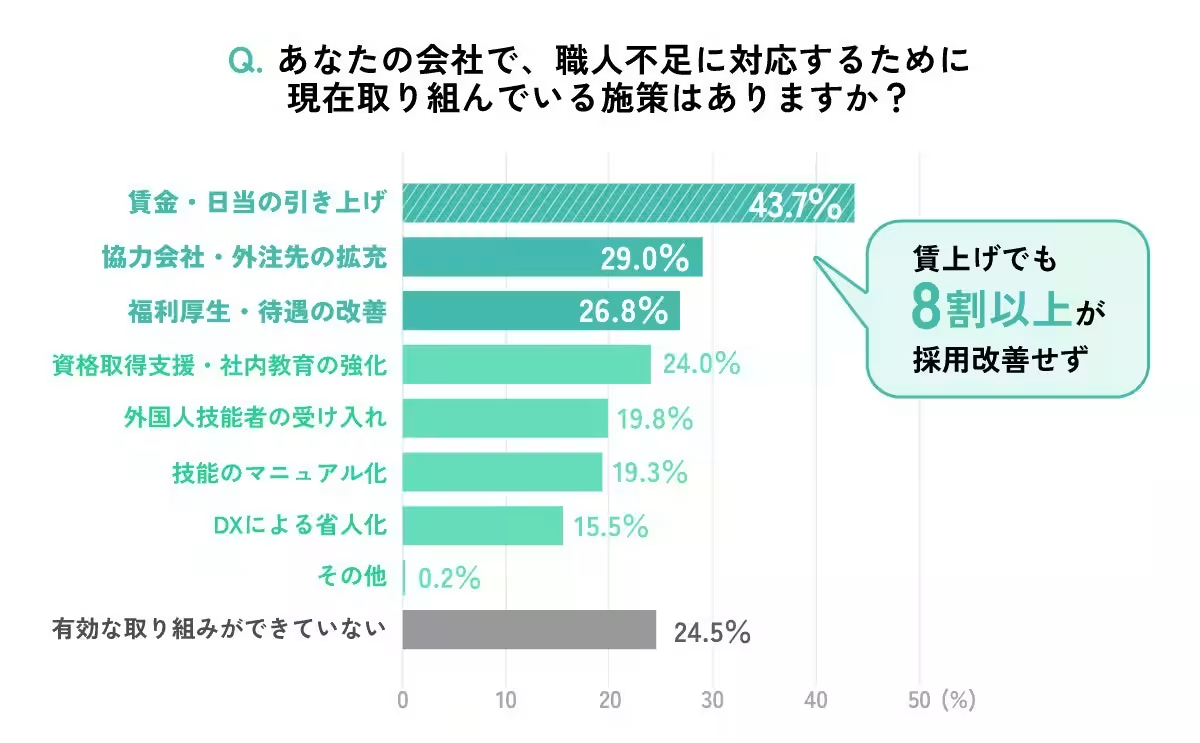
- - When considering solutions for the labor crisis, 43.7% suggested increasing wages as the most effective measure. However, a shocking 84.3% of those who implemented wage increases found no improvement in recruitment.
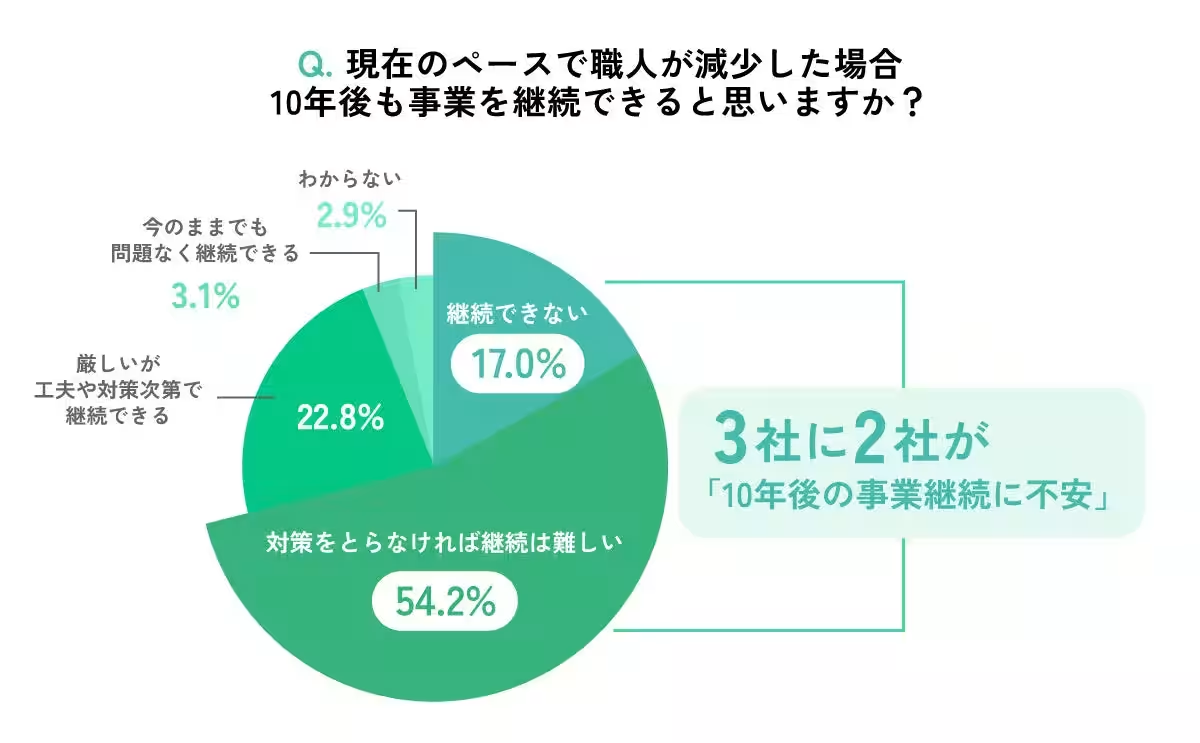
- - Over 71.1% expressed concerns that if the current rate of worker depletion continues, sustaining their businesses in ten years would be nearly impossible.
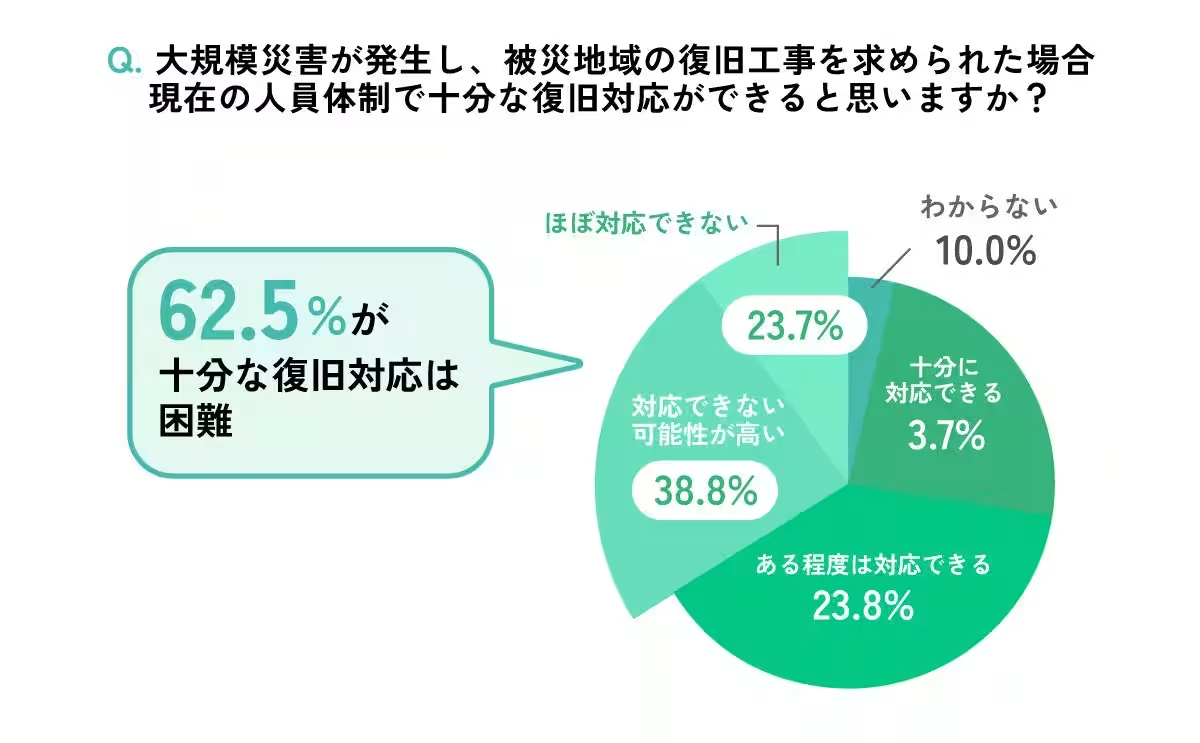
- - Furthermore, 62.5% admitted that their companies would struggle to mount effective recovery operations in the event of a major disaster.
Young Talent Influx Stalled
The survey also posed a critical question regarding the availability of young craftsmen aged 10 to early 30s. An overwhelming 74.3% of respondents stated that there is a significant shortage in this demographic, with 19.2% noting a current sufficiency but expressing concerns about future sustainability. In contrast, when asked how many craftsmen might retire in the next ten years, around 56.8% projected that over 30% could potentially leave the workforce, with over 20% estimating that this figure could exceed 50%.
This dynamic poses a significant challenge as experienced workers retire while young entrants into the field remain scarce, jeopardizing the operational capabilities of construction sites across Japan.
Missed Opportunities Due to Labor Shortage
The labor shortage also translates into tangible business impacts, with more than 70.5% of respondents confirming they have missed out on contracting opportunities due to the lack of available craftsmen. The issue illustrates how labor shortfalls not only hinder potential projects but also curtail the overall capacity for businesses to respond to current market demands.
Wage Increases Fail to Attract Talent
Despite the industry's acknowledgment of its challenges, surveys indicate that merely increasing wages is insufficient to attract new talent. For instance, when asked about strategies to alleviate labor shortages, the most common response was to raise wages, with 43.7% of firms indicating this. However, a staggering 84.3% of those who adjusted pay scales reported little to no improvement in their hiring outcomes. Compounding the issue, about 24.5% of respondents indicated that they had not implemented effective measures to address these challenges, reflecting a disconnect between understanding the crisis and executing viable solutions.
Long-Term Business Viability in Jeopardy
With the steady decline of available skilled labor, when participants were inquired whether they believed their businesses could endure over the next decade, 71.2% expressed doubts, either outright stating they could not continue or noting that without specific countermeasures, sustainability would be challenging. This forecast underscores how the shrinking workforce is not merely a short-term concern but poses existential threats to the entire construction industry.
Challenges to Disaster Recovery
In light of this labor structure crisis, further questioning about disaster response capabilities during large-scale emergencies revealed that over 62.5% believe their companies would be unable to provide effective recovery assistance. This realization is alarming and highlights the dire consequences of continued skilled labor shortages not just on company performance but on the broader resilience of regional infrastructure during disasters.
Association's Role in Building Future Workforce
The research underscores a considerable challenge facing the construction sector: maintaining a sustainable workforce, particularly in light of accelerating retirements among experienced workers and the insufficient influx of younger labor. The General Association for National Construction Personnel, of which World Corporation is a part, is working diligently to alleviate these deficits. Approved by the Minister of Health, Labour and Welfare, the organization aims to improve working conditions and increase the number of skilled construction workers through strategic matching initiatives between job seekers and employers. Starting November 2025, a specialized recruitment platform titled
Topics Consumer Products & Retail)


【About Using Articles】
You can freely use the title and article content by linking to the page where the article is posted.
※ Images cannot be used.
【About Links】
Links are free to use.