




The Impact of Extreme Heat on Children’s Developmental Opportunities During Summer Break
The Impact of Extreme Heat on Children’s Developmental Opportunities
As the effects of climate change become increasingly pronounced, the impact of extreme heat on children’s outdoor playtime during the summer break raises significant concerns. A recent survey conducted by PAPAMO, a company focused on supporting children's development through exercise and technology, has highlighted troubling trends related to the amount of time children are spending outdoors. Based in Shibuya, Tokyo, PAPAMO sampled 380 parents across Japan to explore how the summer heat affected their children's outdoor activities this year.
The findings reveal that nearly 40% of children had less than 30 minutes of outdoor playtime per day during the summer vacation, with around 70% engaging in less than one hour of outdoor activities daily. Alarmingly, approximately 82% of parents indicated concerns about heat stroke as a primary reason for limiting outdoor play. The consequences of this trend extend beyond mere discomfort — they represent a critical threat to children's physical and developmental well-being.
Declining Outdoor Activity
The survey results paint a stark picture of reduced outdoor time. For many families, typical outdoor play has become a safety concern, leading to cautious behavioral adjustments in daily life. Compared to previous summers, 53.9% of parents reported a decline in their children's outdoor playtime, with terms like “significantly decreased” and “somewhat decreased” dominating their responses.
Furthermore, it is not just parents noticing this decline. Schools and daycare facilities also reflect this trend, with 46.3% reporting reduced or canceled outdoor activities such as gym classes, playtime, and other events due to the extreme weather conditions.
Reasons Behind Reduced Playtime
The primary reason cited for limiting outdoor play among over 82% of the respondents is the fear of heat-related illnesses.When parents feel that it is unsafe for their children to enjoy a typical outdoor experience, they are left with the dilemma of providing alternative forms of entertainment like indoor games and screen time, which accounted for a notable increase among 16.6% of families. Even more concerning is the 12.2% of parents who reported that their children simply do not want to play outdoors anymore, possibly indicating a shift in behavior brought about by the current climate.
Moreover, educational environments are increasingly recognizing the limitations that heat poses, prompting a reevaluation of the activities available to children. With such widespread curtailment of outdoor physical activities across schools and daycares, the risks posed by climate factors are becoming more apparent.
Parental Concerns About Children’s Development
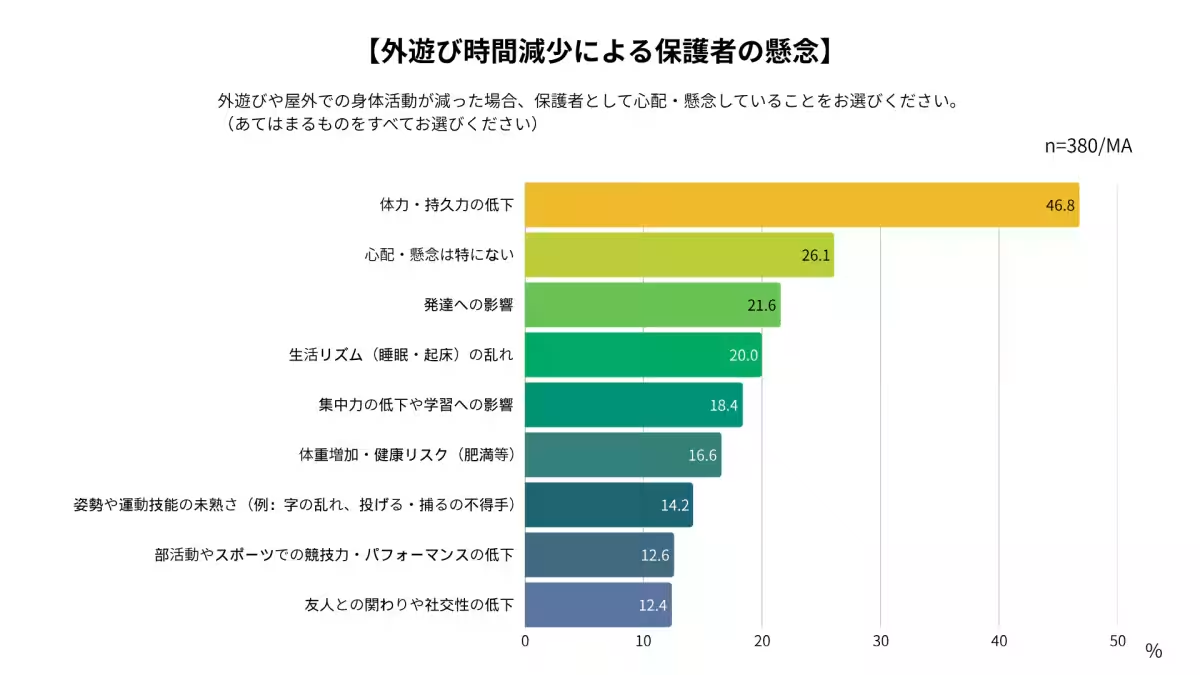
The survey also delved into the worries voiced by parents regarding their children’s development due to reduced physical activity. An overwhelming 46.8% of parents expressed concern about a decline in physical endurance and overall fitness. Additionally, 21.6% linked the reduction of outdoor activities directly to potential impacts on development, while 18.4% worried about how decreased physical activity may affect concentration and learning capabilities.
The Bigger Picture: Climate Change and Its Consequences
As per PAPAMO's CEO, Sakiko Hashimoto, the long-standing norm of children freely playing outside is fading as climate change redefines acceptable weather conditions for outdoor activities. The company aims to raise awareness about how these environmental changes erode children’s developmental opportunities. Hashimoto emphasized, “The rise in temperature is not merely altering how kids play; it’s presenting serious social problems that affect their physiological and psychological development.”
Through their service, PAPAMO hopes to provide solutions that empower children to engage in physical activities irrespective of weather constraints. Transitioning to online platforms for development support and exercise instruction allows children to maintain active lifestyles in the comfort of their homes. As children remain at risk of deteriorating physical activity levels due to increased heat, PAPAMO seeks to build a “new developmental infrastructure” that ensures children can thrive and flourish socially and physically despite the challenges posed by climate change.
Conclusion
The survey illuminates the pressing issue of how an increasingly hot climate compromises children's health and development. The alarming statistics reveal that current trends raise significant concerns for parents and educators alike. Urgent action is necessary to ensure that the next generation can continue to experience the joy of outdoor play, essential for their physical and emotional well-being amid a changing climate.





Topics People & Culture)



【About Using Articles】
You can freely use the title and article content by linking to the page where the article is posted.
※ Images cannot be used.
【About Links】
Links are free to use.