



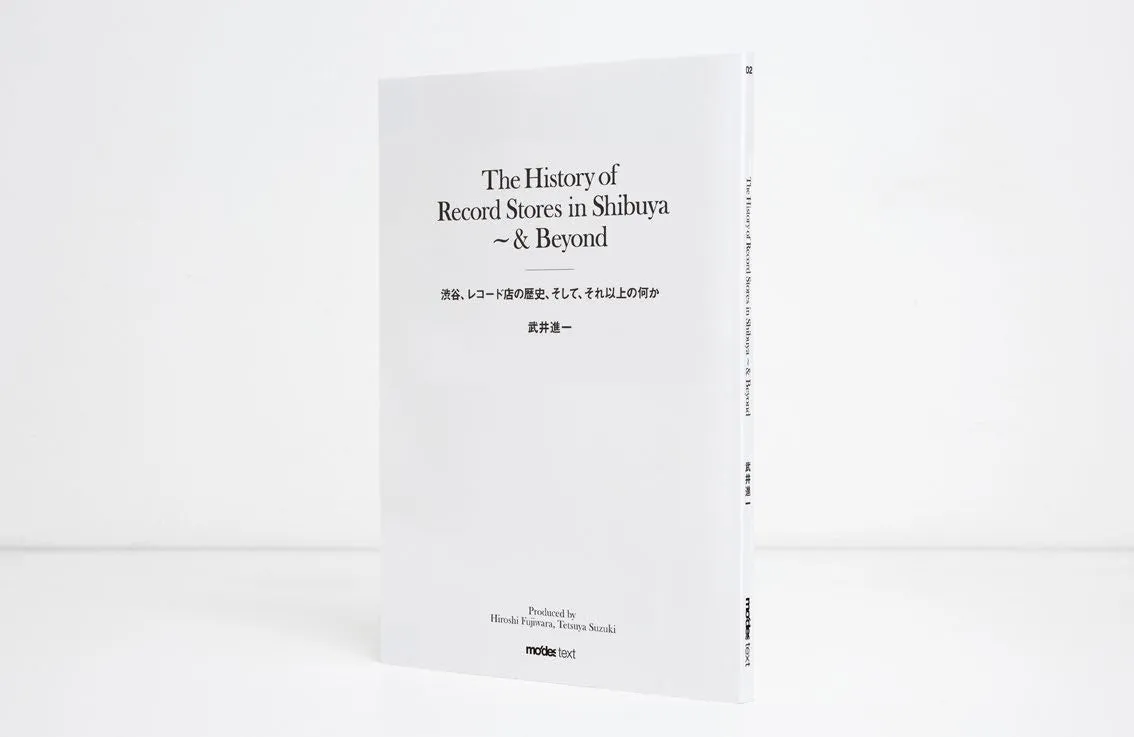
Explore the Cultural History of Shibuya's Record Stores: A New Book by Shinichi Takei
Discovering the Heart of Shibuya's Record Culture
In early May 2026, Shinichi Takei, the founder of the renowned analog record store Face Records, will release his highly anticipated book, The History of Record Stores in Shibuya ~& Beyond. Published by mo'des book and produced by esteemed cultural figures Hiroshi Fujiwara and Tetsuya Suzuki, this work promises to explore the unique relationship between Shibuya and its vibrant record store scene.
A Deep Dive into a Local Legacy
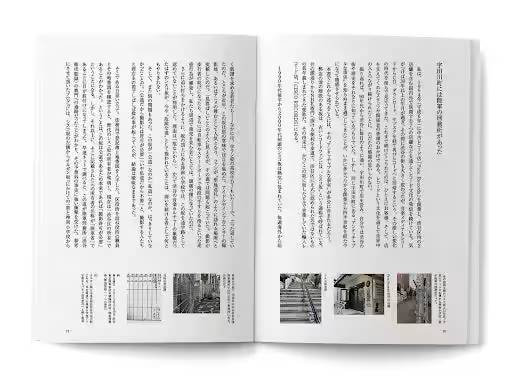
Face Records, established in the bustling Udagawacho area of Shibuya over three decades ago, has become an iconic haven for vinyl enthusiasts. But what ignited this phenomenon in Shibuya? Takei’s journey into this inquiry began with a simple question: "When did record stores in Shibuya first emerge?" This curiosity evolved into a thorough investigation that not only retraces the history of record shops but also revisits the rich cultural history of Shibuya itself.
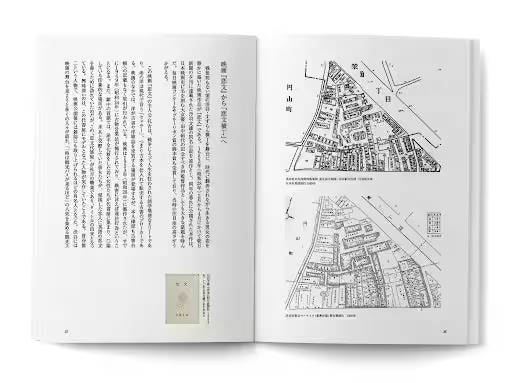
Through meticulous research in libraries, antiquarian bookstores, and municipal archives, Takei’s investigation has transformed into a commendable scholarly study. His work dives into the epoch of the post-World War II Americanization, tracing how it influenced societal values and, subsequently, the urban development and consumer culture in Shibuya. The exploration of Shibuya’s record stores serves as a lens through which the evolution of cultural values in post-war Japan is vividly illustrated.
Uncovering the Layers of History
The upcoming book is structured to take readers through a compelling journey of discovery, divided into several captivating sections:
Part One: The First Record Store in Shibuya
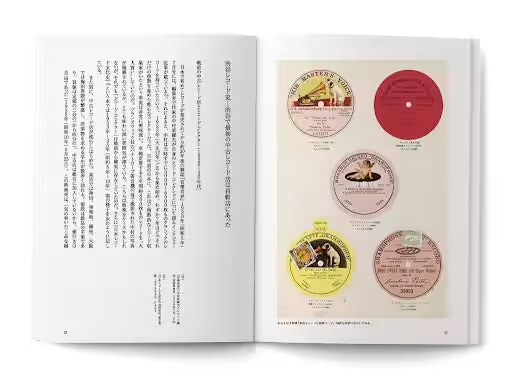
This section seeks to uncover the inception of record shops and why memories of these establishments tend to fade over time.
Part Two: The First Import Record Shop was Located in Washington Heights
Focusing on Washington Heights, this section delves into its significance as an early hub for imported records, juxtaposed with the memories and histories of the location.
Part Three: The American Culture Brought by Occupying Forces
This part examines how American soldiers and music influenced Japan's cultural landscape, creating a lively exchange of ideas and trends.
Part Four: The Underground Culture Post Washington Heights Return
Here, the narrative shifts to the intertwining of subcultures that emerged after the return of Washington Heights, highlighting significant events like the Tokyo Olympics and the evolution of jazz cafes into discotheques.
A Personal Journey into Culture
Shinichi Takei is not only a business owner but also a dedicated local historian. His passion for music has driven him to rediscover and document the forgotten stories of Shibuya and its residents, enriching our understanding of its cultural significance.
The publication aims to appeal to music lovers, historians, and anyone interested in the unique saga of Shibuya as a cultural capital. As the book is expected to hit shelves at venues including Face Records locations and select bookstores like Tsutaya, it’s set to become a must-read for those looking to grasp the essence of Shibuya through its transformative record stores.
For readers worldwide, Takei’s work will provide insight into how music and urban culture intertwine. With a price point of 2,800 yen (excluding tax) for 200 pages, this book is not just a history lesson; it's a journey into the heart of a city that has become synonymous with musical innovation.
Conclusion
In a world rapidly shifting toward digital, The History of Record Stores in Shibuya ~& Beyond will remind us of the persistent allure of vinyl and the stories wrapped in every record’s journey. By understanding these narratives, we gain a clearer view of how places like Shibuya shape our identities and cultural legacies.
For more information and updates, you can reach out to FTF Corporation or visit their official website at ftfinc.co.jp.

Topics Entertainment & Media)
【About Using Articles】
You can freely use the title and article content by linking to the page where the article is posted.
※ Images cannot be used.
【About Links】
Links are free to use.