



New Discovery at Kanazawa University: Tracking Molecular Shape Changes in Real Time
Unveiling the Secrets of Molecular Switches at Kanazawa University
Recent research from the Nano Life Science Institute (WPI-NanoLSI) at Kanazawa University has made significant strides in understanding the molecular switches that govern many biochemical processes. Published in the esteemed Journal of the American Chemical Society, the study demonstrates groundbreaking methods to observe how molecules transition between different structural states in response to chemical signals. The implications of this work could reshape the design of future molecular machines and adaptive materials.
The Research Team's Innovative Approach
Led by Shigehisa Akine and his team, the researchers engineered a unique molecular cage that behaves in an impressively slow manner. This innovative design provided a rare opportunity to observe the series of molecular events following a chemical signal in real-time. By tracking how molecules switch states gradually, they could offer insights into the fundamental mechanisms that drive molecular behaviors.
In essence, this research tackles a critical question in the field of chemistry: how can scientists design materials that interact intelligently with their environment? Such responsive systems could serve as pioneering components in creating future smart technologies—think of them as molecular-level machines capable of sensing external stimuli and responding accordingly.
Understanding the Nature of Molecular Switching
Many molecules exist in multiple stable states, seamlessly alternating between them when exposed to various external factors. Traditionally, observing this switching process has proven challenging due to the rapid nature of these events. Often, only the starting and endpoint of the molecular transitions are visible, obscuring the path taken between states.
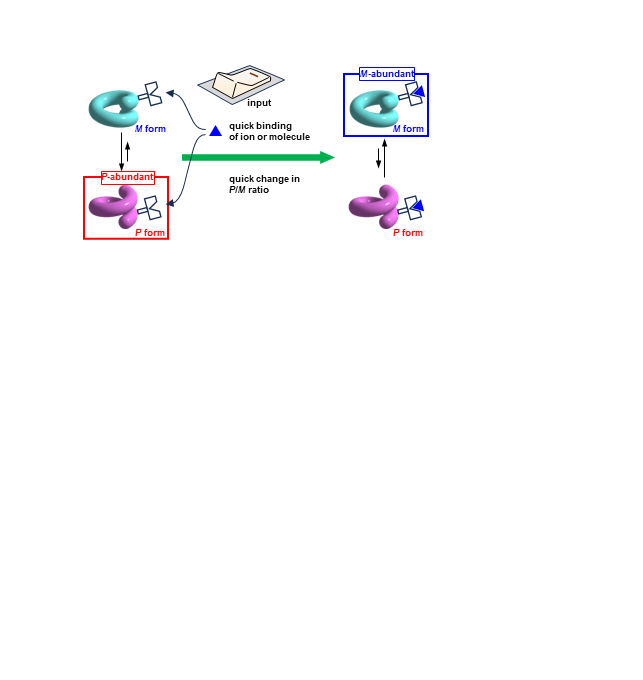
The Kanazawa research team addressed this issue by creating a molecular cage specifically designed to slow down both the uptake of guest ions and the subsequent structural rearrangement. Their creation—a triple-helical cobalt metallocryptand—exemplifies a ingenious design that maintains structural integrity while facilitating a protracted yet observable transformation when cesium ions are introduced.
Real-Time Observations Unveiled
The introduction of cesium ions triggers a fascinating transformation within the molecular population. Over time, the researchers documented a shift from predominantly right-handed forms to left-handed forms. Utilizing nuclear magnetic resonance (NMR) spectroscopy, circular dichroism (CD) spectroscopy, and x-ray crystallography, they captured the molecular dynamics as they unfolded. This multi-faceted approach allowed them to construct a detailed narrative of the switching process,
This led to a surprising finding. Contrary to traditional beliefs where a guest molecule first binds and then induces a change in the host structure, this study revealed that cesium ions preferentially bind to the less prevalent left-handed structure already present in the solution. This mechanism highlights how molecular switching primarily occurs through conformational selection—a significant insight that alters how chemists understand molecular interactions.
Implications for Future Research
The findings suggest not only a new understanding of molecular switching but also the potential for designing systems that respond distinctly to various chemical signals. The study highlights that while cesium ions push the molecular state towards the left-handed structure, external factors like chloride ions can favor the right-handed form. This dual responsiveness reinforces the concept of 'smart' materials capable of nuanced interactions with their environments.
Professor Akine notes, "Most molecular switches operate too quickly for us to see how they actually work. By designing a system where guest uptake and structural switching share a similar timescale, we were able to uncover the hidden pathways that connect these processes. Our discoveries will contribute to the rational design of future smart molecular architectures."
In summary, this innovative research teases apart the complexities of molecular switching, providing a clearer understanding of the underlying mechanisms. The team at Kanazawa University is paving the way not just for new scientific insights, but also for breakthroughs in developing future technologies based on molecular systems.
For further details, you can look into the study titled Interplay between Slow Chirality Inversion and Slow Guest Uptake in a Triple-Helical Closed-Cage Metallocryptand.
About Kanazawa University
Founded in 1862, Kanazawa University has a longstanding history of excellence in research and education, especially in the fields of molecular and life sciences. The university is dedicated to fostering an environment that encourages innovative scientific inquiries and global collaborations.
Topics Other)
【About Using Articles】
You can freely use the title and article content by linking to the page where the article is posted.
※ Images cannot be used.
【About Links】
Links are free to use.