


Changing Gift-Giving Trends Among Seniors: Insights from 2025 Survey
Changing Gift-Giving Trends Among Seniors: Insights from 2025 Survey
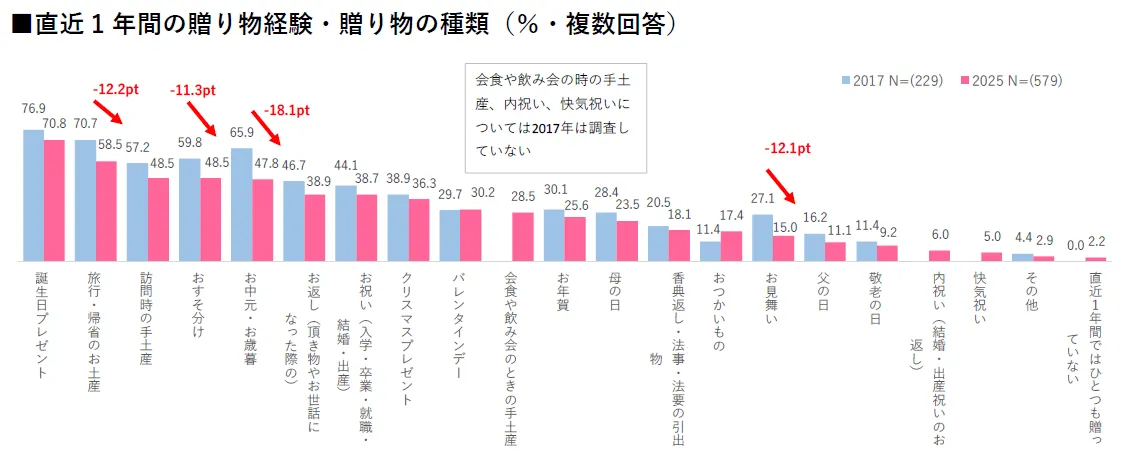
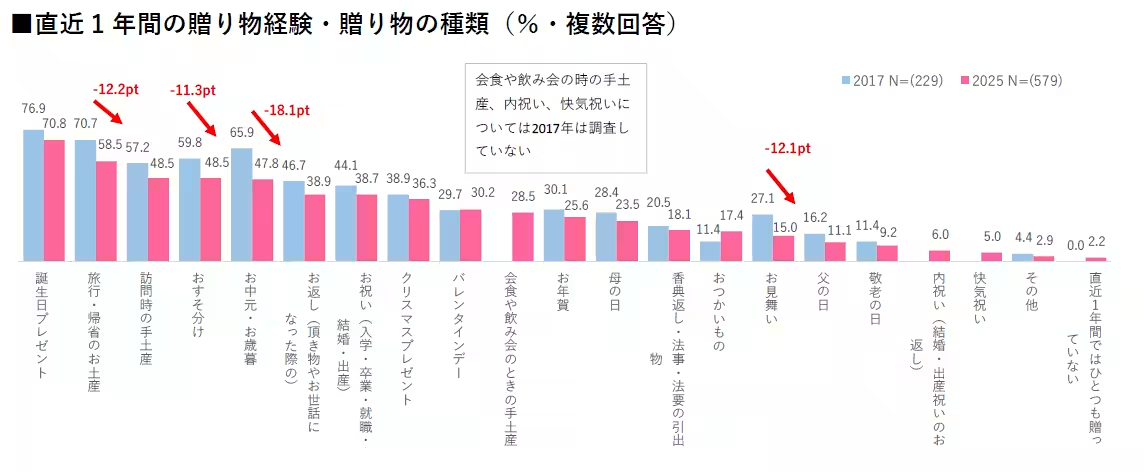
A recent survey conducted by Halmech's Aging Lifestyle Research Institute reveals a significant shift in gift-giving behaviors among seniors aged 50 to 87. In this study, which included responses from 579 women, key findings were noted regarding the decreasing opportunities for gift-giving, particularly traditional practices such as ochugen and oseibo, which have seen an 18.1% decline since 2017.
Decline in Traditional Gift Giving
According to the survey, an impressive 97.8% of seniors still engage in gift-giving, but the frequency and nature of these gifts are changing. The opportunities for giving gifts overall have noticeably decreased, especially for traditional occasions such as ochugen (mid-year gifts) and oseibo (year-end gifts). As social conventions evolve, many seniors are considering whether these customs are still relevant to their lives.
The survey indicated that there are fewer instances of giving gifts such as trip souvenirs, shared meals, and the above-mentioned traditional gifts. Notably, the percentage of those giving ochugen and oseibo has dropped significantly, highlighting a cultural shift away from obligatory gift-giving. Interestingly, there seems to be an uptick in casual gifting occasions like Valentine's Day and practical gifts intended for daily use.
Changes in Gift Investment and Preferences
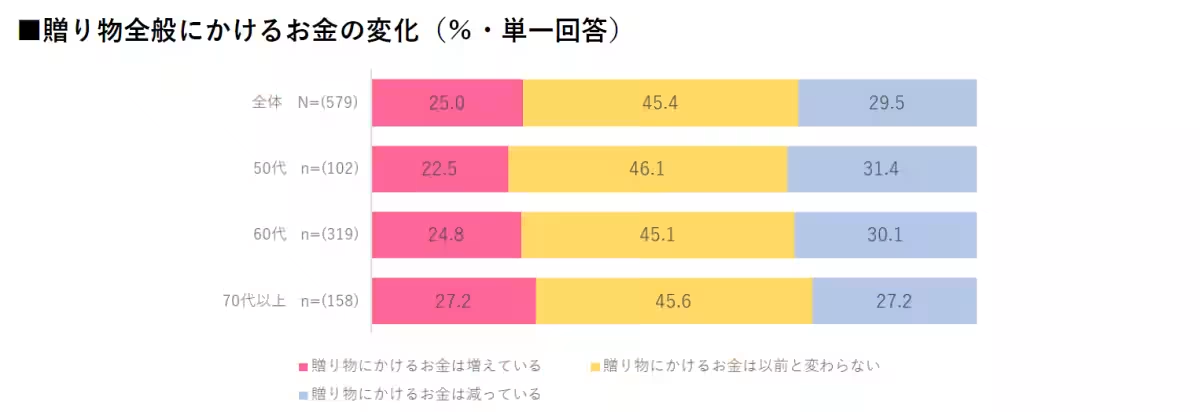
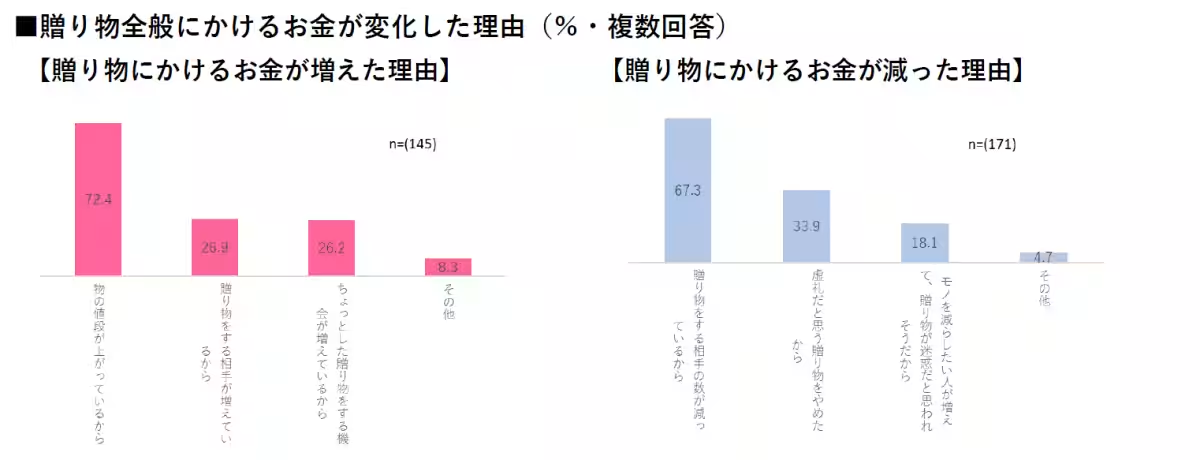
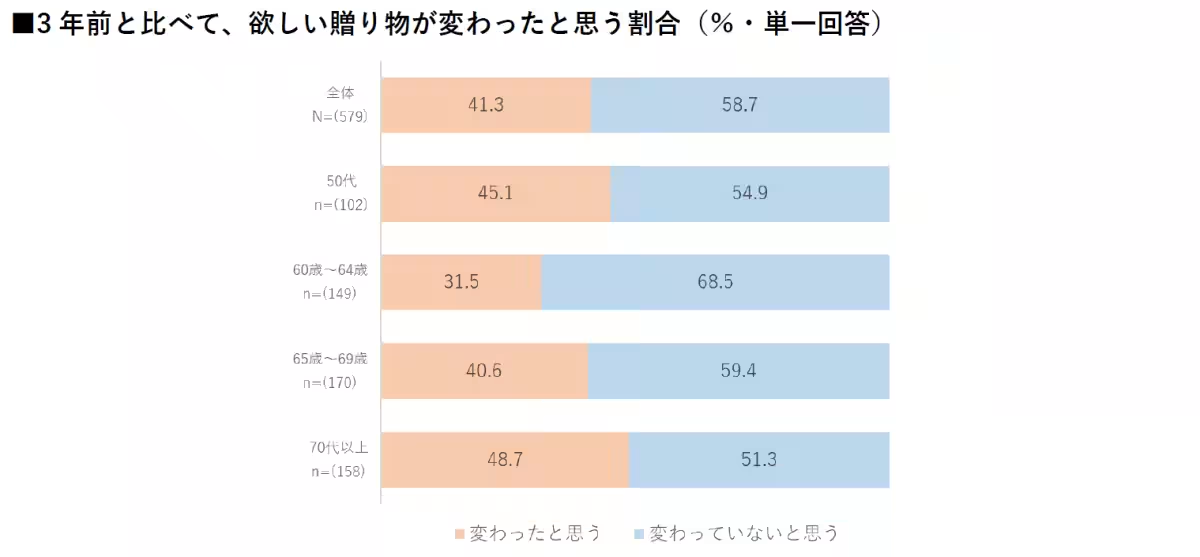
When examining the financial aspect of gift-giving, 45.4% of respondents claimed their expenditures on gifts had remained stable over the past three years. However, nearly 40% noted changes in the type of gifts they prefer. Many indicated an inclination towards receiving practical gifts such as food items, gift cards, or experience-based gifts over traditional material presents. With rising prices and economic uncertainties, seniors are focusing on quality over quantity, choosing to purchase thoughtful gifts for fewer people.
The Rise of Digital Gifting
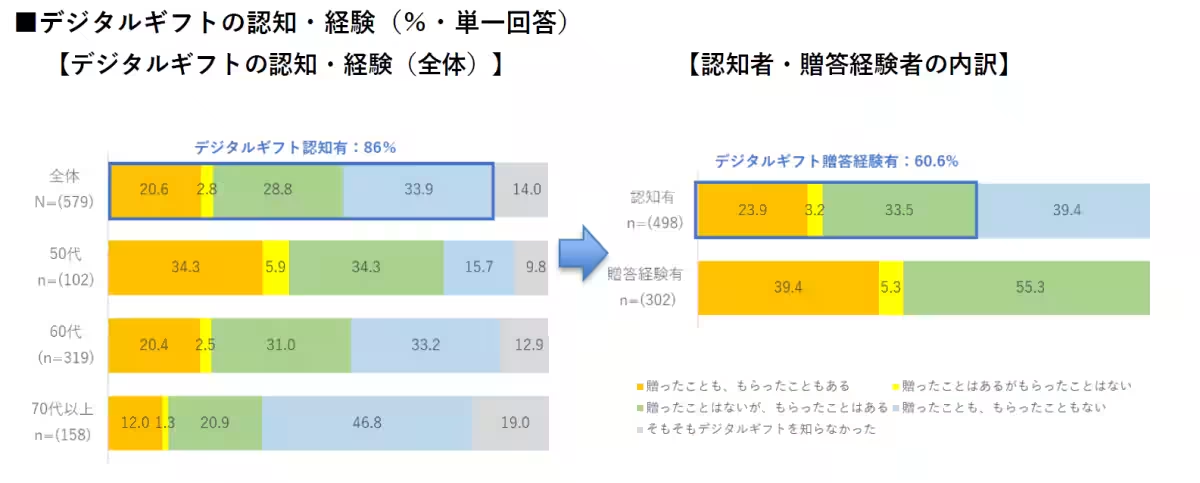
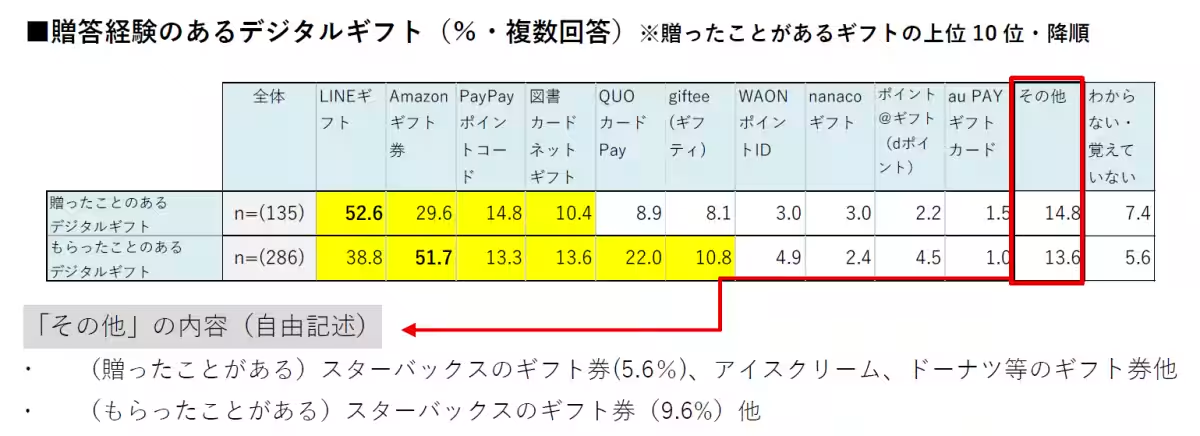
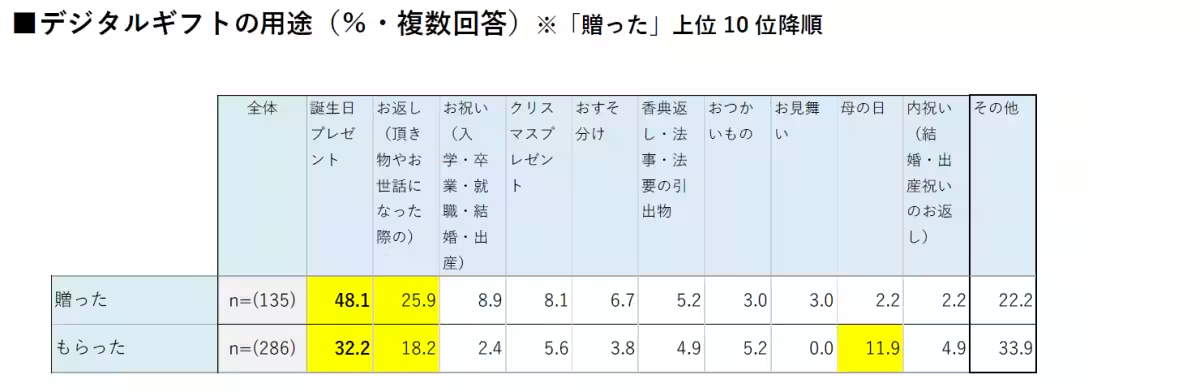
Another significant finding from the study was the rise of digital gifts. Approximately 90% of respondents were aware of digital gift options, with 60.6% of these individuals having given or received digital gifts. The most popular choices included LINE gifts and Amazon gift cards, showcasing a clear trend towards convenience and flexibility in gift-giving. Digital gifts are being used not only for birthdays and thank-yous but are expanding into everyday casual contexts, reflecting a modern approach to maintaining relationships without the burden of traditional gifting pressures.
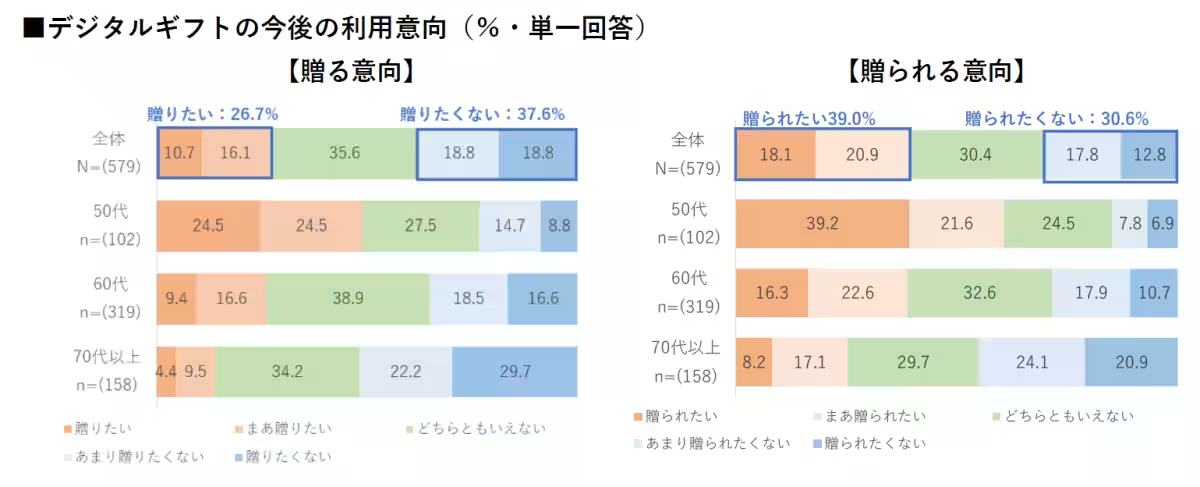
Despite its growing acceptance, opinions on digital gifts remain polarized. While many appreciate the convenience, some voiced concerns about the personal touch associated with traditional gifts. The future of digital gifting will rely heavily on balancing ease of use with emotional significance.
Expert Insights
Yukie Umeda, the director of Halmech's Aging Lifestyle Research Institute, has emphasized that the changing dynamics of gift-giving among seniors mirror broader cultural shifts. As the traditional obligations of gifting fade, there is a move towards lightening relationships with more thoughtful, casual gestures facilitated by digital options.
Umeda notes, “Digital gifts can represent a new kind of heartwarming connection, reflecting the desire to maintain relationships without imposing on one another with traditional gift-giving expectations.” The need to adapt gifting practices to fit current lifestyles and health considerations has led to a reevaluation of what constitutes a meaningful gift.
Conclusion
As gifting practices continue to evolve among seniors, it is clear that traditional obligations are giving way to greater flexibility and personalization. The integration of digital gifts offers new opportunities for connection while removing the pressures associated with more formal gifting. The essence of gift-giving remains—maintaining relationships with kindness and consideration—but the form it takes is becoming increasingly relevant to modern lifestyles.
As Halmech continues to support and empower women over 50 with valuable information and products, it is evident that the gifting landscape will keep transforming, showing that thoughtful gestures can thrive in any cultural context.

Topics People & Culture)




【About Using Articles】
You can freely use the title and article content by linking to the page where the article is posted.
※ Images cannot be used.
【About Links】
Links are free to use.