



Young Employees Struggle with Reporting Challenges Compared to Veterans
Understanding the Reporting Challenges Among Young Employees
In a modern work environment, where digital communication tools like chat platforms dominate, young employees still face difficulties in reporting and communication with their superiors. A study conducted by Idex Business Services, which operates the office renovation service WAKURINO, aimed to explore the differences in perceptions regarding reporting between younger employees in their first three years of service and experienced professionals with over ten years in the workforce.
Survey Overview
The survey was conducted from November 18 to November 20, 2025, utilizing the internet research platform PRIZMA. A total of 1,016 employees participated, with 512 being young employees and 504 experienced professionals. The focus was on understanding the generational gaps in reporting and communication perceptions.
Key Findings from Young Employees
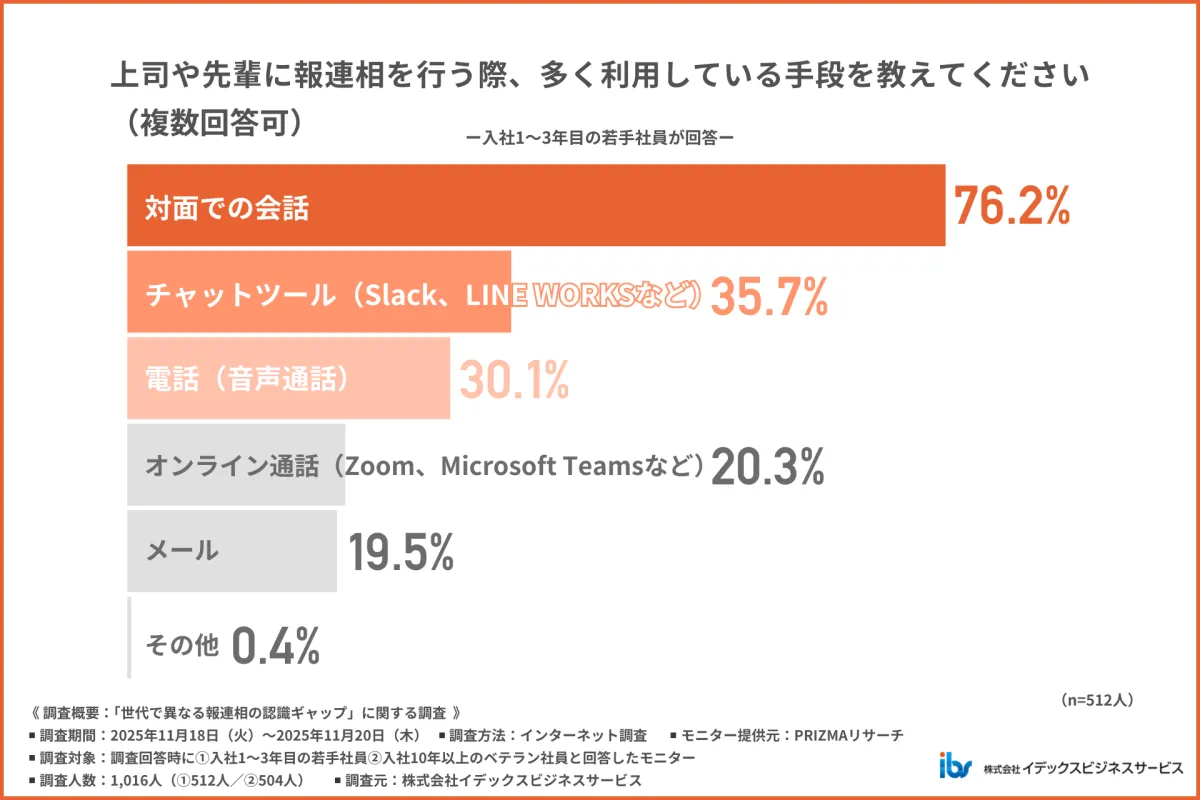
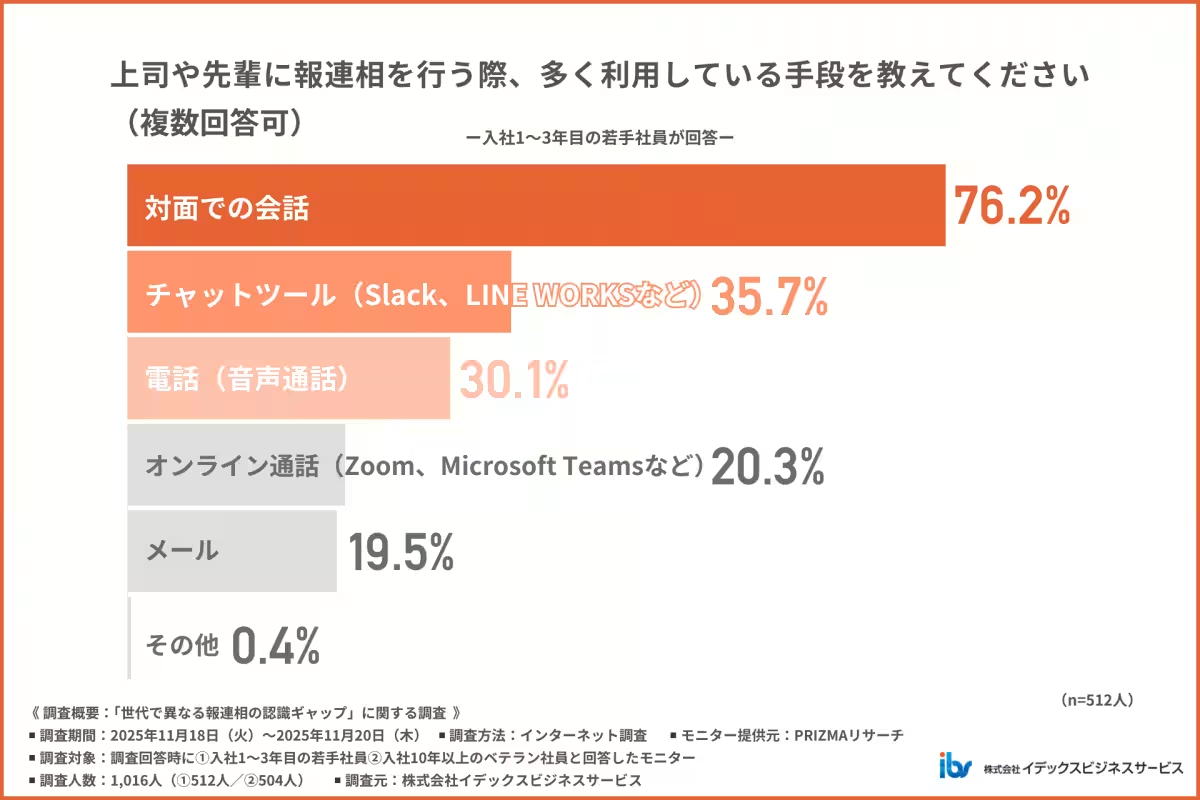
When asked about the methods commonly used for reporting to their superiors, a significant 76.2% of young employees indicated that face-to-face conversations were their primary choice. This was followed by chat tools (35.7%) and phone calls (30.1%). The preference for in-person communication highlights their emphasis on building trust and conveying nuances accurately in their interactions.
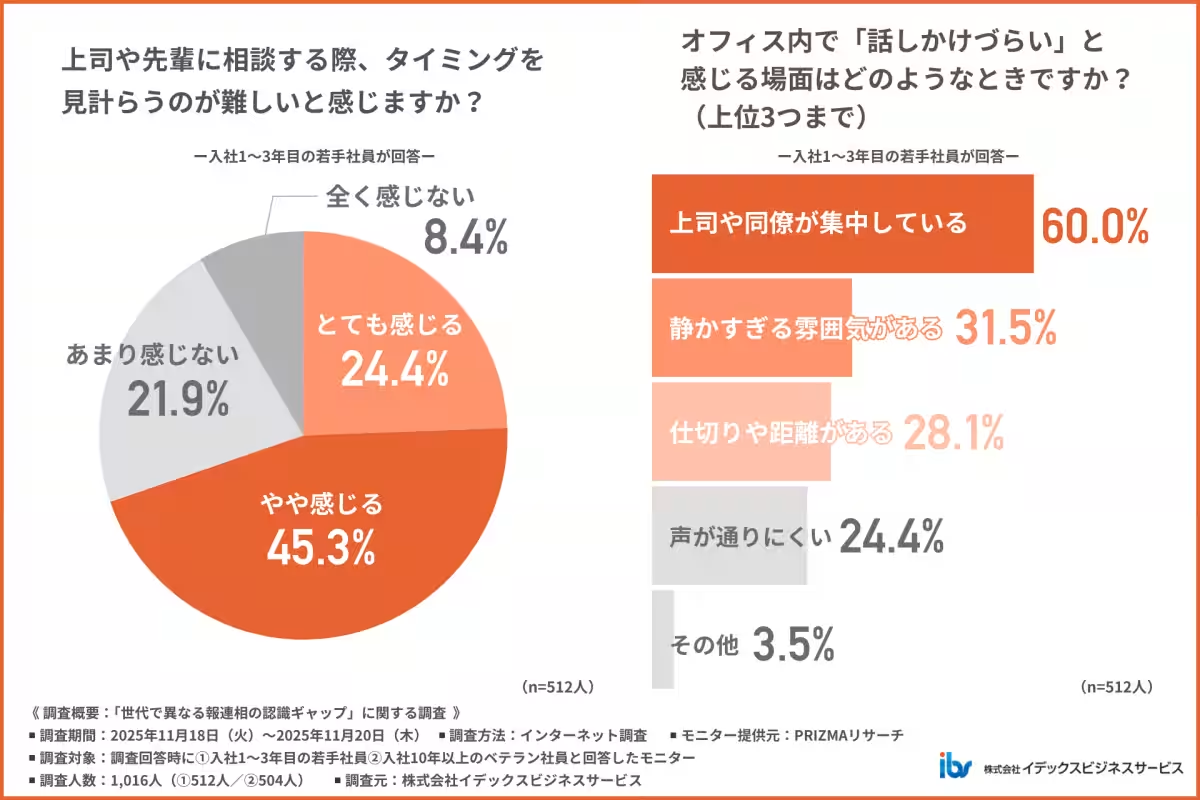
However, many young employees reported feeling uncertain about the timing for approaching their managers for advice, with almost 70% indicating they often find it difficult to gauge when to initiate these conversations. Such hesitancy can stem from the pressures of busy work schedules and the challenge of interpreting their superiors’ emotional cues.
Regarding the perception of their office environment, 60% reported feeling hesitant to approach superiors when they are concentrating, followed by 31.5% who cited an overly quiet atmosphere and 28.1% who mentioned physical barriers such as partitions. The data suggests that young employees are highly aware of their workplace dynamics and are sensitive to the context around them.
Communication via Digital Tools
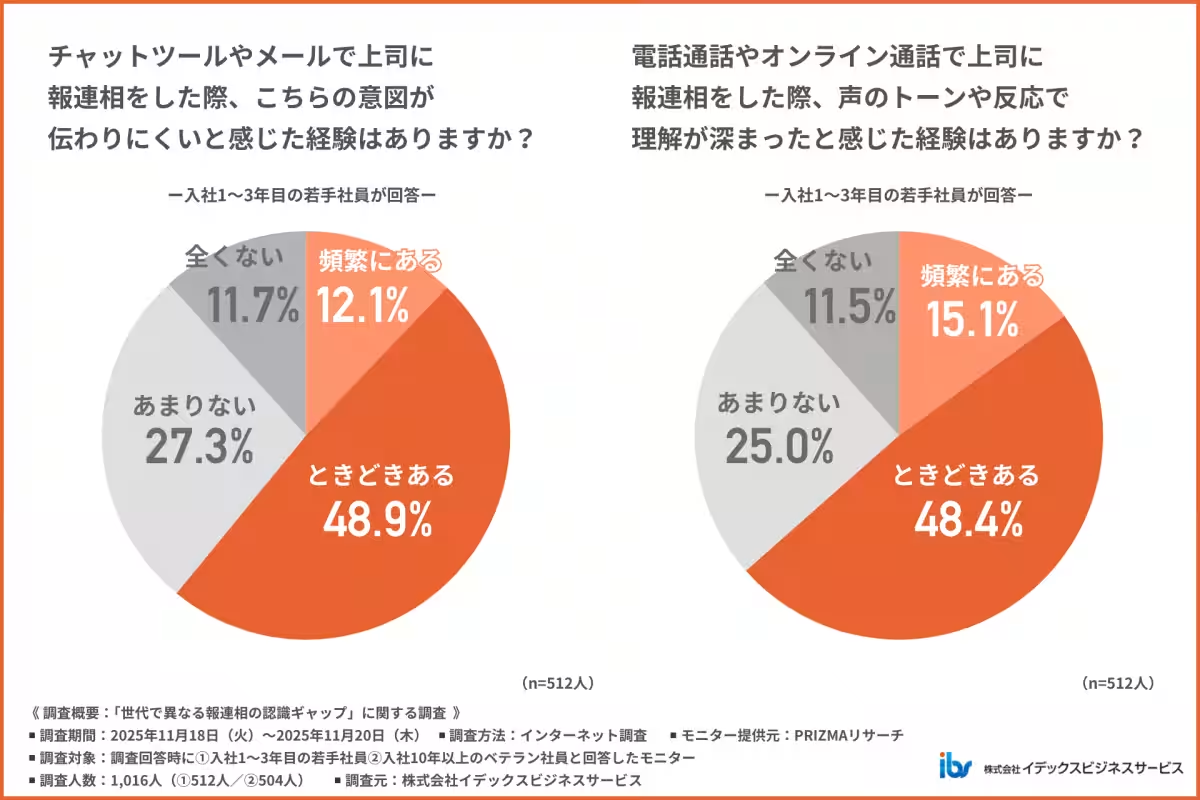
The adaptation to digital communication tools presents its own set of challenges. Over 60% of young employees noted they often struggle to convey their intentions clearly through chat or email, primarily due to the limitations of text-based communication, which lacks emotional nuance. While some employees felt they effectively communicate in writing, the struggle is more pronounced among those with less experience, who might find it challenging to balance tone and clarity.
Conversely, when communicating via phone or video calls, approximately 63.5% of young respondents felt that vocal tones and immediate feedback helped enhance their understanding, indicating the vital role of nonverbal cues in successful communication. This emphasizes the need for blended communication strategies that incorporate verbal methods when discussing complex topics.
Perspectives from Veteran Employees
To contrast these findings, veteran employees were asked about their communication preferences and perceptions. While the complete results were not disclosed, preliminary insights suggest that seasoned employees value direct and clear communication, reflecting their extensive experience and established workplace relationships.
Conclusion
The survey results underscore an existing divide in reporting practices and communication styles between young and veteran employees. Young employees feel more comfortable with direct communication yet are challenged by the pressure of timing and the nuances of various communication methods. On the other hand, while veteran workers may favor straightforward communication, both groups agree on the importance of effective verbal interactions over digital messaging for complicated discussions.
In light of these findings, it’s essential for organizations to foster a work environment that encourages open dialogues, minimizes intimidation in communication, and leverages various methods to ensure clarity and comfort across generational lines. Implementing supportive structures and cultivating a culture that bridges these gaps will be vital in enhancing overall workplace communication efficacy.
WAKURINO by Idex Business Services is committed to evolving work environments to support such communication improvements, positioning itself as a leader in office renovations tailored for contemporary work styles.

Topics People & Culture)

【About Using Articles】
You can freely use the title and article content by linking to the page where the article is posted.
※ Images cannot be used.
【About Links】
Links are free to use.