



Collaborative Efforts for Sustainable Bridge Management Using Generative AI in Nagasaki Prefecture
Collaborative Efforts for Sustainable Bridge Management
In a significant development for infrastructure maintenance, NTT Comware Corporation, Nagasaki University, Mizuta Design Office, and the Nagasaki Prefectural Construction Technology Research Center have embarked on a project aiming for the advanced management of bridge diagnostics through the application of generative AI. Between April and May of 2025, a pilot study will take place focusing on 13 bridges within Nagasaki Prefecture, utilizing inspection data to create diagnostic proposals concerning the bridges' health status and observations. This initiative aims to confirm the effectiveness of such technology in the preservation of sustainable infrastructure.
The Urgent Need for Bridge Maintenance
With a growing concern over the rapid deterioration of national bridges, statistics reveal that out of approximately 730,000 bridges nationwide, about 59% will be over 50 years old by the fiscal year 2032. To ensure safety, regular inspections every five years are mandatory, making it necessary to diagnose around 150,000 bridges annually. Such a demand requires a substantial number of skilled technicians. Additionally, as the guidelines for regular inspections of road bridges are set to be revised in 2024, there will be greater expectations for the uniform quality of diagnostic assessments and the documentation of underlying reasons and potential risks associated with damages. This evolution poses challenges, as the time required for diagnostics is expected to increase, underscoring the need for efficient processes and the transfer of critical skills among emerging technicians.
A Collaborative Solution for Bridge Diagnostics
In light of these challenges, NTT Comware, along with Nagasaki University, Mizuta Design Office, and the Nagasaki Prefectural Construction Technology Research Center, is leveraging the infrastructure maintenance support solution "SmartMainTech®" to address the pressing issues in sustainable bridge management. Associate Professor Kohei Yamaguchi from Nagasaki University's Graduate School of Applied Science supervises this initiative, bringing expertise in bridge maintenance and diagnostic know-how to the project.
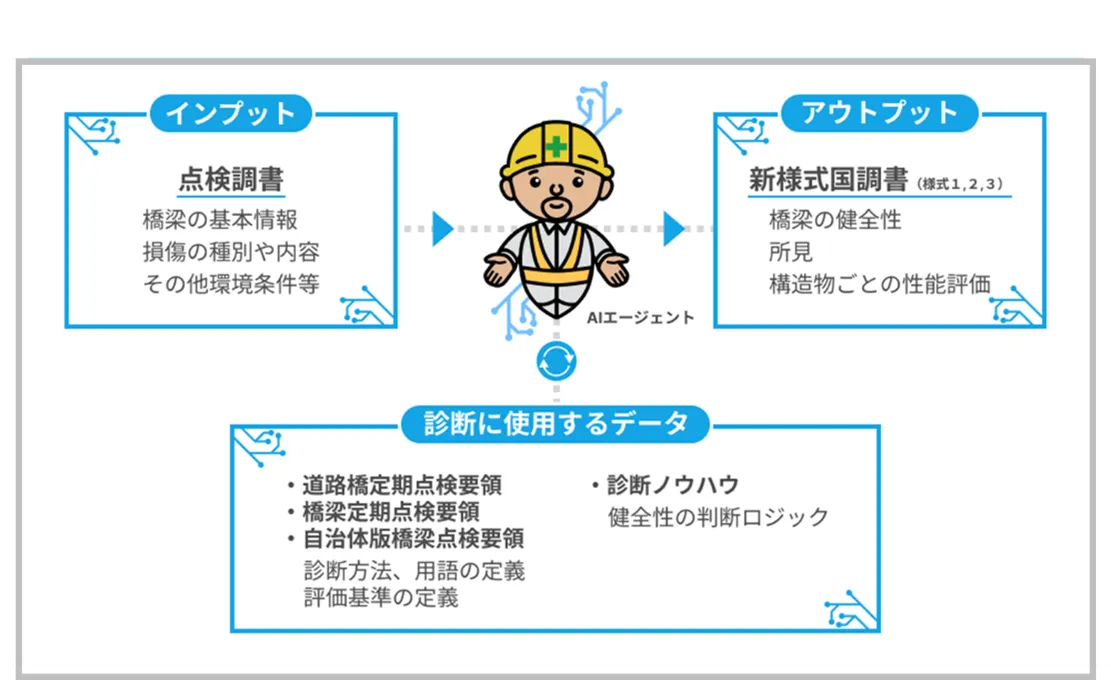
The pilot project involves utilizing a newly developed AI agent from NTT Docomo. By applying generative AI, diagnostic proposals will be constructed based on extensive input data concerning damage types, locations, and severities listed in bridge inspection reports. The AI agent will reference maintenance knowledge and diagnostic protocols to formulate these proposals. Preliminary results indicate a dramatic 57% reduction in the time required for inspections per bridge, showcasing the potential benefits for knowledge transfer and technician training, as well as suggesting that uniformity in diagnostic outcomes could significantly impact repair cost optimization.
Future Directions for AI in Bridge Maintenance
Looking ahead, the project plans to expand beyond the current diagnostics to include support for repair planning and predictive maintenance through advanced AI technologies. The objective is to analyze and utilize accumulated data across the entire maintenance cycle of inspection, diagnosis, remedy, and record-keeping to further optimize lifecycle costs. NTT Comware, Mizuta Design Office, and Nagasaki University are committed to implementing these advancements across municipalities nationwide, aiming for widespread impact on sustainable bridge maintenance.
Summary of the Pilot Study
Timeline: April - May 2025
Target: 13 bridges in Nagasaki Prefecture
Goals: Measure and evaluate the effectiveness of generative AI applications in reducing technician workload, optimizing repair costs, and ensuring skill transfer.
Evaluation Areas:
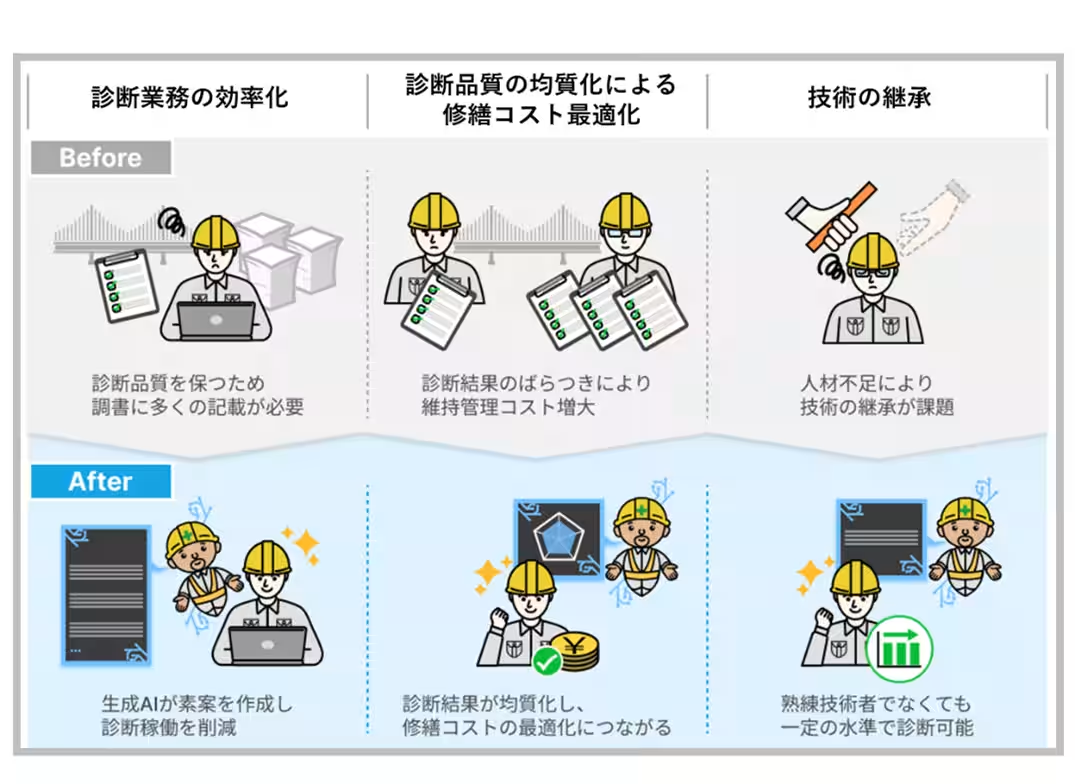
- - Enhance efficiency in bridge diagnoses, leading to reduced operation time.
- - Optimize repair costs through proper diagnostics and address discrepancies in judgment.
- - Facilitate the transfer of diagnostic techniques and knowledge to emerging professionals.
Roles of Participating Entities:
- - NTT Comware: Plans and executes the pilot study leveraging its expertise in infrastructure maintenance.
- - Nagasaki University: Oversees the experimental process based on bridge maintenance insights and diagnostics know-how.
- - Mizuta Design Office: Provides knowledge and expertise in bridge maintenance and diagnostic protocols.
- - Nagasaki Prefectural Construction Technology Research Center: Assesses the outcomes of the pilot study.
This initiative is poised to revolutionize the framework for managing bridge safety and sustainability through the innovative use of technology.
Topics Other)
【About Using Articles】
You can freely use the title and article content by linking to the page where the article is posted.
※ Images cannot be used.
【About Links】
Links are free to use.