



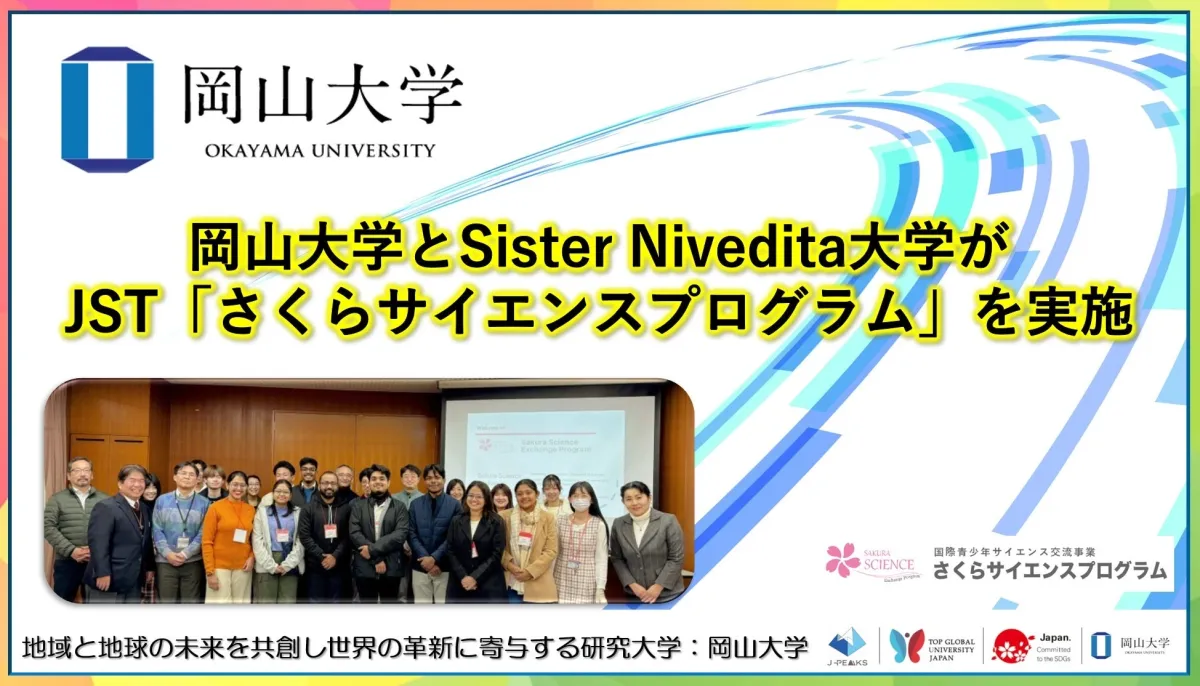
Okayama University Collaborates with Sister Nivedita University for Scientific Exchange Program
Enhancing Scientific Collaboration: Okayama University and Sister Nivedita University
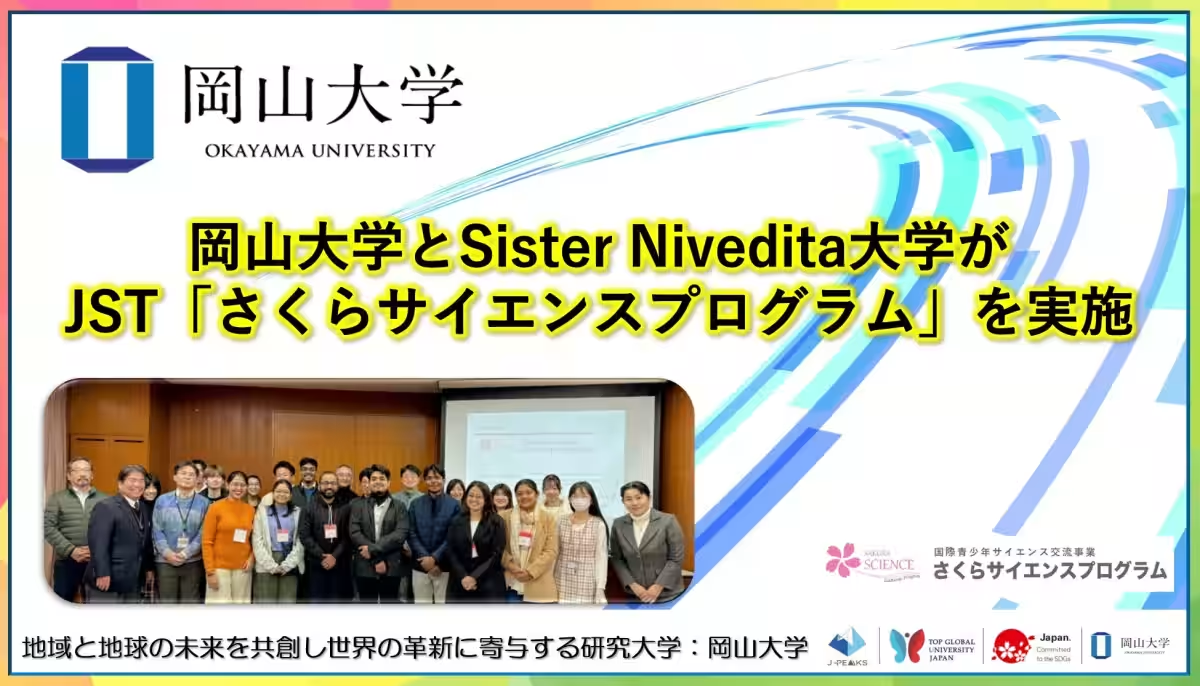
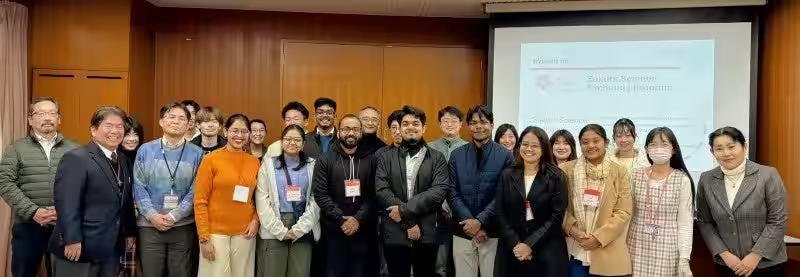
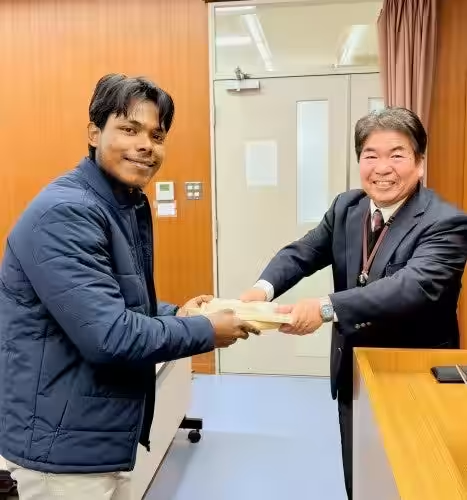
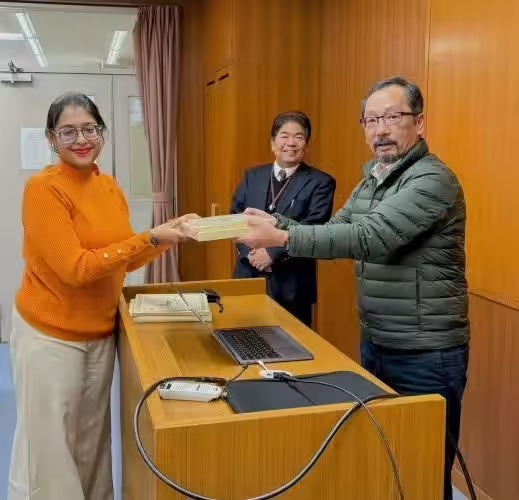
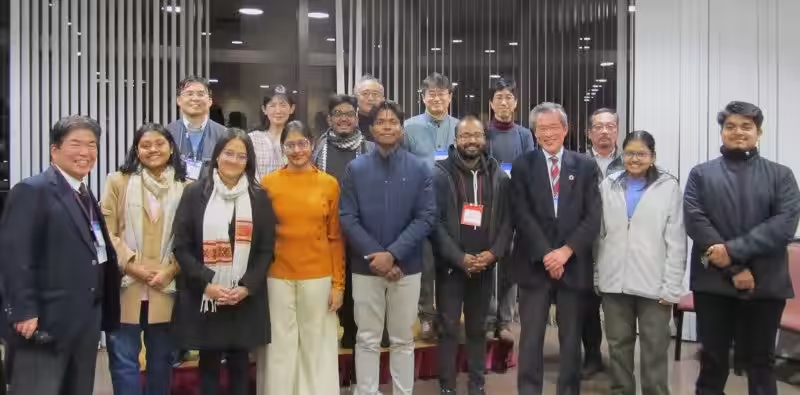
In a significant step towards international educational exchange, Okayama University (OU) has partnered with Sister Nivedita University (SNU), located in India, under the JST Sakura Science Program for the academic year 2025. This collaboration aims to invite seven graduate students and one faculty member from SNU to engage in a series of research activities at OU's Department of Health Systems Integration Science from January 13 to 29, 2026. This initiative will not only promote co-research activities but also pave the way for the next generation of leaders in bio-pharmaceutical sciences.
The Sakura Science Program
The Sakura Science Program, administered by the Japan Science and Technology Agency (JST), is designed to foster interactions between Japanese institutions and overseas universities, enhancing mutual understanding and collaborative research efforts. It provides students and researchers the opportunity to engage in meaningful academic and cultural exchanges, which can lead to innovative research outcomes and advancements in science and technology.
Objectives of the Program
During their stay, the SNU students will be integrated into various research laboratories within the Bio-Pharmaceutical Division of Okayama University. Through joint research initiatives, they will have the chance to develop essential skills and knowledge in life sciences, experiencing firsthand the cutting-edge research practices in Japan. This program aims to empower them to select paths that will enable them to contribute significantly to advancements in their respective fields.
Strategic International Activities
Okayama University has established a reputation for its strategic international education and research activities, particularly in collaboration with institutions in India. One of the significant initiatives is the establishment of the Okayama University Indo-Infection Disease Joint Research Center in Kolkata, which focuses on vital research areas like cholera and other intestinal infections. This center exemplifies OU's commitment to addressing global health challenges through collaborative research efforts.
Additionally, the inter-departmental agreement between the Department of Health Systems Integration Science at OU and SNU has been elevated to a university-level agreement, further solidifying the partnership. This elevation signifies a robust commitment to fostering global educational and research initiatives that enrich both institutions.
Expectations and Future Prospects
As Okayama University continues its mission to promote distinctive research and educational activities, there is immense expectation for its regionally pivotal role in advancing science and innovation. With a focus on sustainable development goals (SDGs), OU not only contributes to local educational needs but also aligns with global objectives aimed at improving societal well-being through research and cooperation.
This partnership with Sister Nivedita University marks just the beginning of a series of collaborative efforts intended to push the boundaries of scientific understanding and research capabilities, fostering a brighter future for both Japan and India in the realm of life sciences.
Conclusion
The collaboration between Okayama University and Sister Nivedita University signifies a promising advancement in international collaboration in education and research. By providing invaluable opportunities for experiences and exchanges between these two institutions, they pave the way for future scientists who are equipped to address global challenges in health and science. The academic community eagerly awaits the outcomes of this initiative and its potential to inspire innovation in the life sciences field.
Topics Other)
【About Using Articles】
You can freely use the title and article content by linking to the page where the article is posted.
※ Images cannot be used.
【About Links】
Links are free to use.