



Okayama University Joins Helium Recovery Project from Used MRIs with Iwate University
Okayama University Joins Helium Recovery Initiative
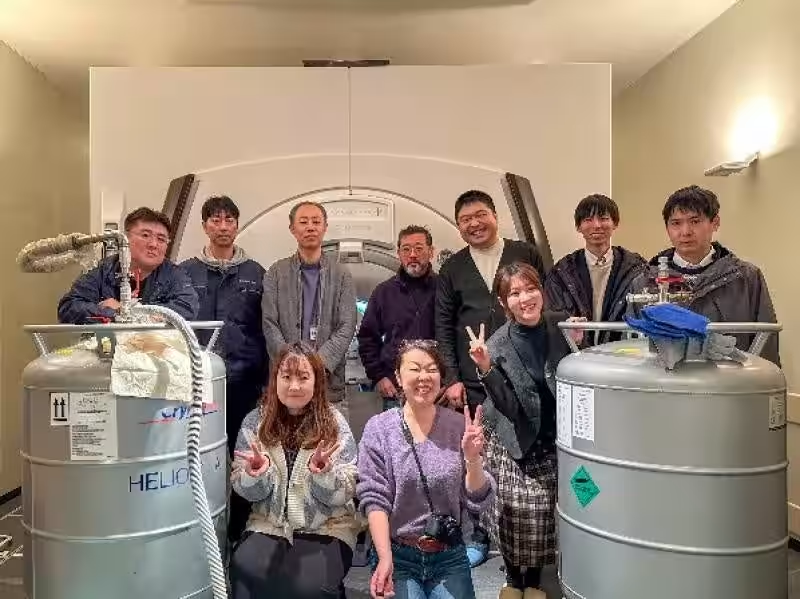
On December 22nd and 23rd, 2025, a task force from Okayama University focused on enhancing the shared use of research instruments visited Iwate Medical University’s Yahaba Campus. This visit was in support of a collaborative project with Iwate University and Iwate Medical University aimed at recovering helium from decommissioned MRI machines. Participants from Okayama University included Vice Task Force Leader Koji Hatanaka, Research Cooperation Specialist Hideaki Yamazaki, Administrative Officer Ryota Tomosada, and Coordinator Karahiro Hong from the Research and Innovation Collaboration Organization. They were joined by technicians from Iwate University and the chief radiological technician from the Advanced MRI Research Center at Iwate Medical University.
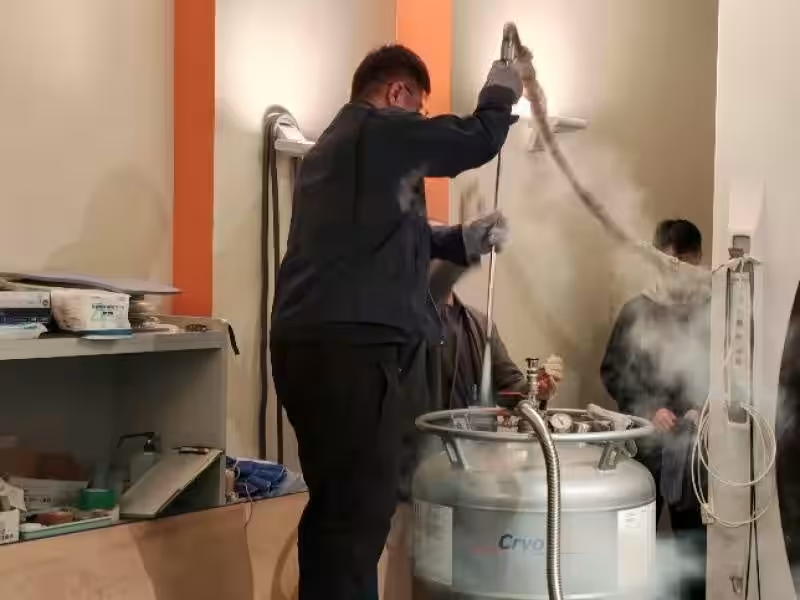
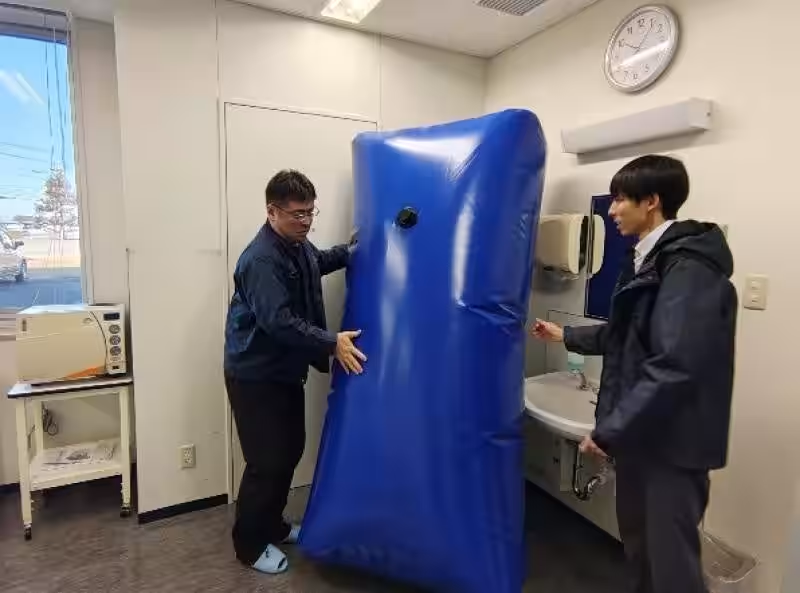
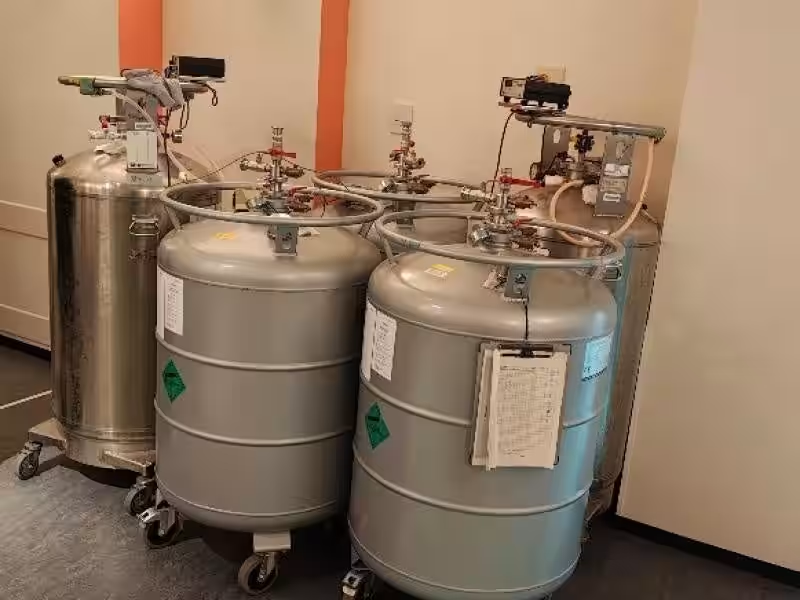
The initiative aims to not only recover helium gas but also to contribute significantly to national economic security. Helium is a vital resource that is entirely reliant on foreign imports in Japan. The recovery efforts on this occasion proved successful, with over 500 liters of liquid helium and approximately 3 cubic meters of gaseous helium recovered.
The advanced technical challenges involved in transferring helium at the incredibly low temperature of about -269°C posed significant hurdles. Nevertheless, the plan and execution of this complex task were successfully carried out by the team from Okayama University, highlighting the institution's commitment to sustainability and resource recovery.
As part of this collaboration, discussions were also held regarding the deployment of the smart speaker control device known as the ‘WAN-WAN System’. This system is expected to enhance the operational efficiency of helium recovery and distribution across participating academic institutions.
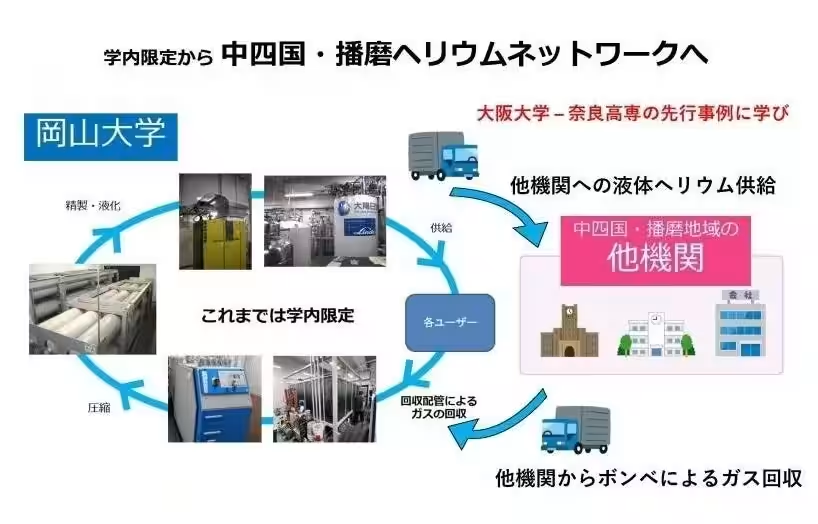
The success of this helium recovery project represents a significant leap forward for Okayama University's ongoing ‘HeliGet’ initiative, which aims to establish a systematic approach for retrieving liquid helium from disused equipment. This development is a key milestone in promoting research and innovation across the Chugoku and Shikoku regions in Japan.
Moreover, the project aims to extend liquid helium supplies not only to Okayama University, but also to nearby universities, research institutions, and technical colleges. By facilitating the production and supply of helium, Okayama University positions itself as a central player in expanding research and development in science and technology fields that rely on this critical resource.
The project has drawn considerable attention, not just for its immediate benefits, but as a strategic move to bolster Japan's research capabilities and innovation framework. The involvement of various universities in this effort showcases a unified approach to addressing challenges in resource management within the scientific community.
Future plans for the ‘Chugoku-Shikoku Helium Recovery Network’ and the ‘HeliGet’ initiative will include extensive collaboration with local universities and research entities. Okayama University believes this initiative not only enhances its research environment but also significantly contributes to Japan’s economic security by reducing reliance on foreign helium imports. The community is encouraged to look forward to the continued advancements and partnerships that this initiative will foster in the pursuit of innovative research solutions.
Overall, the partnership among Okayama University, Iwate University, and Iwate Medical University illustrates a commitment to collaborative innovation, sustainable resource management, and an ambitious vision for a future driven by scientific excellence.


Topics Other)
【About Using Articles】
You can freely use the title and article content by linking to the page where the article is posted.
※ Images cannot be used.
【About Links】
Links are free to use.