



A Breakthrough in Immunology: Reviving Sleepy Cellular Powers with Iron-Mobilizing Chelators
A Breakthrough in Immunology: Reviving Sleepy Cellular Powers with Iron-Mobilizing Chelators
In an innovative study conducted collaboratively by Okayama University and Toyama University, researchers have uncovered a pioneering method to artificially induce a state known as functional pseudohypoxia. This approach leverages iron-mobilizing chelators to effectively manipulate cellular oxygen sensing. The findings were announced in a press release dated March 26, 2026, by Okayama University, marking a significant step in immunology and cancer treatment.
Understanding Functional Pseudohypoxia
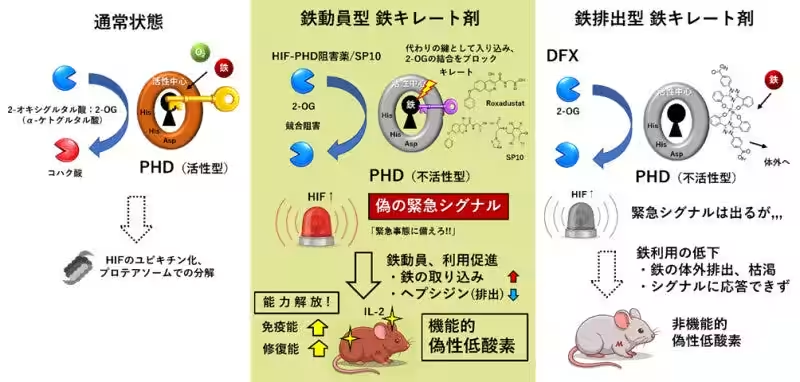
Pseudohypoxia is characterized by a cellular state where cells mistakenly perceive themselves to be in low-oxygen conditions, despite the presence of adequate oxygen. Researchers have unraveled the molecular mechanisms that allow specific iron-mobilizing chelators, like Roxadustat, to block oxygen sensor enzymes within cells. This deception triggers a critical shutdown in cellular activity, which subsequently activates the body's latent but powerful immune and repair mechanisms.
With this approach, cells can release their stored capabilities—primarily enhancing antitumor immune responses and promoting tissue repair mechanisms, such as neuroregeneration. The implications of this breakthrough are vast, particularly in treating persistent ailments like colorectal and lung cancers.
Enhancements in Cancer Treatment
The research team, including experts from multiple disciplines and institutions, administered iron-mobilizing chelators orally to mouse models of colorectal and lung cancer. The results were striking: the introduction of these chelators not only induced functional pseudohypoxia but also synergistically enhanced the secretion of critical cytokines, specifically IL-2, which is vital for activating immune cells.
Moreover, the study showcased that this method amplifies the effects of existing immune checkpoint inhibitors, such as PD-1 antibodies. This combination therapy has revealed a promising avenue for increasing the efficacy of cancer treatments that have previously shown limited success.
Protecting Cognitive Functions in Aging Models
In addition to its applications in oncology, the research explored the effects of this new methodology in aged mouse models. The response was equally impressive. The technique appears to activate neuroregeneration signals without inducing harmful inflammation in the brain, potentially safeguarding cognitive functions and preventing a decline in working memory associated with aging.
This work opens a compelling narrative around the use of induced states of pseudohypoxia, presenting a dual-faceted approach to tackle not just cancer but also neurodegenerative diseases, showcasing the potential of harnessing the body's intrinsic capabilities to fight back against illnesses.
A Glimpse of the Future
The concept of functional pseudohypoxia, as proposed in this study, presents a revolutionary perspective on treatment. Rather than merely attacking disease from the outside, this method encourages the body to tap into its dormant strengths. Such innovative therapies may redefine how modern medicine addresses cancer and complex diseases like dementia.
The results of this groundbreaking research have been shared across various prestigious international journals, affirming its significance in advancing medical science.
Conclusion
According to Associate Professor Toshiaki Ohara from Okayama University, the cellular response to perceived danger is akin to a burst of potential reminiscent of transformative moments in popular culture, illustrating the inner power that can be harnessed safely. This research not only builds a foundation for future studies but also sparks hope for patients battling diseases that have been challenging to treat effectively.
With further exploration and validation, the implications of this research could extend globally, influencing therapeutic strategies and providing new hope in the fight against some of the most daunting medical challenges of our time.
For additional details, refer to the official press release from Okayama University and the published studies in notable academic journals.


Topics Health)
【About Using Articles】
You can freely use the title and article content by linking to the page where the article is posted.
※ Images cannot be used.
【About Links】
Links are free to use.