




The Disparity Between Blue-Collar and White-Collar Salaries: Insights from Japan's Labor Market
Disparity in Earnings: Blue-Collar vs White-Collar in Japan
In recent years, a notable trend has emerged in the United States, where blue-collar professionals—particularly in construction and logistics—are garnering attention as "Blue-Collar Billionaires." This phenomenon reflects the evolution of labor dynamics in response to pressing issues such as workforce shortages, wage inflation, and the impact of AI on traditional white-collar roles. But how does this translate to Japan's labor market? Can we anticipate a similar emergence of blue-collar wealth here?
Understanding the Blue-Collar Billionaire
A blue-collar billionaire is typically defined by their significant earning potential within traditionally lower-wage professions. In America, trades such as electrical work and plumbing have seen wages surge, driven by a confluence of factors:
1. The rise of AI and automation has displaced numerous white-collar jobs, prompting a shift of labor towards blue-collar fields.
2. Legal measures ensure fair compensation for skilled labor in public works and construction, safeguarding the economic interests of these workers.
3. Increasing integration of technology and efficiency in operations has enabled companies to offer better salaries, thereby enhancing employee earnings potential.
Structural Differences in Japan
Contrarily, Japan's labor landscape presents distinct structural challenges that inhibit a parallel rise of blue-collar billionaires. Here are some core differences:
- - Population Dynamics: The aging population and declining birth rates in Japan have led to a shrinking labor force, exacerbated by a lack of interest in blue-collar jobs, which are often perceived as undesirable due to the "3K" (kitsu, kitanai, kiken—hard, dirty, and dangerous) image.
- - Complex Employment Structures: The persistent issue of subcontracting in Japan dilutes profits at multiple levels, directly impacting wage growth in blue-collar sectors.
- - Limited Workforce Mobility: Unlike the U.S., where a large-scale labor shift to blue-collar jobs has occurred, Japan has not experienced significant layoffs in white-collar sectors, resulting in less movement of skilled workers into blue-collar roles.
Possibility of Blue-Collar Billionaires in Japan
To gauge the potential for blue-collar wealth accumulation in Japan, we analyzed recent job market data from Frog, a company specializing in employment analytics. We compared earnings between blue-collar and white-collar jobs, highlighting their disparities:
Job Count Comparison
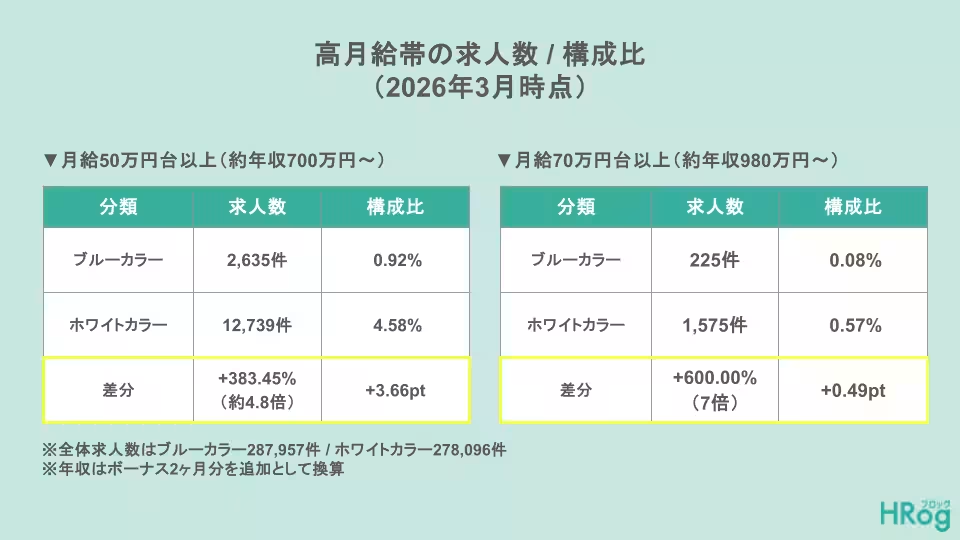
Data from March 2026 indicates that job listings offering salaries exceeding 700,000 yen are predominantly white-collar positions, outnumbering blue-collar jobs by a staggering seven times. Specifically, there are:
- - 2,635 blue-collar positions with salaries of 500,000 yen and above
- - 12,739 white-collar positions, resulting in a composition ratio of 4.58% for white-collar roles compared to a mere 0.92% for blue-collars.
In the 700,000 yen salary category, blue-collar listings shrink to just 225 compared to 1,575 white-collar positions. This data starkly illustrates how stark the salary gap remains in Japan's labor market.
Salary Trend Over Six Years
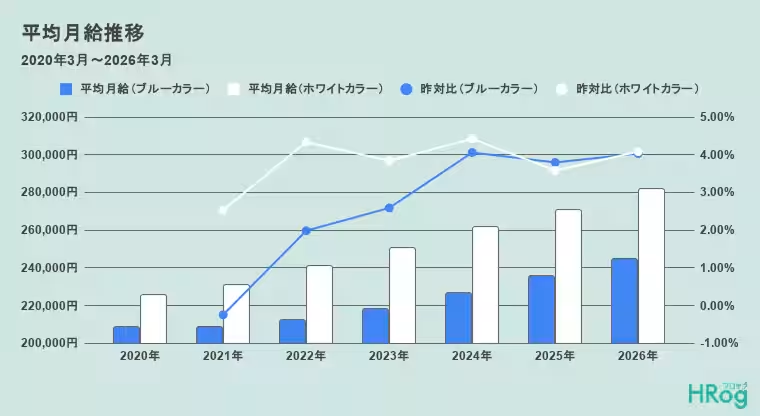
In examining average monthly wages from 2020 to 2026, we noticed significant growth trends:
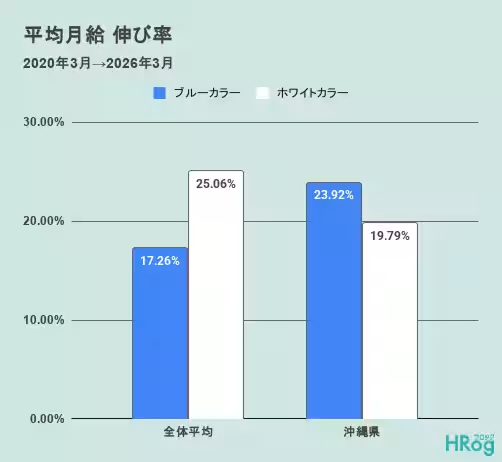
- - Blue-collar wages: Increased from 208,770 yen to 244,802 yen, marking a 17.26% growth rate.
- - White-collar wages: Rose from 225,434 yen to 281,938 yen, reflecting a 25.06% growth rate.
Comparative Analysis of Occupations
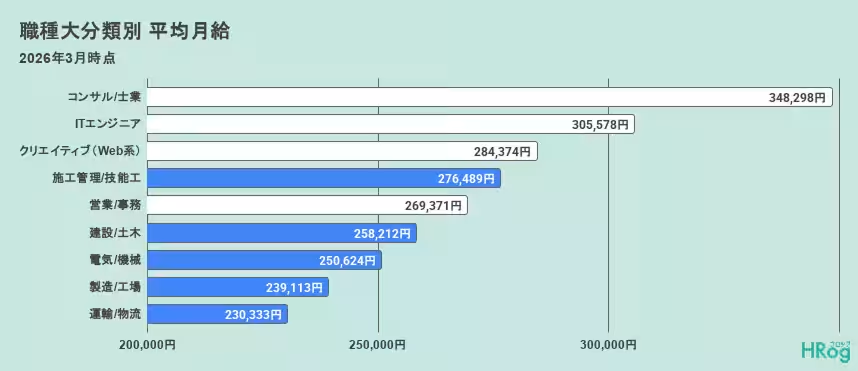
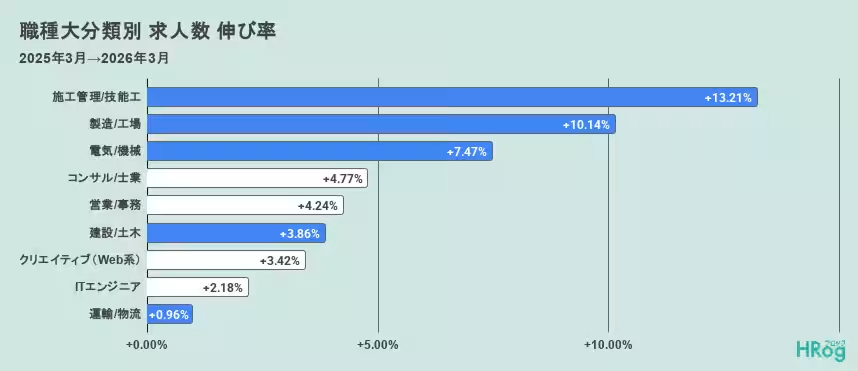
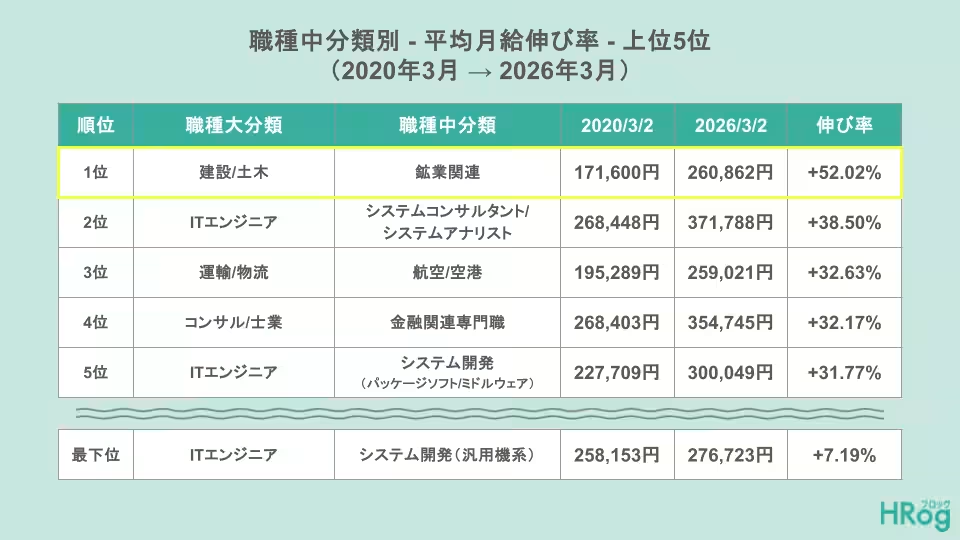
Diving deeper into specific occupations, we find that positions such as construction management and mining have shown substantial pay increases. Interestingly, some sectors are witnessing average salaries reach an astounding 276,489 yen, surpassing certain white-collar roles. However, these positions are exceptional rather than the norm.
Examination of Regional Differences
When comparing salary growth across various prefectures, it's notable that some regions, like Okinawa, report faster growth in blue-collar wages than their white-collar counterparts, primarily driven by robust local industries such as tourism and construction.
Conclusion
The landscape for blue-collar professionals in Japan does not currently mirror that of the U.S. where blue-collar billionaires are progressively emerging. While there are segments showing positive trends, like certain specialized occupations and specific regions, widespread wealth generation remains unlikely under existing structural constraints. For a significant shift toward blue-collar wealth accumulation to occur, fundamental changes in how labor is compensated and perceived will be necessary.
In summary, while wage growth is trending upwards in blue-collar sectors, and some unique circumstances hint at potential changes, the absence of a widespread blue-collar billionaire phenomenon remains a defining characteristic of Japan's labor market today.


Topics People & Culture)


【About Using Articles】
You can freely use the title and article content by linking to the page where the article is posted.
※ Images cannot be used.
【About Links】
Links are free to use.