



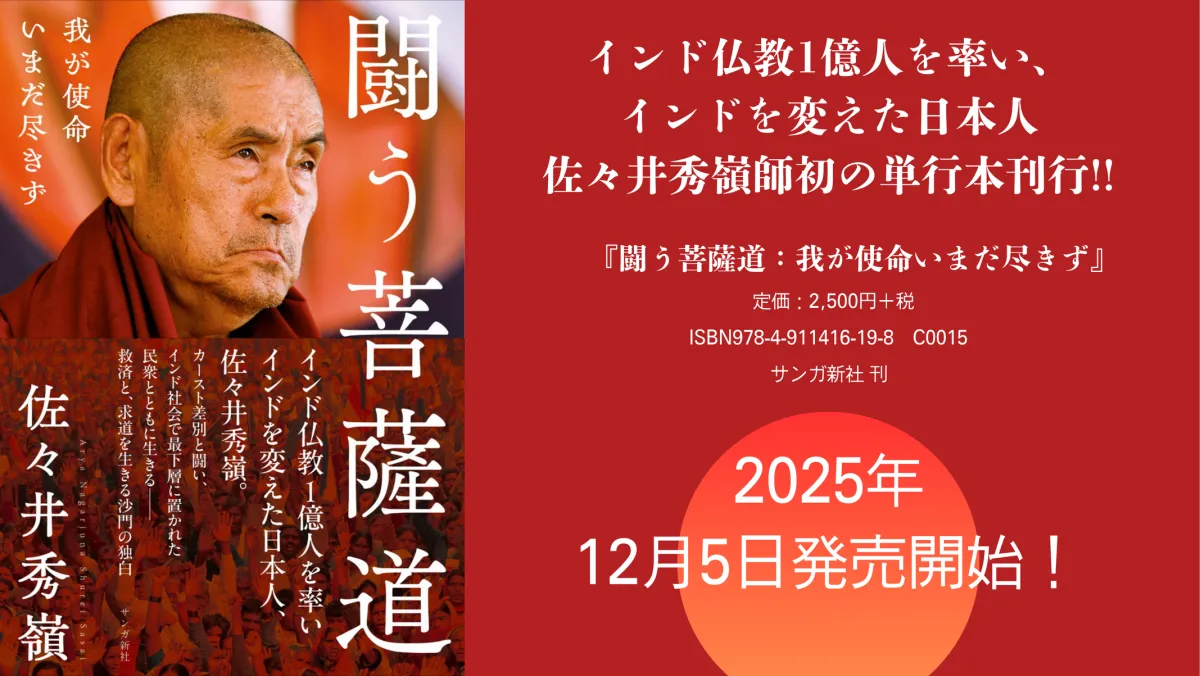
The Inspirational Journey of Shinrei Sasai: A Champion for Buddhism in India and Beyond
The Inspirational Journey of Shinrei Sasai
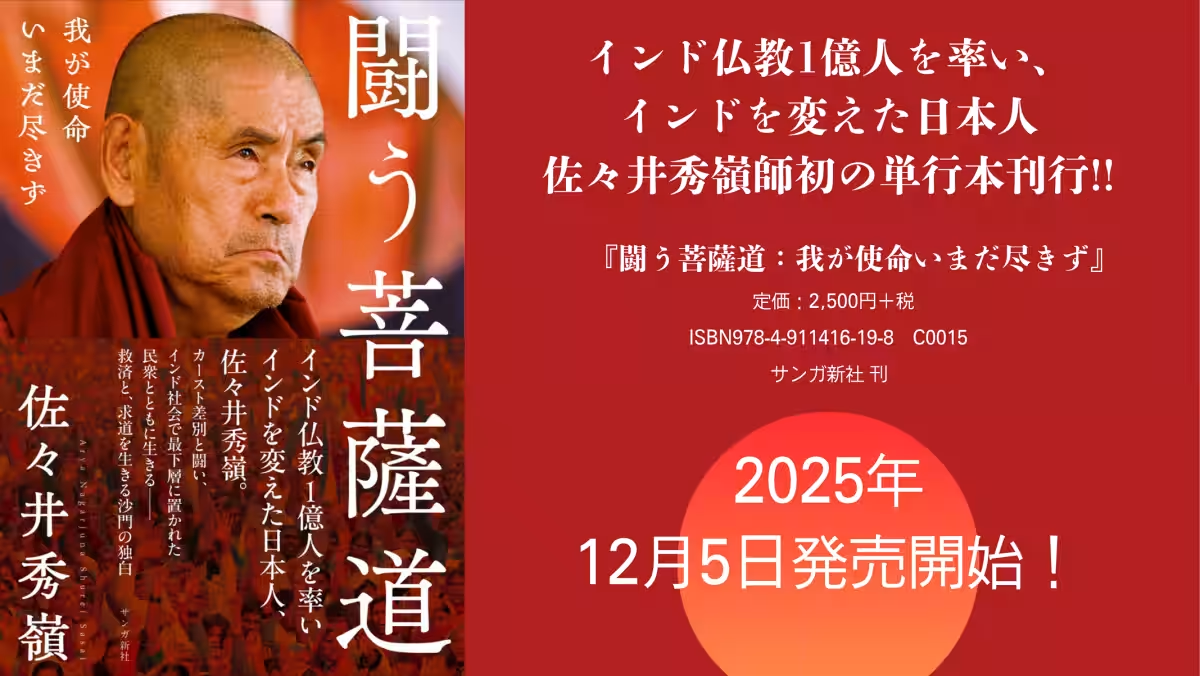
In a remarkable story that spans continents and cultures, Shinrei Sasai has become a symbol of hope for millions of Buddhists in India. Leading over 100 million Indian Buddhists, he has dedicated his life to challenging the deep-rooted caste discrimination that has plagued India for centuries. His debut book, Fighting Bodhisattva Way: My Mission Still Unfinished, published by Sangha Shinsha, provides an intimate look at his life, struggles, and aspirations.
The Book's Release
Shinrei Sasai's first-ever solo release on December 5, 2025, comes after years of foundational work in India, where he has advocated for the rights and dignity of Dalits, who have endured the harsh realities of the caste system. The book amalgamates his previous works, Buddhism that Fights and Seekers of Truth: Love and Hatred in India, adding new insights and a map showcasing significant temples linked to his journey. This comprehensive volume paints a vivid picture of Sasai's life and the inspiration behind his work, contextualizing his efforts within contemporary Buddhist practices.
Historical Context: Caste Discrimination in India
Caste discrimination in India dates back to ancient times and was formally institutionalized during British colonial rule. Despite the enactment of the Indian Constitution in 1950, which prohibits discrimination based on caste, the regressive mindset persists deeply within society. Dalits, once deemed 'untouchables', face discrimination in employment, marriage, and social interactions. Approximately 200 million people identify as Dalits today, representing about 16.6% of India's population as per the 2011 census.
The Role of Ambedkar in Dalit Liberation
The liberation movement for Dalits was spearheaded by Dr. B.R. Ambedkar, who was himself a Dalit. An educated scholar, Ambedkar believed the roots of caste discrimination lay within Hindu doctrine. His advocacy for Buddhism comes from its teachings on equality. In a landmark event on October 14, 1956, he converted along with hundreds of thousands of followers in Nagpur, marking a watershed moment for the revival of Buddhism in India. This annual conversion ceremony continues to empower many Dalits who seek refuge in Buddhist teachings.
Sasai's Contribution to Buddhist Revival
Shinrei Sasai has taken the torch from Ambedkar, leading efforts to revive Buddhism in India actively. In 2003, he became the Buddhist representative for the Indian Government's Minority Commission, extending his activism into political realms. Sasai drew significant attention in Japan through a documentary titled Bodhisattva Way: A Tale of One Man, airing on Fuji TV in 2004. His journey, which started in Thailand in 1965 before immigrating to India, demonstrated his unwavering commitment, never returning to Japan until 2009.
His influential presence at the annual conversion ceremonies in Nagpur, where he leads thousands in embracing Buddhism, has further solidified his role as a prominent Buddhist leader among an estimated 100 million Buddhists in India. Sasai's narrative has sparked interest across various media platforms in Japan, including recent features in Sekai Fushigi Hakken in February 2023. Notably, his influence resonated with notable personalities such as businessman Hiroshi Ono, who sought ordination under Sasai and now operates under the name Ryuko, symbolizing the ongoing Buddhist revival in India.
Significance of Fighting Bodhisattva Way
The newly released book encapsulates Sasai's experiences, reflecting on his formative years, the mental struggles of youth, his encounter with Buddhism, and the lifelong dedication to combating caste discrimination through Buddhist teachings. Sasai emphasizes the importance of Buddhism as a contemporary and active religion, using it as a framework to challenge societal norms and injustices in India. His narrative serves as a vital reference for understanding the dynamics of caste, Buddhism, and social reform, with critical insights drawn from his personal journey.
In conclusion, Fighting Bodhisattva Way is more than a memoir; it is a call to action for those who aspire to create a world that embodies the principles of equality and compassion laid out by the Buddha. Sasai's life is a testament to the power of belief and action in the face of deep-rooted discrimination, making it a must-read for anyone interested in social justice and religious revival.
- ---
About the Author
Shinrei Sasai was born in Okayama, Japan, in 1935 and became a key Buddhist leader in India after obtaining Indian citizenship in 1988. He has been a transformative force in the Buddhist community, advocating for Dalit rights while promoting the teachings of Buddhism. With a wealth of experiences and a deep commitment to his mission, Sasai continues to inspire countless individuals in their journey towards equality and peace.

Topics People & Culture)




【About Using Articles】
You can freely use the title and article content by linking to the page where the article is posted.
※ Images cannot be used.
【About Links】
Links are free to use.