




Increasing Use of Job Transition Services Among Gen Z Highlighted by Survey Data on Mental Health Challenges
The Rising Trend of Job Transition Services Among Young Workers
In recent findings revealed by Axxis Inc., a company specializing in career support and job placement services, there has been a notable rise in the use of job transition services among young professionals. The data, based on 1,190 individual consultations, sheds light on the pressing issues that are leading many in Generation Z to reconsider their employment, especially after the prolonged breaks associated with the Golden Week holidays.
The survey, primarily focusing on employees aged 18 to 24, points to a significant disconnect between the expectations of these young professionals and the realities of their work environments. This disconnect has contributed to what many are calling the 'May Syndrome' — a phenomenon where new employees experience mental and emotional fatigue following the expectations and pressures that come with starting their careers.
Key Findings from the Survey
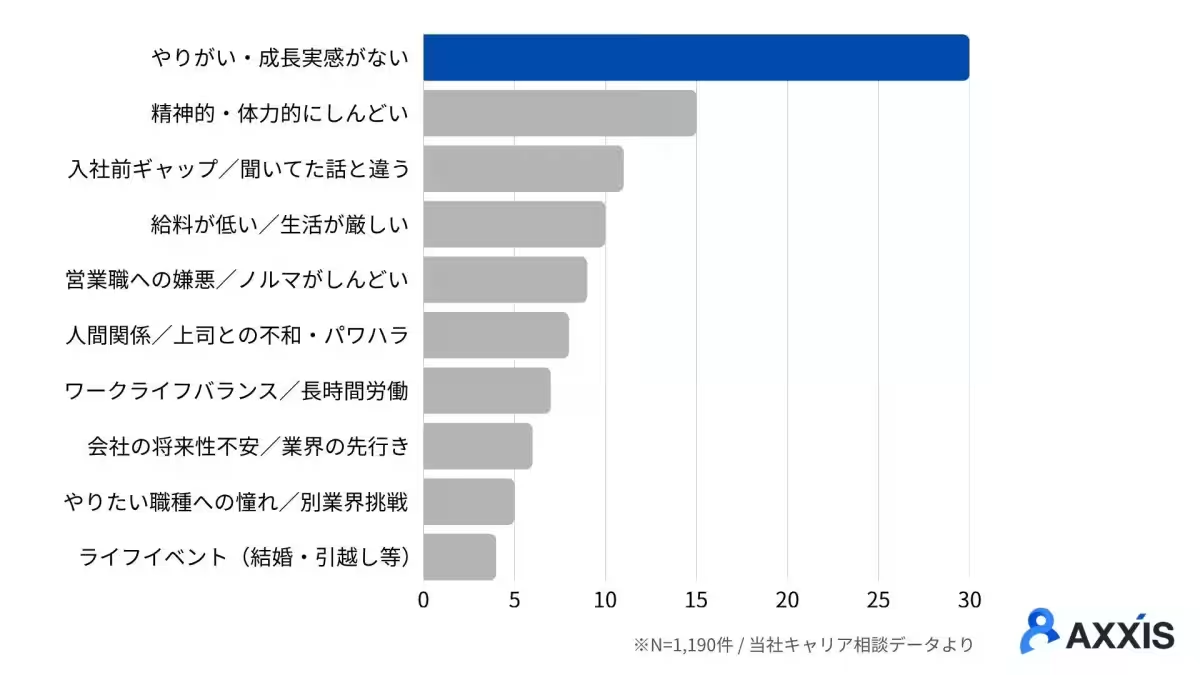
The analysis of the collected data reveals the top reasons young professionals are considering leaving their jobs. At the forefront, 30% of respondents indicated that they feel a lack of challenge and growth in their current positions. This sentiment speaks volumes about the nature of work assigned to these employees and highlights the importance of job fulfillment in career satisfaction.
The Top 10 Reasons for Leaving:
1. Lack of Engagement: "I feel like I’m doing the same thing every day with no skill enhancement; I'm worried about my career, said a 24-year-old employee.
2. Mental and Physical Exhaustion: "I experienced nausea and tears while working. I often think about quitting, described a 23-year-old real estate agent.
3. Mismatch Between Expectations and Reality: One young employee, who was promised no relocations, found herself transferred just months into her job.
4. Inadequate Compensation: A 24-year-old clinical technician disclosed the struggle with high student debt and a low salary.
5. Sales-Related Stress: Job pressures in sales roles are demotivating for many, as exemplified by a 23-year-old bank employee.
6. Workplace Harassment: Concerns about harassment and toxic workplace cultures are cited by 8% of younger employees.
7. Long Hours: Overwork remains a significant issue, with 7% of responses highlighting extensive working hours.
8. Company Stability Issues: As uncertainties about future job security loom, 6% of respondents expressed concerns over their companies' long-term viability.
9. Desire for Change: The aspiration to explore new industries led 5% to consider leaving.
10. Personal Life Events: Life changes also played a part in the decision-making process for about 4% of respondents.
The Role of Supervisors in Retention
As we explore the contributing factors for young employees leaving their jobs, it is crucial to acknowledge the impact of management behavior. According to Axxis’ analysis of the consultations, certain behaviors displayed by supervisors can inadvertently worsen the situation and provoke employees to consider job transitions.
The study lists the following as harmful actions taken by managers:
- - Assigning tasks without providing context or explaining their relevance to career goals.
- - Overlooking signs of mental distress and promoting outdated perspectives like “just hang in there for three years”.
- - Dismissing employee feedback on dissatisfaction as trivial or irrelevant.
- - Fostering a culture where excessive work hours are romanticized.
- - Failing to accommodate the need for flexible work arrangements.
The Importance of Communication
The findings indicate a critical need for dialogue between management and employees. Young professionals today are increasingly driven by the value of time and personal growth; thus, when they sense stagnation or undervaluation in their current roles, they are quick to see alternatives.
As the labor landscape changes and the definition of a successful career evolves, it becomes imperative for companies to reconsider their strategies for retention. They must engage with their younger workforce openly and constructively, recognizing that simply labeling early departures as a trend among “young people” ignores the fundamental issues at play.
Axxis encourages employers to take proactive steps toward understanding and addressing these growing concerns. From enhancing workplace environments to fostering actionable engagement, organizations need to evolve their management styles to better meet the expectations and needs of their employees.
Conclusion
In conclusion, as Axxis prepares for continual updates on labor market trends and insights, it remains dedicated to facilitating understanding between individual aspirations and the organizational structures in place. Ensuring that young professionals find meaningful careers involves thorough discussions around their motivations, fears, and hopes for the future. Through this approach, companies can strive for a working environment where both individuals and organizations thrive together.

Topics People & Culture)




【About Using Articles】
You can freely use the title and article content by linking to the page where the article is posted.
※ Images cannot be used.
【About Links】
Links are free to use.