



The Hidden Traps of Blood Sugar Levels: Exploring A1c Awareness Gaps
The Hidden Traps of Blood Sugar Levels: Exploring A1c Awareness Gaps
In September 2026, the Japan Lifestyle-Related Disease Prevention Association, led by Takashi Wada, conducted a comprehensive awareness survey regarding blood sugar and hemoglobin A1c levels. In this survey, 331 doctors and 310 members of the general public participated, revealing startling discrepancies in their understanding of diabetes risk.
Blood sugar levels reflect the amount of glucose in the blood at a given moment, fluctuating throughout the day, while hemoglobin A1c measures the average blood sugar levels over the previous one to two months. The latter is often referred to as a “report card” for blood sugar since it remains relatively stable over time.
Understanding the Awareness Gap
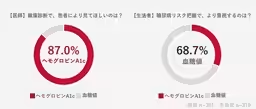
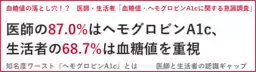
The survey unveiled a significant gap in how doctors and the public perceive key indicators of diabetes risk. When doctors were asked which metric they preferred patients focus on during health screenings, an overwhelming 87% chose hemoglobin A1c. Contrastingly, when the general public was queried on which measure they prioritized for understanding diabetes risk, 68.7% favored blood sugar levels (Figure 1).
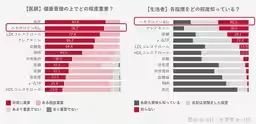
Despite 78.2% of doctors considering hemoglobin A1c “very important,” its recognition among the public was alarmingly low, with over 40% claiming they were unaware of its existence. Conversely, only 2.3% of respondents didn’t recognize blood sugar levels. This clear discrepancy highlights a crucial gap in health literacy that requires immediate attention.
Deepening the Understanding
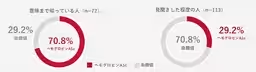
Delving further into the data, it was noted that among those aware of hemoglobin A1c, a significant difference in understanding emerged. About 70.8% of people who comprehended its meaning recognized its importance, while only 29.2% of those with superficial knowledge deemed it significant (Figure 3). This indicates that simply increasing awareness of the term is not enough; the distinct roles and significance of both blood sugar and hemoglobin A1c must be communicated effectively.
Exploring Doctors’ Perspectives
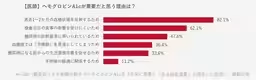
To understand the doctors’ emphasis on hemoglobin A1c, respondents were allowed to select multiple reasons for its importance (Figure 4). The leading rationale, supported by 82.1% of participants, was that it reflects blood sugar over the past one to two months. Other reasons included its resistance to immediate dietary influences (62.1%) and its use as a diabetes diagnostic criterion (47.6%).
To clarify, blood sugar levels illustrate the glucose content at the moment of testing, typically rising after meals before reverting to lower levels in non-diabetics. However, those who are pre-diabetic may experience misleading readings, appearing normal during fasting hours (a phenomenon known as “blood sugar spikes”). This tendency to overlook crucial indicators forms the basis of the “hidden traps” associated with relying solely on blood sugar readings.
In contrast, hemoglobin A1c provides a stable representation of blood sugar levels over time, making it especially valuable for individuals whose post-meal blood sugar levels may remain elevated, despite normal fasting numbers. Hemoglobin A1c derives its indication by measuring the ratio of glucose-bound hemoglobin in relation to the total hemoglobin present.
Misconceptions Among the General Public
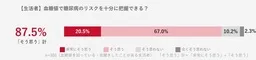
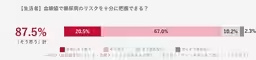
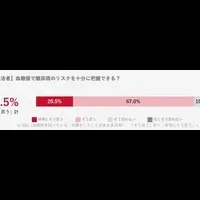
Alarmingly, 87.5% of survey respondents who understood blood sugar levels were confident that these measures alone provided a complete picture of their risk for pre-diabetes or diabetes (Figure 5). This belief illustrates a fundamental issue, as doctors frequently caution that blood sugar levels can mislead and obscure the larger picture of an individual's health.
The belief that monitoring one's blood sugar levels suffices reflects the accessibility and familiarity of the metric. Of the respondents, 20.5% strongly agreed, and 67% somewhat agreed with this misleading assertion, leaving only 12.5% doubtful. Meanwhile, 36.4% of medical professionals cited potential oversights in pre-diabetic status when relying solely on blood sugar measurements during their discussions with patients (Figure 4).
The Importance of Blood Sugar Management in Emergencies
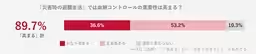
Additionally, in light of recent disasters such as the Kumamoto Earthquake and other severe flooding, the inquiry into blood sugar management during emergencies was timely. A striking 90% of physicians affirmed that blood sugar management becomes increasingly paramount during such crisis situations (Figure 6).
Conclusion
Dr. Takashi Wada of the Japan Lifestyle-Related Disease Prevention Association expressed the need for increased public knowledge about hemoglobin A1c and its significance in managing overall health, especially in understanding diabetes. The survey revealed this disconnect between public perception and medical understanding, emphasizing how pivotal it is to educate individuals beyond just the surface level of health metrics.
About the Survey
The survey, titled 'Awareness Survey of Blood Sugar Levels and Hemoglobin A1c,' was conducted online in September 2026. It included 331 participating doctors and 310 individuals from the general public with ages ranging from 20 to 69 years, aiming to assess knowledge and prioritization of health metrics related to diabetes and overall health management. The Japan Lifestyle-Related Disease Prevention Association has been dedicated to promoting awareness and education surrounding lifestyle diseases since its establishment in 2000.
Topics Health)
【About Using Articles】
You can freely use the title and article content by linking to the page where the article is posted.
※ Images cannot be used.
【About Links】
Links are free to use.