



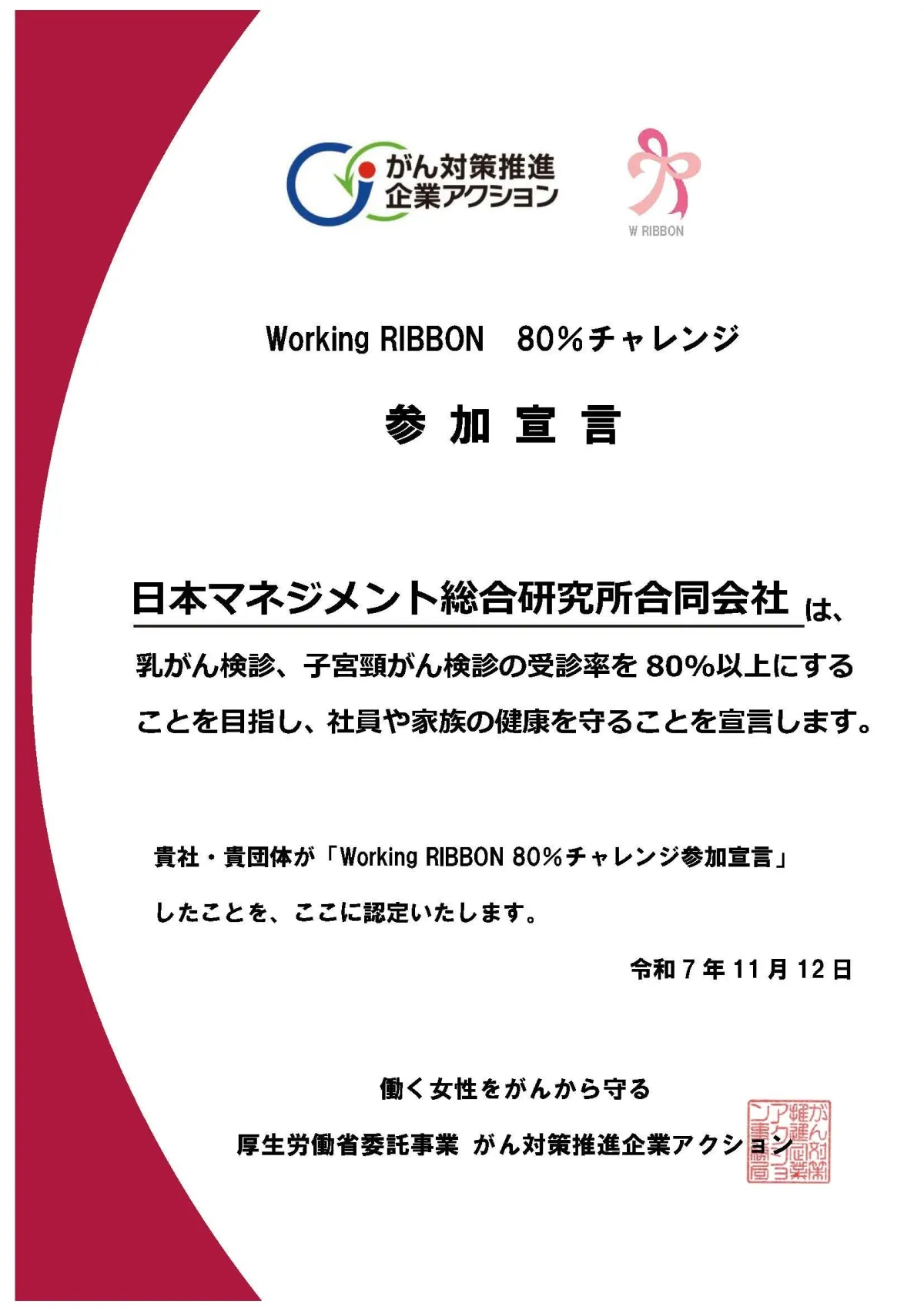
Japan Management Institute Joins Working Ribbon for Cancer Support Initiatives
Japan Management Institute Joins Initiatives for Cancer Support
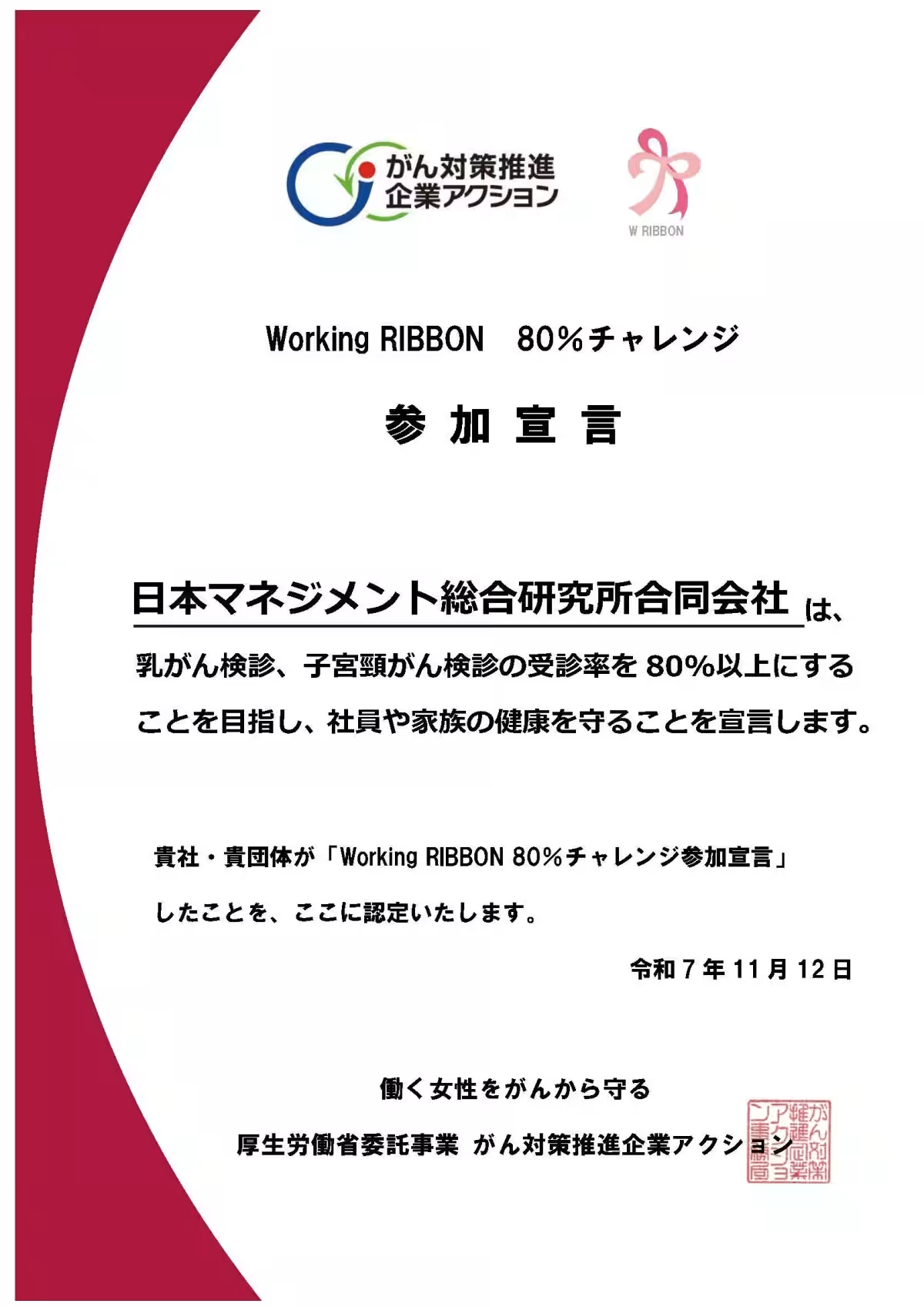
The Japan Management Institute (JMI) recently announced its participation in the Ministry of Health, Labour and Welfare's project known as the 'Working Ribbon', particularly the '80% Challenge'. This initiative is aimed at promoting corporate action against cancer in Japan, a cause that has reached critical importance in today's society.
In light of various disasters and social issues, the organization's engagement in this life-altering project comes as a beacon of hope. It not only highlights the commitment to employee health and wellness but also showcases a more extensive approach to tackling cancer and mental health issues in the workplace. The organization expresses its condolences to the families affected by recent calamities, underlining the human aspect of their commitment to public health.
Details of the Project
The 'Working Ribbon' program invites companies to actively participate in cancer-related initiatives, which involve offering support to employees affected by cancer and promoting a healthy work-life balance during treatment. JMI has joined this movement to spearhead efforts related to both cancer prevention and supportive measures for employees undergoing treatment.
One of the activities that JMI is proudly promoting is the 'Home Hospital Stay Medical Record' program, which is designed to support employees who require extended medical care due to cancer. This innovative approach allows individuals to manage their health conditions more effectively with the support of the workplace. Additionally, the program titled, 'Resort for the Mind and Cancer' aims to provide mental health support specifically tailored for cancer patients, creating a holistic avenue for recovery and well-being.
Not only does the Working Ribbon initiative focus on the practical sides of treatment but also incorporates essential mental health support systems. In this regard, JMI aims to enhance workplace environments by addressing essential areas like cancer prevention, early detection screenings, and rehabilitation, thus alleviating employee concerns regarding healthcare and personal well-being.
Broader Implications
The larger implications of JMI’s commitment resonate across various dimensions—business and human rights, ESG (Environmental, Social, and Governance) perspectives, and surrounding social issues. Each step taken through the Working Ribbon project is geared toward creating a safer and supportive work environment while addressing societal challenges that pertain to health.
These initiatives reflect JMI's ongoing commitment to embodying corporate responsibility and ethical business practices. The fusion of professional and personal lives, particularly in the context of health, highlights the necessity for organizations to become proactive in addressing challenges faced by employees.
In conclusion, JMI's participation in the Working Ribbon initiative serves as an important reminder of the responsibilities that companies hold toward their employees and society. By integrating health consciousness into the workplace, the organization is not just aiming for improved employee well-being but is also setting a precedent for other companies to follow. It marks the beginning of a long-term vision that prioritizes both health and productivity in tandem, bridging the gap between professional commitments and personal health challenges. More information can be found on their website: Japan Management Institute
Topics People & Culture)

【About Using Articles】
You can freely use the title and article content by linking to the page where the article is posted.
※ Images cannot be used.
【About Links】
Links are free to use.