



Creating a Space of Well-Being in the Office Through Gratitude and Smiles
Introduction
In recent years, the importance of human capital management within corporations has grown significantly, highlighting the role of office environments in supporting employee health and productivity. A comfortable and healthy workplace is increasingly recognized as directly linked to promoting creativity and communication, thereby strengthening corporate competitiveness. From the perspective that positive emotions enhance motivation and work efficiency, workplaces focusing on well-being have started to emerge. Well-being refers not only to a state of "being healthy" but encompasses a holistic condition of physical, mental, and social fulfillment. The World Health Organization (WHO) defines health not merely as the absence of disease but as a state of complete physical, mental, and social well-being. In business contexts, a high level of well-being is associated with conditions that allow employees to work securely, foster trustworthy relationships, recognize personal growth, and maintain a balance with life. This is viewed as a crucial element for corporate productivity and sustainability.
The Background for the Experiment
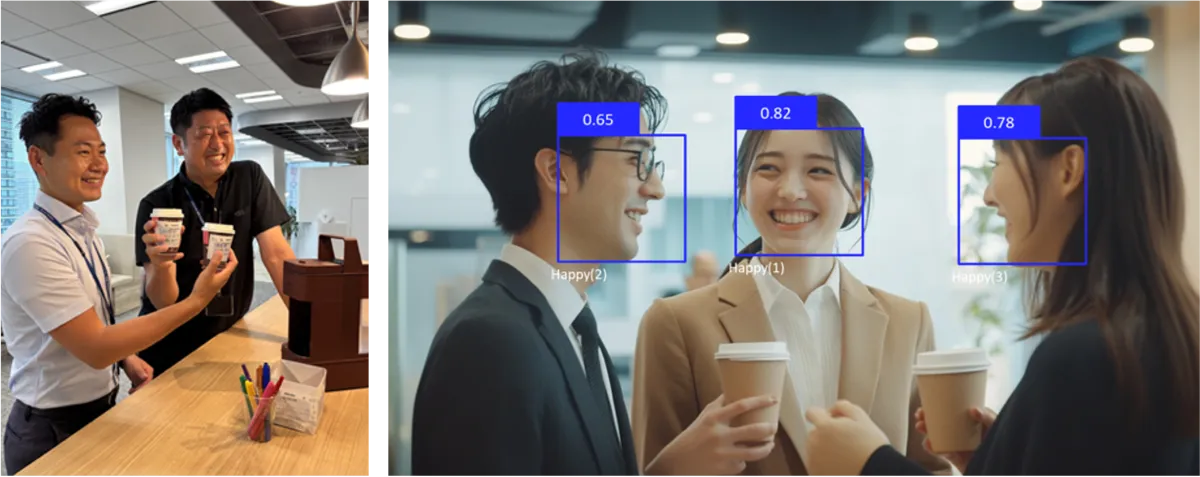
Maison Technology, in collaboration with Okamotoya and Koozyt, has been pursuing initiatives aimed at cultivating a joyful and well-being-focused office space. Research indicates that smiles can enhance immune response, propagate positive emotions, and improve communication skills, establishing a correlation between smiles and well-being. A previous initiative, "Smile Wednesdays," measured smiles to visualize well-being during office hours, which laid the foundation for the current project. The three companies defined "smiles" as a proxy variable for well-being and utilized web cameras to capture and count smiles within the office, aiming to visualize the vitality and state of well-being in that environment.
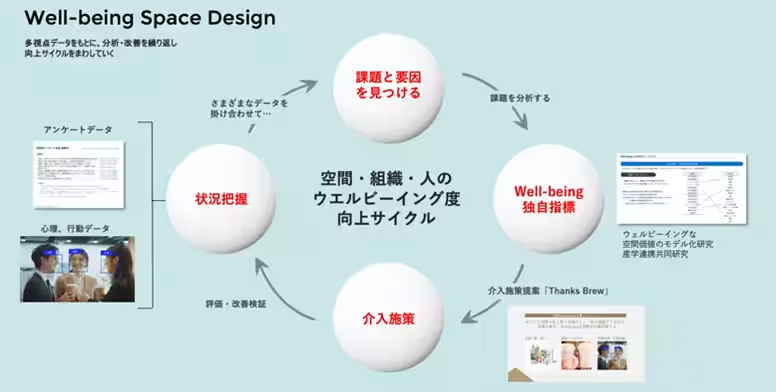
In line with this background, the collaboration aimed to create a well-being-focused office environment by emphasizing three core elements: 1) Physical - Smiles, 2) Mental - Gratitude, and 3) Social - Connections. Each of these elements was designed to naturally develop and interact to create a positive feedback loop, encapsulated in the project concept “Thanks Brew - Brewing Gratitude.”
Division of Roles Among Companies
Okamotoya: The operational entity for the event, serving as a total solution provider for office space and offering a live office for the experiment.
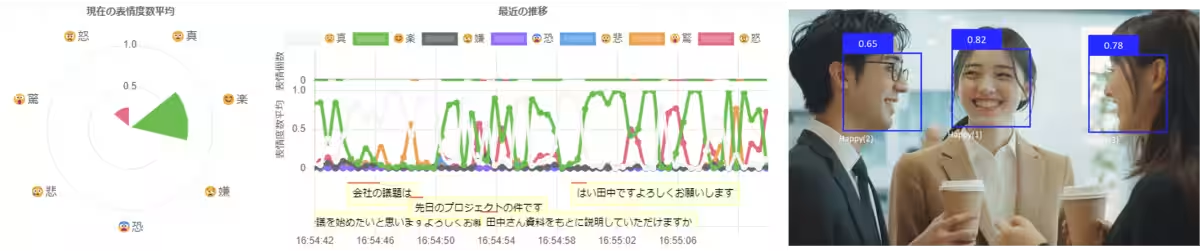
Koozyt: Providing smile and facial expression sensing technology based on AI data analysis and knowledge of well-being.
Maison Technology: Planning the project aimed at well-being spaces and supporting data analysis during the validation process.
Experiment Details
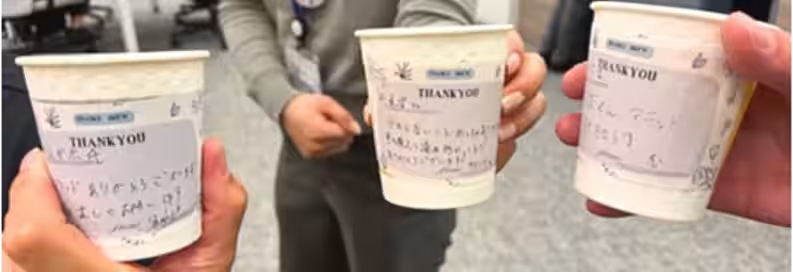
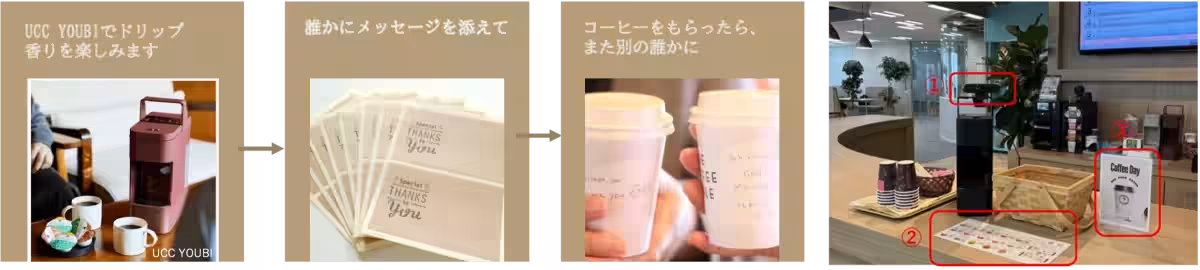
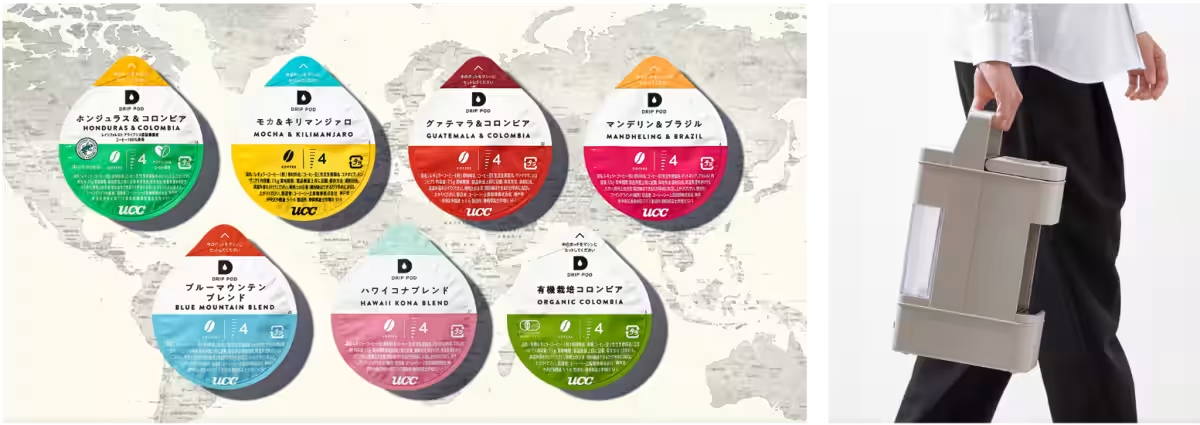
The first intervention in the well-being series, “Thanks Brew – Brewing Gratitude,” capitalized on the observation that the waiting time for coffee drip (approximately 40 seconds) often promotes conversation, listing coffee as a common initiative among companies for enhancing communication. The project involved designing a public café space within the office where employees could brew coffee for others, not just themselves. Specifically, each employee had access to a free cup of coffee (or tea) daily and a designated time to brew coffee for someone else with an added message of gratitude. This comparative research was part of a broader series aimed at stimulating well-being through sensory engagement, particularly targeting taste and smell to foster a chain reaction of smiles and connections.
Purpose and Hypothesis
Through the “Thanks Brew - Brewing Gratitude” event, the focus was on assessing the effectiveness and potential of elements such as smiles, gratitude, and connections in shaping a well-being-oriented office environment.
The duration and structure of the project were outlined as follows:
- - Event Period: May 19 - June 13, 2025,
- - Pre-event: May 19 - 1 week
- - During Event: May 26 - 2 weeks (“Thanks Brew - Brewing Gratitude”)
- - Post-event: June 9 - 1 week
- - Time: 9 AM to 6 PM
- - Target Area: Café space
Evaluation Methodology
Cameras designed for smile and facial expression measurement were installed in the event space, with a dedicated computer actively recording during the event. After completion, an anonymous employee survey was conducted involving 113 participants. The evaluation employed several components: a web camera for expression measurement, a taste map, and point-of-purchase (POP) displays.
- ---
Results of the Experiment
Changes in Participation and Feelings
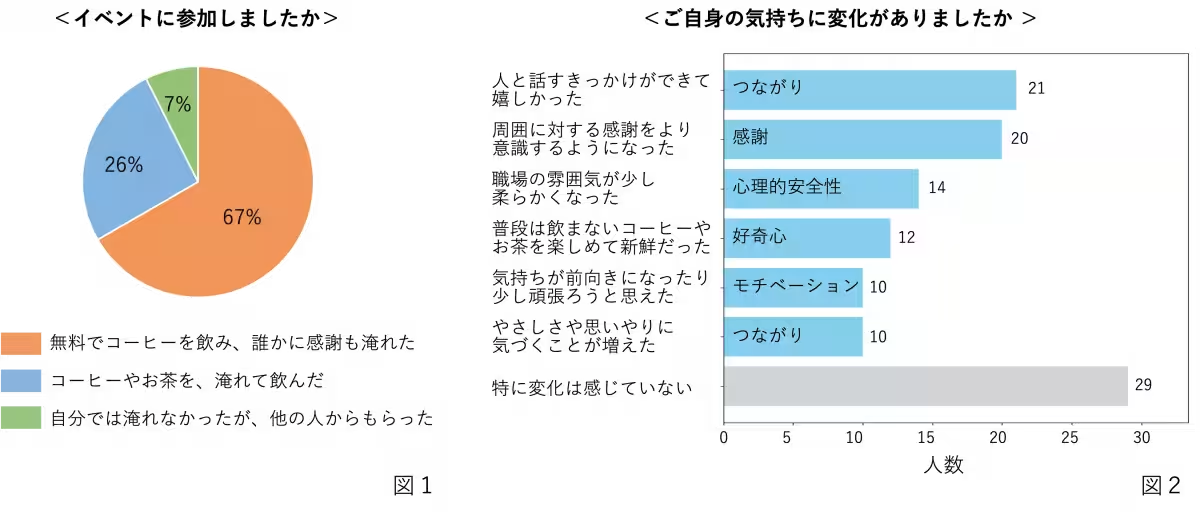
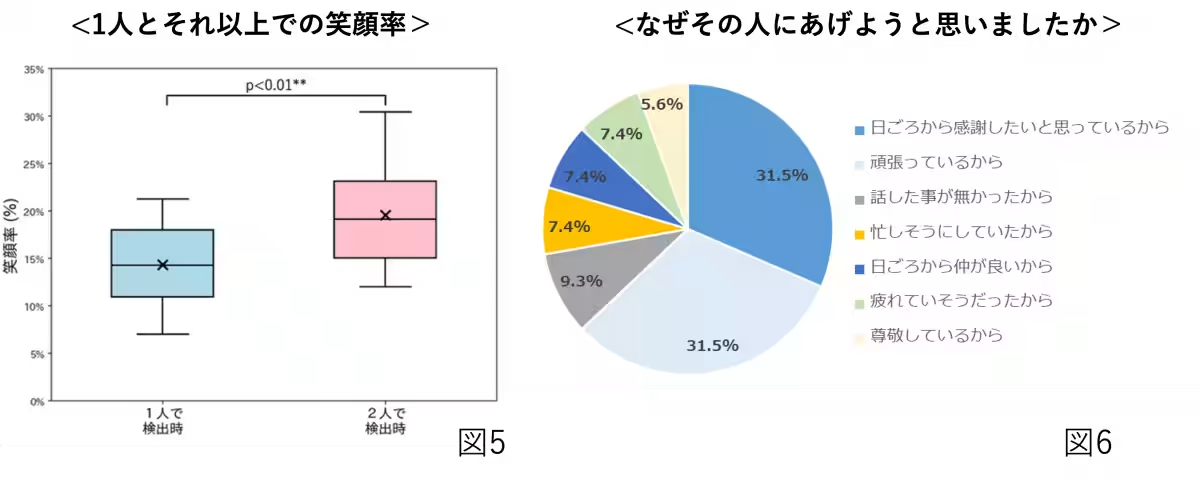
Out of 54 participants, the attendance rate was 48%. Participants were categorized into three types: 1) Those who simply consumed coffee/tea, 2) Those who brewed coffee for someone else, and 3) Those who received coffee without brewing it themselves. Interestingly, about 26% of attendees participated due to free coffee alone, but 67% engaged in expressing gratitude through brewing for others.
Smile Count and Sustainability of Effects
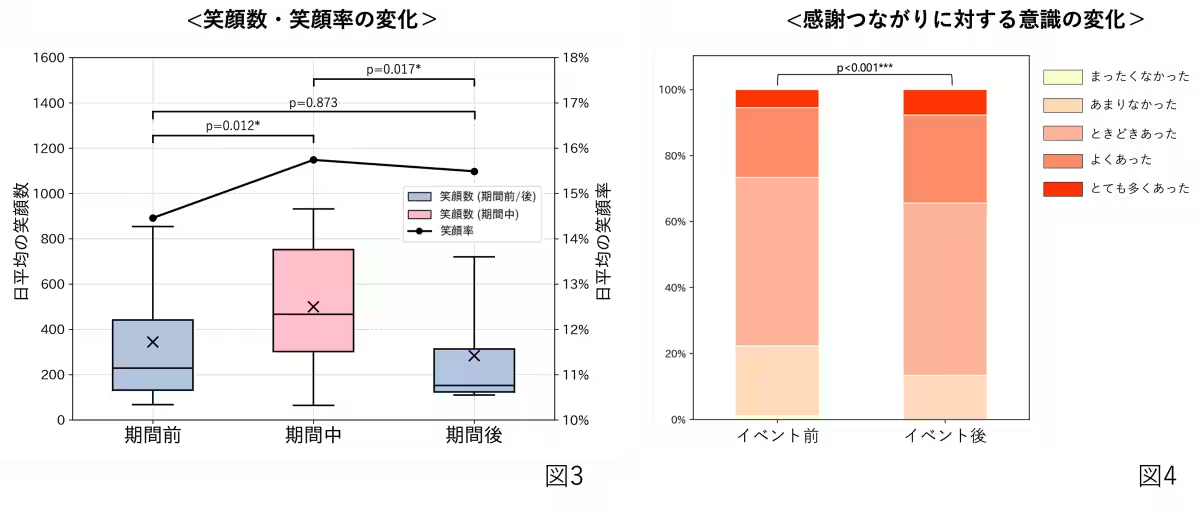
Analysis revealed that the number of smiles significantly improved during the event period when compared to before and after timelines (with a 5% significance level). Furthermore, post-event, the frequency of recognizing gratitude and connections significantly rose compared to before the event.
Correlation Between Smile Dynamics and Connections
Findings suggested that brewing coffee collectively encourages interactions and smiles, indicating that social activities within the workplace have a positive impact on emotional vibrations among teams.
The “Thanks Brew - Brewing Gratitude” initiative successfully defined well-being within the office through physical (smiles), mental (gratitude), and social (connections) layers to spark natural interactions fostering a virtuous cycle. The results indicate that not only does this method increase smiles and gratitude awareness, but it also catalyzes meaningful communication, hinting at a broader potential for enhancing various aspects of well-being in the workplace.
This initiative, influencing perception and behavioral changes while creating enriching spaces, serves as a cornerstone for future endeavors aimed at embedding well-being deeper into corporate ecosystems.



Topics People & Culture)

【About Using Articles】
You can freely use the title and article content by linking to the page where the article is posted.
※ Images cannot be used.
【About Links】
Links are free to use.