




How IMAJINA Engaged 90 Executives Struggling with Quiet Resignation
IMAJINA's Transformative Event on December 2
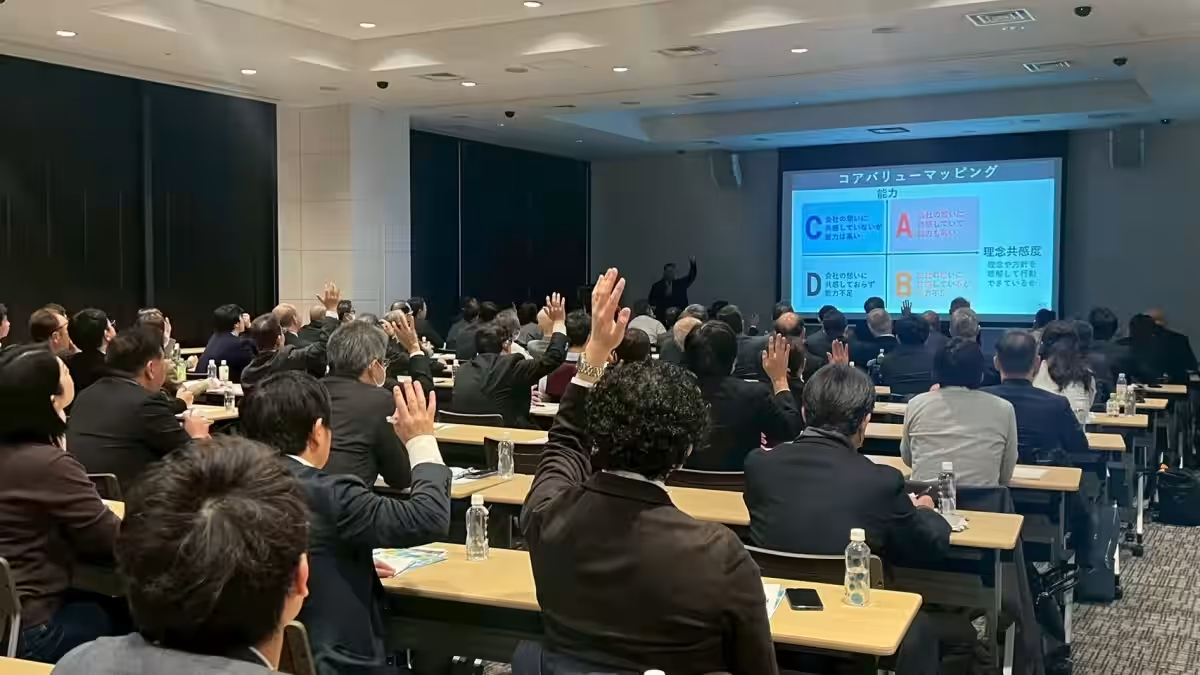
On December 2, 2025, IMAJINA Inc., a Tokyo-based company specializing in brand consulting and human capital management support, held a noteworthy launch event for its new book, "Blueprint for Empathic Value". The event took place at the Tokyo Convention Hall and received overwhelming interest, surpassing initial capacity expectations.
A Phenomenal Response from Participants
The atmosphere was charged, culminating in an almost immediate full house as soon as the registration opened. A particularly striking moment came after the lecture, where attendees, primarily business leaders and HR executives, formed an unwavering queue for questions directed towards IMAJINA's CEO, Yoshiki Sekino. This persistent line of queries reflected the serious challenges that Japanese companies are currently facing regarding employee engagement and retention.
The Revelation of Four Types of Employees
One pivotal moment during the lecture was when Sekino introduced a unique framework categorizing employees into four types based on their abilities and levels of empathy toward the company’s vision:
- - Type A (Talent): High ability and high empathy—ideal leaders who drive the organization forward.
- - Type B (Potential): Lower ability yet high empathy—young talents who resonate with corporate values and show promising growth potential.
- - Type C (Critics): High ability but low empathy—capable individuals who often criticize or belittle the company’s direction.
- - Type D (Challenge): Low ability and low empathy—individuals who neither contribute to results nor align with the organization's ideals.
Sekino pointed out that the stagnation among Japanese firms can largely be attributed to the presence of Type C employees. In a future dominated by AI, skills devoid of empathy will become commonplace. More alarmingly, Type C employees can sap the motivation of emerging Type B talents, leading them toward a phenomenon known as 'quiet resignation', effectively crippling the future of the organization. During the Q&A session, numerous executives shared their resonating experiences, exclaiming how their own leaders resembled Type C or acknowledging that the sluggish development of young talents stemmed from such individuals, rather than a lack of training.
The Shift from Symptomatic Treatment to Fundamental Education
Statistical data indicates that 52.6% of Japanese professionals do not engage in external learning or self-development, illustrating a widespread aversion to change in corporate environments. Traditional symptomatic solutions like salary increases, improved benefits, or superficial skills training have proven ineffective.
Instead, the seminar proposed a paradigm shift toward
Topics People & Culture)


【About Using Articles】
You can freely use the title and article content by linking to the page where the article is posted.
※ Images cannot be used.
【About Links】
Links are free to use.