



Revitalizing the Printing Experience: Ichikara Lab's Collaboration with Kansai Universities
Reinventing Printing with Digital Natives: A Joint Project by Ichikara Lab and Kansai Universities
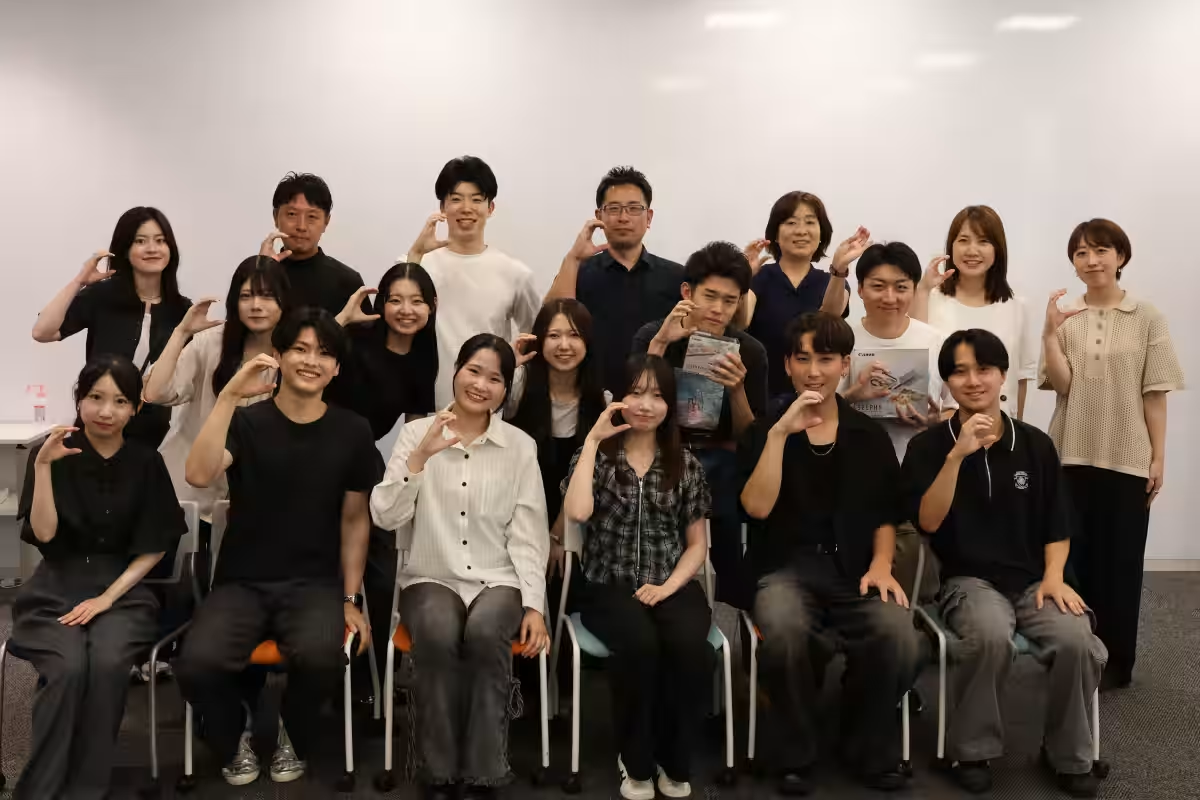
In a significant display of innovation, Ichikara Lab, an entrepreneurial venture within Canon Marketing Japan, has partnered with three leading universities in Kansai: Kansai University, Ritsumeikan University, and Kinki University. This collaboration culminated in a final presentation on July 31, 2026, at the KANDAI Me RISE campus, showcasing the fresh perspectives of the digital native generation on the world of printing.
The project focused on reimagining the experience and appeal of print media through the lens of students who grew up in a fully digital environment. The Ichikara Lab has leveraged feedback from these young minds to explore new avenues of creativity grounded in both analog and digital mediums. Students from the three universities formed groups to tackle the challenge of creating new value that transcends traditional printing paradigms.
During the project, 11 students engaged in a hands-on learning experience, navigating through user research, value analysis, and concept development. This learning journey enabled them to refine their ideas through discussions and feedback from Ichikara Lab professionals. Ultimately, the final presentations highlighted innovative experiences that combine the unique value of analog with Gen Z’s perspective.
One standout concept proposed by Kansai University involved creating a card game from personal photos. This idea allows users to design their own custom card games, utilizing templates and images, and order professionally printed cards. This brings a fun and personal touch to social interactions among friends and communities, doubling as a unique communication tool. Moreover, participants can sell their designs on the platform, potentially expanding the reach through C2C (Consumer to Consumer) transactions.
Ritsumeikan University's group suggested establishing printers on campus that would randomly print pictures alongside discount coupons (QR codes) for nearby dining establishments. With a one-week validity period, these coupons encourage students to visit local eateries and share their dining experiences and recommendations, which can then be featured on a community map. This initiative not only promotes surrounding businesses, but also provides a sustainable income stream for them, and could be adapted for use by corporations.
The Kinki University group focused on the beauty industry, proposing the installation of printers in hair salons to capture and print images of clients’ freshly styled hair. This idea aims to develop a personalized hair album for customers, enhancing their experience while integrating discount coupons for the next appointment. The concept addresses both client engagement and operational efficiency for hairstylists, positioning it well for expansion to other service sectors like nail salons or pet grooming.
Student feedback post-project underscored the value of collaboration across universities and the fresh insights gleaned from professional mentors. Many participants expressed appreciation for the diverse feedback, which helped refine their proposals and expand their understanding of market needs. The enthusiasm for continuing such collaborative endeavors in the future was palpable, pointing to the potential for ongoing innovation.
Ichikara Lab plans to integrate insights and experiences gained from this project into their ongoing open innovation programs, fueling future initiatives that promise exciting possibilities in the realm of print media. Through collaboration with the youth, they aim to pioneer innovative experiences that resonate with the next generation and instigate tangible changes in the printing landscape.
Project Background
As digitalization evolves, our lives have become increasingly convenient. However, the realm of printing has also undergone significant changes in its role and perceived value. Ichikara Lab, actively engaging with young people, has recognized the tangible experiences that analog printing offers, such as sensory appeal and the physical presence of printed materials.
Recognizing these possibilities, Ichikara Lab is committed to pushing the boundaries of traditional printing, striving to create experiences and values that resonate with today’s youth. Their mission revolves around collaborating with like-minded businesses and organizations to create experiences fitting for the modern age, aiming for a thrilling future that captures the hearts of many.
For those interested in discovering more about Ichikara Lab and their initiatives, detailed information is available on their official website.
Conclusion
With the landscape of printing undergoing transformation, initiatives like Ichikara Lab’s collaborative university project represent a beacon of future creativity. By harnessing the potential of digital natives, the project not only reinvigorates the essence of printing but also lays the groundwork for future innovations that connect the past with the present and beyond.

Topics Consumer Products & Retail)









【About Using Articles】
You can freely use the title and article content by linking to the page where the article is posted.
※ Images cannot be used.
【About Links】
Links are free to use.