



EY Strategy & Consulting Launches Next-Generation Industry Operations for Manufacturing Sector
EY Strategy & Consulting Launches Next-Generation Industry Operations
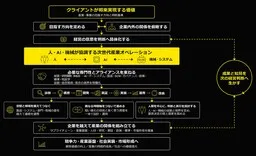
EY Strategy & Consulting (EYSC), located in Chiyoda-ku, Tokyo, has announced the launch of a transformative service tailored for the manufacturing sector. This initiative focuses on fostering collaboration between humans, AI, and machines, which they refer to as the "Next-Generation Industry Operations." The service aims to support various businesses in the manufacturing landscape by establishing clear frameworks for decision-making, resource allocation, and boundaries.
Addressing Challenges in Manufacturing
In recent years, the manufacturing industry has faced multiple challenges, including the advancement of products, software integration, and restructuring global supply chains. Additionally, issues such as labor shortages and the transfer of skills have become increasingly prominent. The integration of AI is evolving beyond mere data analysis and suggestions; it now encompasses decision-making assistance and operational execution through robotics and machinery.
As a result, there is a pressing need for a new operational framework that addresses critical questions like "What should be evaluated, and by which standards?" and "Who is responsible for these evaluations—humans, AI, or machines?" EYSC’s latest service seeks to revolutionize the operational design by elucidating these questions and clarifying the roles of each element involved.
Comprehensive Support Framework
The service proposed by EYSC revolves around three core design elements: decision-making structures, resource allocation, and boundary definitions. Here’s how each of these components contributes to enhancing operational efficiency:
1. Decision-Making Design: This involves specifying what decisions need to be made, the rationales behind those decisions, and the criteria and impacts involved.
2. Resource Allocation Design: The focus here is determining who or what (human, AI, machine) will be responsible for executing each decision.
3. Boundary Design: At this stage, it is critical to define the extent of reliance on AI and machines, including the conditions that allow for verification, approval, and intervention.
To facilitate these designs, EYSC visualizes the decision architecture that spans organizational levels from management to the workshop floor. This holistic view is essential in linking executive intent to operational execution.
Rethinking Operational Strategies
The growing sophistication of tasks within manufacturing means that the traditional separation of roles—such as R&D, planning, IT, and production—will no longer suffice. Many organizations operate in silos and face hurdles when it comes to leveraging advanced technologies effectively. Thus, as AI technologies expand their realm of influence, organizations must reconsider who is accountable for decisions and the structures surrounding these responsibilities.
EYSC aims to integrate AI utilization and operational transformation seamlessly, enabling manufacturers to adapt swiftly to the changing landscape. By leveraging systems engineering methodologies, EYSC reveals crucial decision criteria, responsibilities, and relationships among different roles within the organization.
Targeted Services for Operational Enhancement
The services intended to accompany this transformation include the following key focus areas:
- - Enterprise Operations: Design of business decisions guided by a decision architecture that organizes complex real-world data into actionable insights, streamlining communication between internal knowledge sources and AI systems.
- - Field Operations: Understanding the judgment processes of workers on the manufacturing floor—how they perceive and act based on various situations—will allow for the refinement of skill transfer and optimal task distribution between humans and machines.
- - Governance: Establishing comprehensive AI governance frameworks that strike a balance between risk management and value creation, ensuring that AI's role in decision-making aligns with the organization's goals and ethical standards.
By implementing these components concurrently, EYSC not only aims to revolutionize specific processes but also to drive long-term sustainable transformation in the manufacturing sector.
Conclusion
As Japan's manufacturing industry grapples with pressing challenges such as workforce shortages and technological advancements, EYSC’s innovative service provides a roadmap to integrate AI into everyday operations effectively. By focusing on collaboration between humans and technology, the initiative aims to enhance overall competitiveness, ensuring a resilient future in the manufacturing landscape. EYSC is committed to guiding manufacturers through this evolution, aligning management objectives with on-the-ground realities, and fostering a new paradigm of industrial operations.
For more information on this service, please check the official page.
Topics Consumer Products & Retail)





【About Using Articles】
You can freely use the title and article content by linking to the page where the article is posted.
※ Images cannot be used.
【About Links】
Links are free to use.