



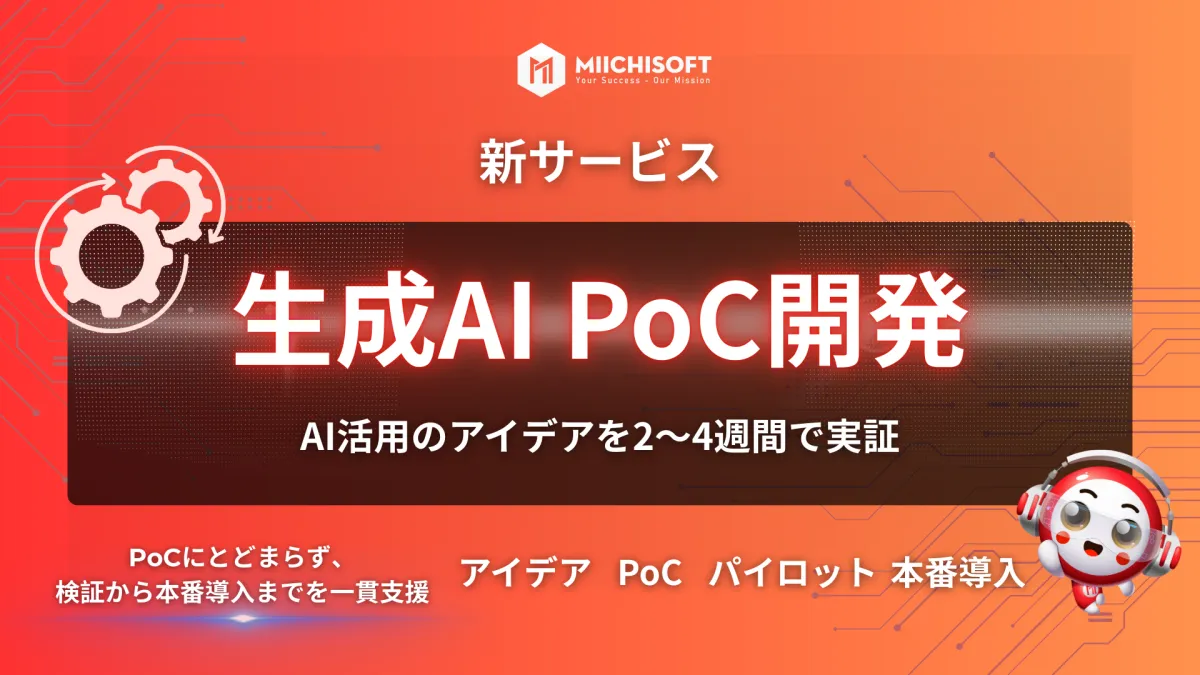
Miichisoft Launches Generative AI PoC Development Services: Transforming Ideas into Prototypes Within Weeks
Miichisoft's Generative AI PoC Development Services
On January 28, 2026, Miichisoft officially announced its new generative AI Proof of Concept (PoC) development services, targeting companies looking to explore the implementation of generative AI while facing challenges such as shortages of specialized personnel, difficulties in validating the feasibility of ideas, and the urgent need for rapid and cost-effective deployments.
1. Key Challenges in PoC Development for Companies
The growing global adoption of generative AI has led many firms to initiate trial implementations through PoC projects. However, many encounter significant roadblocks early on.
1.1 Difficulty in Specifying Use Cases within Organizations
Many organizations view generative AI merely as a technological trend rather than a tool for solving concrete challenges. Consequently, PoC initiatives often remain focused on technology validation rather than aligning with business objectives such as optimizing operations or enhancing customer experience.
1.2 Shortage of Specialized Talent in Generative AI
According to Japan's Ministry of Economy, Trade and Industry, a shortfall of approximately 789,000 IT professionals is anticipated in the country by 2030. Many companies find building in-house generative AI teams to be time-consuming and expensive, often leading to missed market opportunities as they cannot develop PoCs independently.
1.3 Challenges Transitioning from PoC to Production Environments
While numerous PoCs may succeed in validation environments, a lack of adaptability and experience in infrastructure often hampers their deployment in real-world settings.
2. Introduction to Miichisoft's Generative AI PoC Development Services
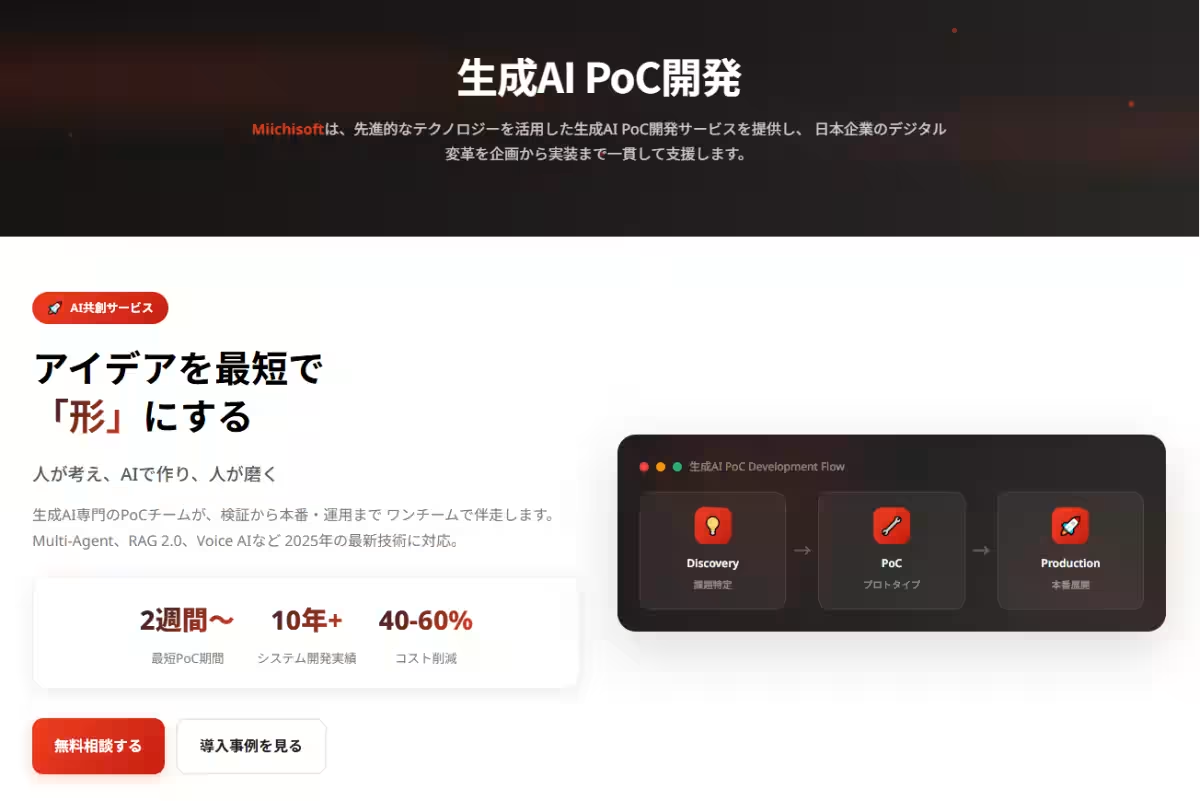
In response to the rising demand for a trial implementation and utilization of generative AI, Miichisoft's service assists companies in rapidly validating generative AI ideas in real environments. The service focuses on building generative AI prototypes in 2 to 4 weeks, emphasizing scenarios with clear business value and post-validation scalability.
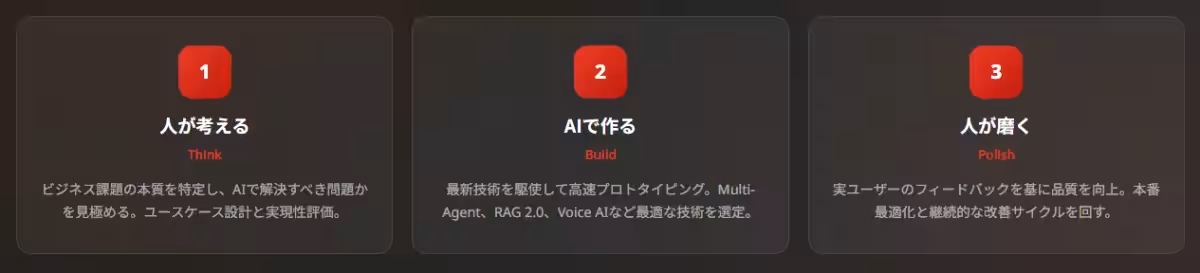
The unique approach of this service is encapsulated in the motto: "We think, AI builds, and we finalize." It recognizes that effective prototypes require not just rapid generation by AI, but deep improvements by expert teams. This enables the realization of designs that anticipate operational deployment and addresses the common challenge of stagnation during the validation phase.
3. Three Key Features of the Generative AI PoC Development Service
The service is designed to enhance the success rate of corporate PoCs and reduce the time taken to achieve operational deployment of generative AI.
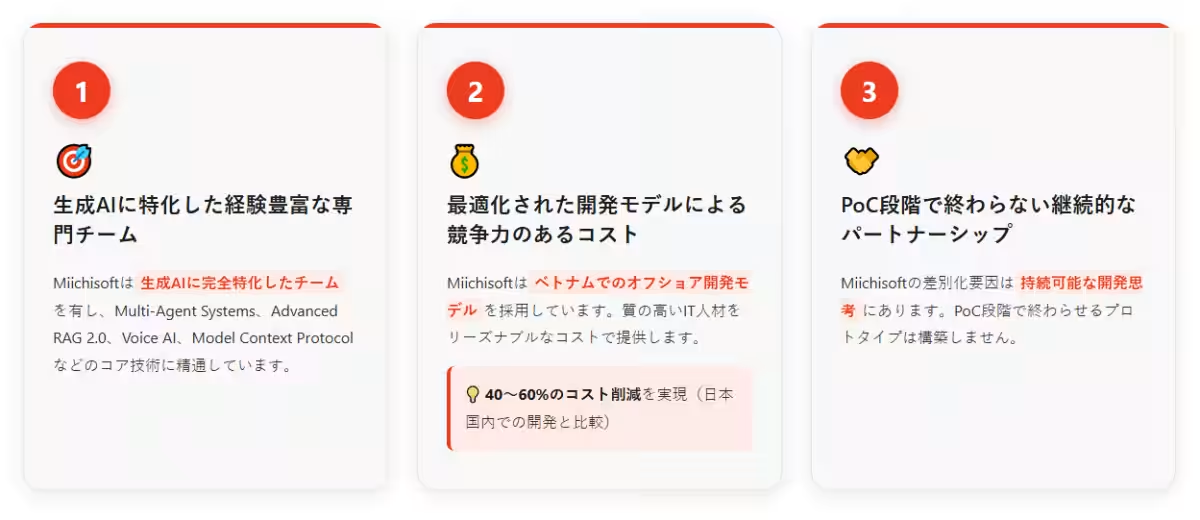
3.1 Advanced Skills and Extensive Experience
Miichisoft has established a specialized team in generative AI, proficient in cutting-edge technologies such as multi-agent systems, Advanced RAG, voice AI, and Model Context Protocol. This expert team is involved from early stages in achieving high-quality prototype designs, covering aspects such as architecture selection, prompt and context design, cost assessment of models, stability, and scalability.
3.2 Competitive Pricing Through Optimized Development Models
By combining high-quality IT talent from Vietnam with insights tailored for the Japanese market, Miichisoft achieves cost reductions of about 40-60% compared to onshore projects. This long-standing experience in the Japanese market facilitates a deep understanding of business challenges, ensuring complete adherence to technical quality and workflow standards.
3.3 Support from PoC to Operational Deployment
A differentiating factor in Miichisoft's service is its sustainable development mindset. Rather than ending with prototype construction, the service encompasses technical validation, establishing evaluation metrics, and scaling up from initial pilot testing with small user groups, providing continuous support to companies. This process preserves knowledge about challenges and technical requirements, maintaining speed and efficiency during the transition to production.
4. Successful Case Studies of Generative AI PoC Projects
The service accommodates various application scenarios, evidenced by two successful generative AI PoC projects implemented for Japanese companies:
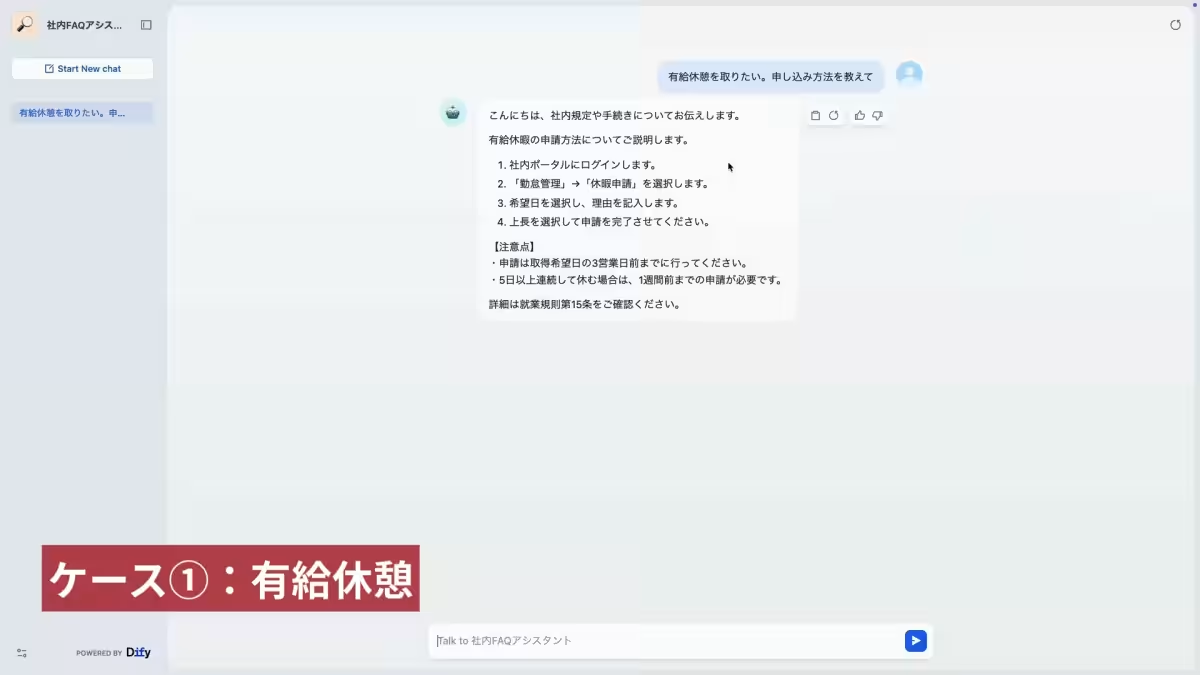
Case Study 1: HR and General Affairs FAQ Chatbot for Dify
- - Background: Large organizations typically receive numerous repetitive inquiries regarding benefits, policies, and internal guidelines in their HR and General Affairs departments. Manual handling is time-consuming and maintaining response consistency is challenging.
- - PoC Development: Developed a company-specific FAQ chatbot on the Dify platform that leverages generative AI for natural language understanding, direct referencing of internal documents, and context-driven real-time responses.
- - Outcome: Reduced response time by up to 80% in the HR department, standardizing the information provided to employees, allowing the team to focus on strategic tasks.
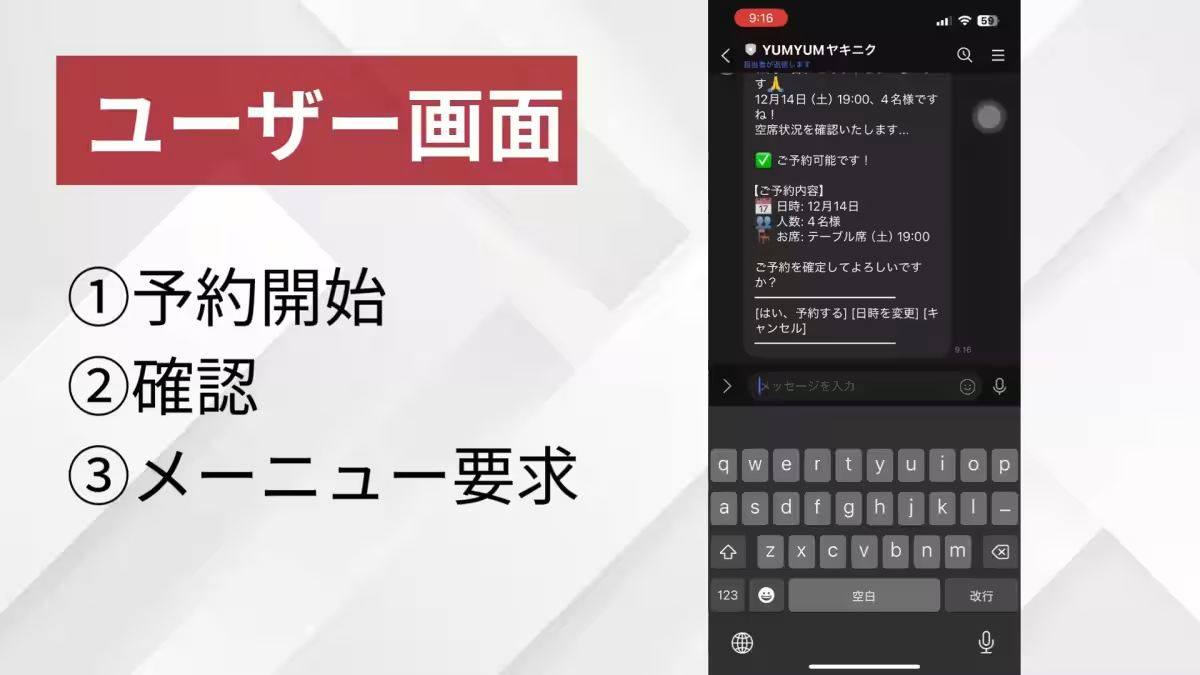
Case Study 2: AI Chatbot Integration with LINE for a Restaurant Chain
- - Background: A large restaurant chain with multiple locations faced the daily challenge of managing a high volume of reservation requests and customer inquiries primarily via phone and LINE, which often lead to staff overload during peak times.
- - PoC Development: An AI chatbot integrated with LINE was deployed, enabling natural multi-turn conversations with customers, flexible understanding of reservation requests (time, number of people, location), and 24/7 automated responses to inquiries about menus and services.
- - Outcome: Reduced staff workload, decreased customer inquiry slip-through during peak hours, and improved reservation success rates.
5. Roadmap for Support: From Generative AI PoC to Operational Deployment
To ensure clients can safely integrate generative AI within their companies, Miichisoft has established a four-phase roadmap from ideation to operational deployment.
Course of Generative AI PoC Development
1. Phase 1: Discovery & Direction Definition (1-2 Weeks)
- Requirement gathering and clarifying business objectives.
- Selecting appropriate use cases.
- Assessing technical feasibility and data readiness.
- Estimating ROI and expected value for large-scale deployment.
2. Phase 2: PoC Development
- Rapid development of generative AI prototypes to validate technical viability, including demo environment setup for real evaluation.
- Setting success measurement metrics.
3. Phase 3: Pilot Testing
- Performing pilot tests with limited user groups to collect data for system accuracy improvement and planning large-scale deployment.
4. Phase 4: Operational Deployment and Ongoing Development
- Official start of the system in a production environment.
- Continuous support for operational maintenance, expansions aligned with actual demand.
6. Cost of Generative AI PoC Development
The following are reference prices for each phase, designed flexibly according to the scales and needs of different enterprises.
| Phase | Duration | Cost | Deliverables |
|---|---|---|---|
| ------ | ---- | ---- | ------------ |
| Discovery & Direction Fac. | 1-2 Weeks | ¥300,000+ | Feasibility report |
| PoC Development | 2-4 Weeks | ¥800,000+ | Functional prototype |
| Pilot Testing | 1-2 Months | ¥1,500,000+ | Enterprise-ready AI system |
| Deployment & Ongoing Development | Ongoing | ¥200,000+/month | Production operation |
Free Consultation Invitation
For companies facing challenges in realizing generative AI ideas or moving from validation to production, Miichisoft offers support. In just a 30-minute online meeting, the expert team will listen to your specific issues and propose the most feasible PoC deployment roadmap.
FAQs
Q1: How does this service differ from typical AI companies?
A1: The difference lies in deployment policy and how we partner with enterprises. Our approach is designed to ensure that if a PoC proves effective, it is prepared for transition into operational deployment.
Q2: Can you provide quick estimates for generative AI application roadmaps for companies?
A2: Yes! Understanding the need for organizations to assess the potential of generative AI quickly, we developed AIDO, a free AI tool for estimating expected ROI and a detailed phased deployment roadmap.
Q3: Will it be necessary to continue using the service for production deployment after the PoC phase?
A3: There is absolutely no obligation. At the end of the PoC, clients receive complete ownership of the source code, deployment roadmap, and detailed technical documentation. Companies may choose to implement independently or request ongoing support for production phases. The decision rests entirely with you after evaluating PoC results.
Topics Business Technology)
【About Using Articles】
You can freely use the title and article content by linking to the page where the article is posted.
※ Images cannot be used.
【About Links】
Links are free to use.