



More Than Half of Contemporary Japanese High School Students Have Used the Phrase 'A Lifetime Request'
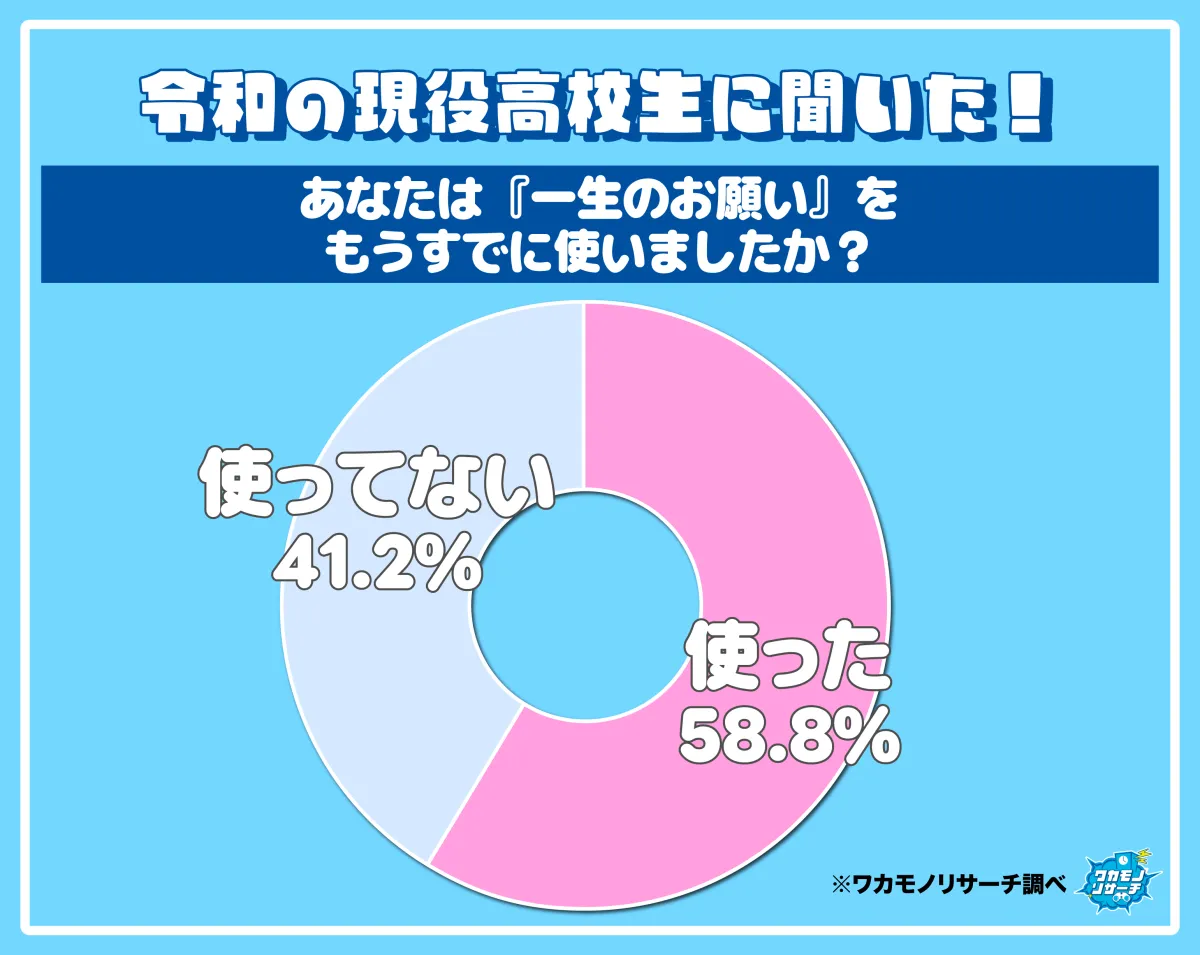
In contemporary Japan, a significant portion of high school students report having used the phrase "A Lifetime Request." This expression, which weighs heavily in meaning, appears to have become more common among today’s youth. A survey conducted by Wakamono Research targeted active high school students across the nation, uncovering that 58.8% of participants have employed this phrase in various contexts, depicting a fascinating cultural trend.
The phrase "A Lifetime Request" typically denotes a deep-seated plea. Among respondents, many mentioned using it during pressing situations, such as needing something crucial, whether it be a favor or material possession. Common scenarios included asking parents for video games or smartphones, often expressed with urgency like, "I really want this game; please! It's a lifetime request!" This highlights the students’ understanding of the weight associated with the phrase as they leverage it to make their urgencies known.
Interestingly, the survey indicated that many students deploy this phrase when they find themselves in a predicament—such as being turned down for a request before resorting to a more intense plea. One student recounted, "I asked for help with homework, and when my friend initially declined, I insisted, saying, ‘It's a lifetime request!’" This shows a strategic use of the phrase beyond mere requests, hinting at social dynamics in young friendships and their reliance on dramatic expressions to emphasize seriousness.
When diving deeper into the types of requests made, the use of this phrase was not limited to material requests. Instances included asking for assistance with school assignments, showing an inclination to seek help during moments of academic pressure. For many high school students, requests for aid while completing homework or projects proved a significant trigger for utilizing this expression. One student humorously noted, "I told my friend, ‘It's a lifetime request!’ when asking to borrow their notes." This creative engagement with the phrase illustrates the blend of seriousness and playfulness inherent in high school culture.
A surprising number of respondents even cited instances where the phrase was utilized in far more embarrassing situations—such as when needing urgent access to a bathroom facility. Comments like, "I’ve used it while desperately needing to use the restroom at school" paint a colorful picture of how the phrase has morphed into everyday vernacular, even in contexts far from its intended gravity.
On the other hand, the survey found that 41.2% of students reported never having used the phrase. For these individuals, the expression holds substantial weight, with many expressing a reluctance to use it casually. Common rationalizations included, "I haven’t found a situation worthy of such a heavy request" and, "I believe this is a phrase meant for significant moments, not everyday situations." This indicates a thoughtful approach to the concept of pleading, demonstrating a contrast between those who gravitate towards more casual usage and those who reserve it for moments they consider monumental.
Some high school students articulated a desire to save their "lifetime request" for future monumental life events. Their responses indicated an appreciation for the gravity of the expression, with phrases like, "I want to use it when asking my girlfriend to marry me" suggesting they reserve such heartfelt appeals for the epic moments they envision in their future.
In conclusion, the dichotomy of responses to the phrase "A Lifetime Request" illustrates the evolving nature of communication among high school students in Japan. As evident from the survey by Wakamono Research, the expression bridges earnest requests and day-to-day banter, reflecting a cultural attitude that balances weighty communications with lighthearted exchanges. The findings underscore the fluid nature of language and expression in youth culture, as high school students navigate their relationships and requests in an ever-complex social landscape. For a more comprehensive look at this research, visit Wakamono Research's website where full survey details and analyses are available.
The phrase "A Lifetime Request" typically denotes a deep-seated plea. Among respondents, many mentioned using it during pressing situations, such as needing something crucial, whether it be a favor or material possession. Common scenarios included asking parents for video games or smartphones, often expressed with urgency like, "I really want this game; please! It's a lifetime request!" This highlights the students’ understanding of the weight associated with the phrase as they leverage it to make their urgencies known.
Interestingly, the survey indicated that many students deploy this phrase when they find themselves in a predicament—such as being turned down for a request before resorting to a more intense plea. One student recounted, "I asked for help with homework, and when my friend initially declined, I insisted, saying, ‘It's a lifetime request!’" This shows a strategic use of the phrase beyond mere requests, hinting at social dynamics in young friendships and their reliance on dramatic expressions to emphasize seriousness.
When diving deeper into the types of requests made, the use of this phrase was not limited to material requests. Instances included asking for assistance with school assignments, showing an inclination to seek help during moments of academic pressure. For many high school students, requests for aid while completing homework or projects proved a significant trigger for utilizing this expression. One student humorously noted, "I told my friend, ‘It's a lifetime request!’ when asking to borrow their notes." This creative engagement with the phrase illustrates the blend of seriousness and playfulness inherent in high school culture.
A surprising number of respondents even cited instances where the phrase was utilized in far more embarrassing situations—such as when needing urgent access to a bathroom facility. Comments like, "I’ve used it while desperately needing to use the restroom at school" paint a colorful picture of how the phrase has morphed into everyday vernacular, even in contexts far from its intended gravity.
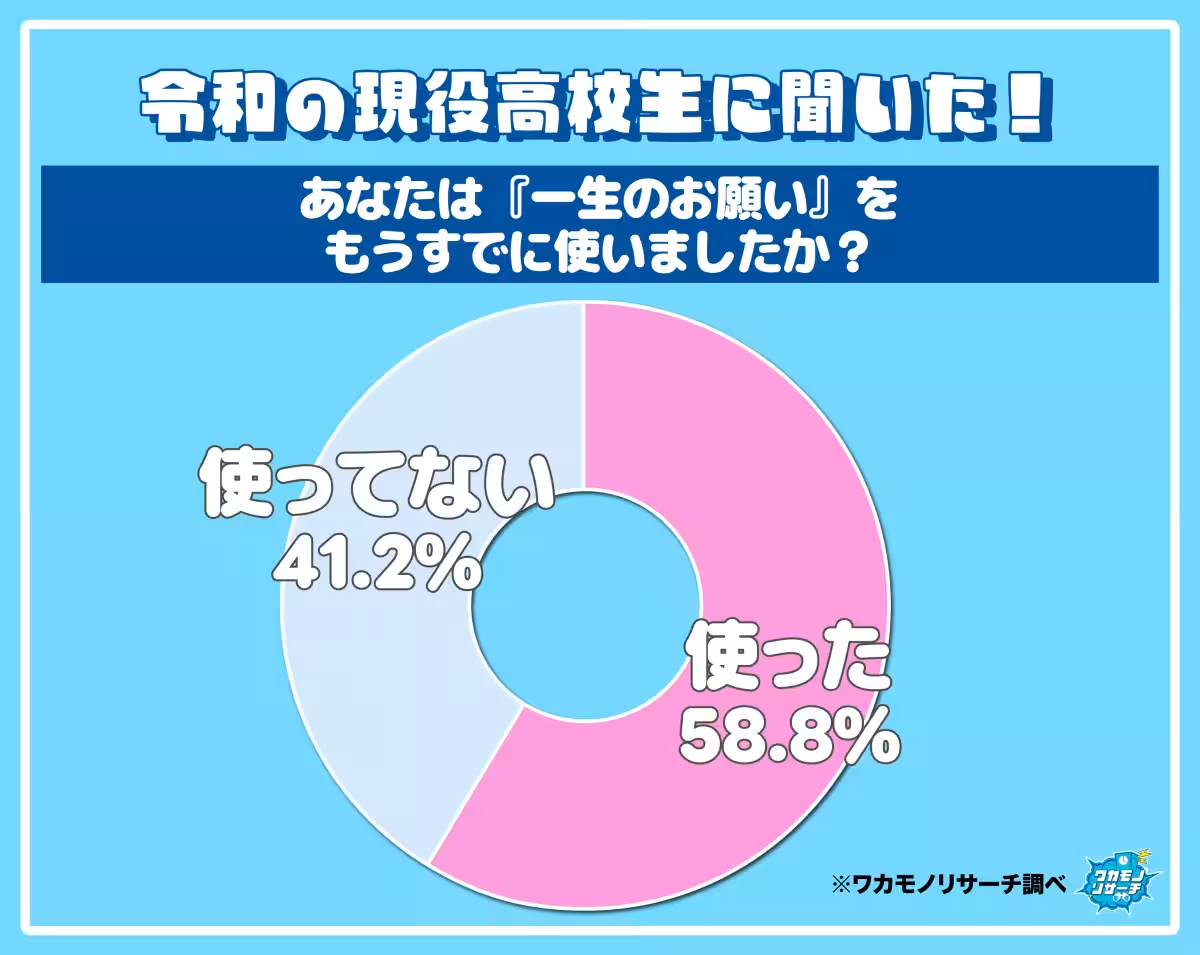
On the other hand, the survey found that 41.2% of students reported never having used the phrase. For these individuals, the expression holds substantial weight, with many expressing a reluctance to use it casually. Common rationalizations included, "I haven’t found a situation worthy of such a heavy request" and, "I believe this is a phrase meant for significant moments, not everyday situations." This indicates a thoughtful approach to the concept of pleading, demonstrating a contrast between those who gravitate towards more casual usage and those who reserve it for moments they consider monumental.
Some high school students articulated a desire to save their "lifetime request" for future monumental life events. Their responses indicated an appreciation for the gravity of the expression, with phrases like, "I want to use it when asking my girlfriend to marry me" suggesting they reserve such heartfelt appeals for the epic moments they envision in their future.
In conclusion, the dichotomy of responses to the phrase "A Lifetime Request" illustrates the evolving nature of communication among high school students in Japan. As evident from the survey by Wakamono Research, the expression bridges earnest requests and day-to-day banter, reflecting a cultural attitude that balances weighty communications with lighthearted exchanges. The findings underscore the fluid nature of language and expression in youth culture, as high school students navigate their relationships and requests in an ever-complex social landscape. For a more comprehensive look at this research, visit Wakamono Research's website where full survey details and analyses are available.
Topics People & Culture)

【About Using Articles】
You can freely use the title and article content by linking to the page where the article is posted.
※ Images cannot be used.
【About Links】
Links are free to use.