




Research Highlights the Urgent Need for Process Optimization in Manufacturing and Logistics Industry
Introduction
In the current landscape of the manufacturing and logistics sector, the imperative for enhanced operational efficiency has reached critical levels due to labor shortages. At the forefront of this movement is Gourica Corporation, headquartered in Shibuya, Tokyo. Under the leadership of President Kensuke Okamoto, the company has conducted an extensive survey targeting business personnel working at large corporations (those with more than 1,000 employees) within Japan. The primary focus of this research was the use of work time and productivity insights specific to the manufacturing and logistics domains.
Key Findings
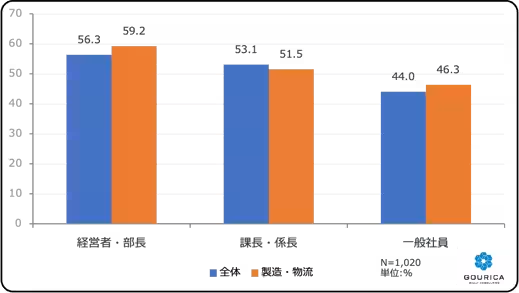
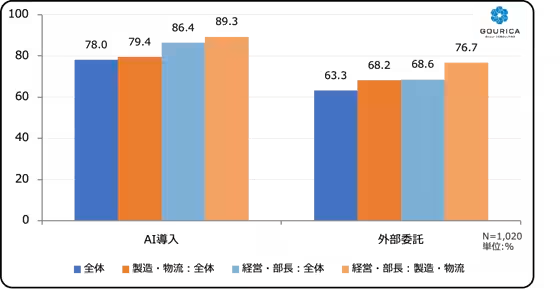
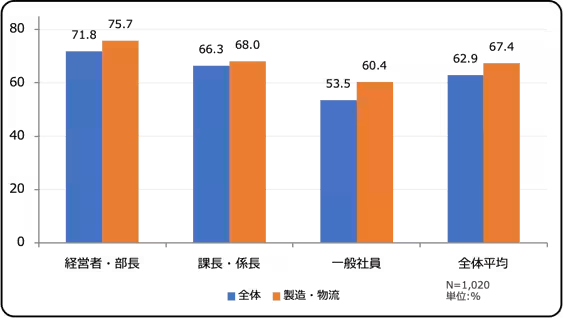
The survey unveiled notable discrepancies between the aspirations for systematic improvements and the present operational practices. Notably, 59.2% of management in the manufacturing and logistics sector expressed a desire to reduce specialized routine tasks through systematization, surpassing the overall average of 56.3%. Additionally, there was a substantial recognition amongst the respondents regarding the necessity of external outsourcing (76.7%) and the implementation of AI tools (89.3%). Although there is a strong inclination towards systematic solutions, a staggering 75.7% of executives in this sector acknowledged that specialized tasks are still heavily concentrated among certain individuals, hinting at a persistent issue of dependency on specific team members.
Implications of the Research
While executives strongly support systematic problem-solving approaches, their optimism stands in stark contrast to the reality faced by frontline workers. Despite the high percentage of management advocating for change, the concentration of tasks among specific individuals remains a significant barrier that hampers productivity. This creates a substantial disconnect between managerial intentions and the operational reality on the ground.
Summary of Results
1. Stronger Preference for Systematic Solutions
Managers in the manufacturing and logistics arena show a marked preference for problem-solving through systematization, with 59.2% supporting this approach as opposed to 50.5% of overall respondents who still rely on personal efforts. This highlights a stronger inclination among those in leadership to drive changes through structured systems rather than individual improvisation.
2. Positive View on Outsourcing
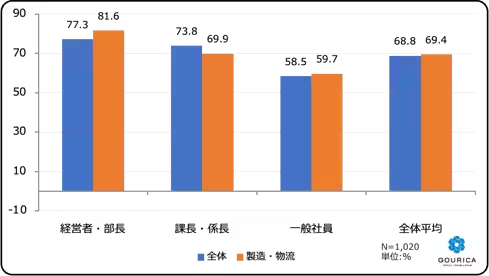
The survey revealed a strikingly positive attitude towards outsourcing among executives, with 81.6% perceiving it as a rational choice. This percentage exceeds the overall managerial confidence level of 77.3%, showcasing a pronounced readiness to leverage external experts and resources, which is vital for operational efficiency.
3. Specialization and Dependency Issues
Alarmingly, the perception that specialized tasks are still concentrated among specific individuals is prevalent, with 67.4% overall, increasing to 75.7% among executives. Such trends suggest that the penchant for systematization does not yet translate sufficiently into practice, leaving a gap between aspirations and actual workforce distribution.
4. Need for Technology Utilization Training
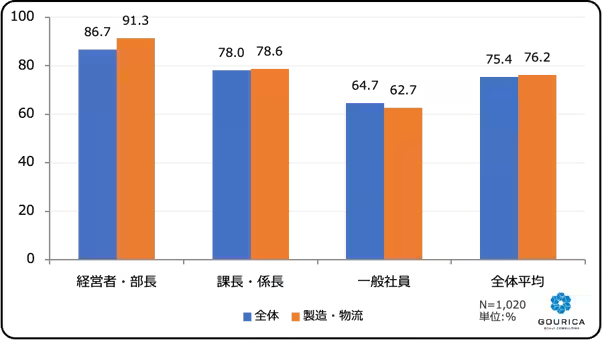
A significant 91.3% of executives in manufacturing and logistics acknowledged the need for training on digital transformation (DX) tools and AI utilization, which exceeds the overall average of 86.7%. This reflects a robust commitment to continuous improvement and adapting to technological advancements in a sector known for its demand for quality and productivity.
Conclusion
The findings from this study underscore the simultaneous existence of a strong desire for systematic improvements and the ongoing challenges of task concentration in the manufacturing and logistics sectors. As stated by President Okamoto of Gourica Corporation, the commitment to improvement and learning among Japanese manufacturing professionals is quite high. Nevertheless, this dedication can lead to inefficiencies when individuals hold onto tasks that could be systematized or outsourced, ultimately hindering progress toward greater productivity.
The Path Forward
To overcome these barriers, it is crucial for companies to embrace outsourcing decisions and establish environments that prioritize training and skill acquisition while leveraging external resources. By doing so, they can enhance focus on core activities and foster a culture of improved efficiency in a competitive landscape.

Topics Consumer Products & Retail)



【About Using Articles】
You can freely use the title and article content by linking to the page where the article is posted.
※ Images cannot be used.
【About Links】
Links are free to use.