



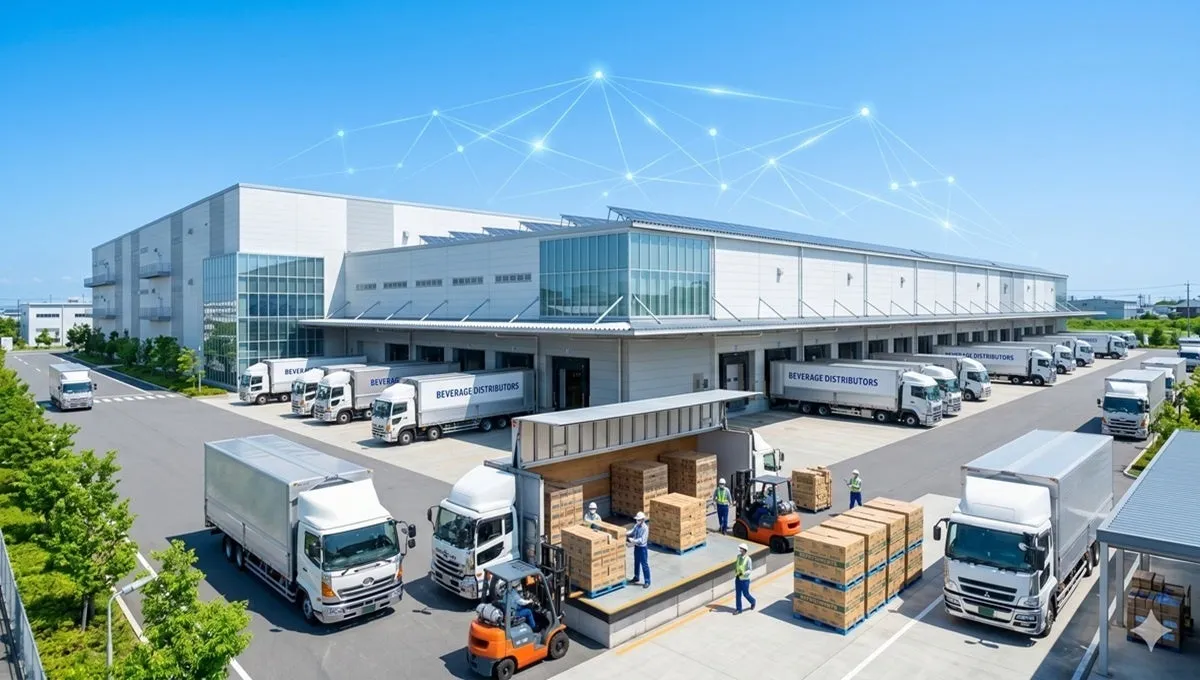
Transforming Beverages Logistics: Overcoming the Triple Challenges Through Structural Reforms
Overcoming Triple Challenges in Beverage Logistics
In a critical juncture for the beverage industry, Seaos Inc., a company specializing in logistics consulting and systems development, has released a white paper detailing the crucial structural reforms needed to address the significant challenges currently facing beverage logistics. The white paper is titled "Transforming Beverage Logistics: Overcoming the Triple Challenges through Structural Reforms - A Roadmap for Joint Delivery and Return Matching Implementation in Anticipation of New Logistics Efficiency Laws."
The Triple Burden Explained
The beverage logistics sector is notably plagued by a unique set of issues collectively referred to as the "triple challenges": severe driver shortages, the impending Logistics 2024 issue, and compliance with the new logistics efficiency laws. One specific difficulty is the handling of heavy goods, alongside steep seasonal demand fluctuations. Additionally, conflicting pallet specifications and the waiting times for cargo further complicate logistics processes.
In this challenging environment, where a steady supply is essential, companies striving for operational efficiency independently are nearing the limits of their capabilities. Therefore, the white paper delves into the core structural challenges and discusses actionable strategies for minimizing risks while adapting to this new era of logistics.
The Necessity of Collaborative Delivery
One of the major focal points of the white paper is addressing the inefficiencies caused by prolonged cargo waits and seasonal demand spikes. These operational challenges, along with industry-specific customs, cannot be resolved by individual companies alone. The document explains why a paradigm shift to a platform-based approach to collaborative delivery is essential. In addition to needing a cohesive strategy for standardization, the paper sets forth compelling reasons for why collaboration between competitors can yield significant improvements in logistics efficiency.
Implementing Return Matching
The white paper also emphasizes the concept of return matching in logistics. As companies seek to respond to the new laws aimed at improving operational efficiency, return matching is emerging as a vital component. However, discrepancies in schedules between different shippers, fare adjustments, and operational rule barriers often lead to setbacks in realization. Through proposed practical steps, the paper outlines how to navigate these challenges and establish sustainable transportation routes.
Fusion of Experience and Digital Innovation
The key to successfully implementing collaborative delivery and return matching lies not solely in adopting IT tools but in redefining the desirable business processes that can accommodate multiple companies participating together. By aligning managerial vision with on-the-ground operations, the white paper advocates for a change management approach that ensures tangible results. The document builds on Seaos' 25 years of expertise in logistics and reinforces how the integration of operational and digital strategies is imperative.
Target Audience
This white paper is directed at decision-makers including:
- - Chief Logistics Officers (CLOs) and leaders in SCM/logistics departments struggling with specific responses to new logistics efficiency laws or long-term strategy formulation.
- - Heads of logistics divisions and on-site managers seeking immediate solutions to challenges like cargo waiting times, demand fluctuations, and delivery scheduling difficulties.
- - Executive leadership overseeing business planning and digital transformation (CIOs and CDOs) who require a strategic approach to drive change.
Conclusion
Seaos Inc. is rooted in over 25 years of specialized experience within the logistics sector, recognizing logistics as a critical area of business value rather than mere transportation. The company supports a wide portfolio, including strategic consulting, system development, warehouse management systems (WMS), transportation management systems (TMS), autonomous mobile robots (AMRs), and outsourcing of logistics operations.
As Seaos continues to step forward as a partner in problem-solving, they emphasize the importance of trust and collaboration to ensure that promised outcomes are met while driving reform both at the strategic and on-the-ground levels. For a deeper understanding of how to navigate these complex challenges in beverage logistics, readers are encouraged to access the full white paper at Seaos White Paper.
Topics Other)
【About Using Articles】
You can freely use the title and article content by linking to the page where the article is posted.
※ Images cannot be used.
【About Links】
Links are free to use.