



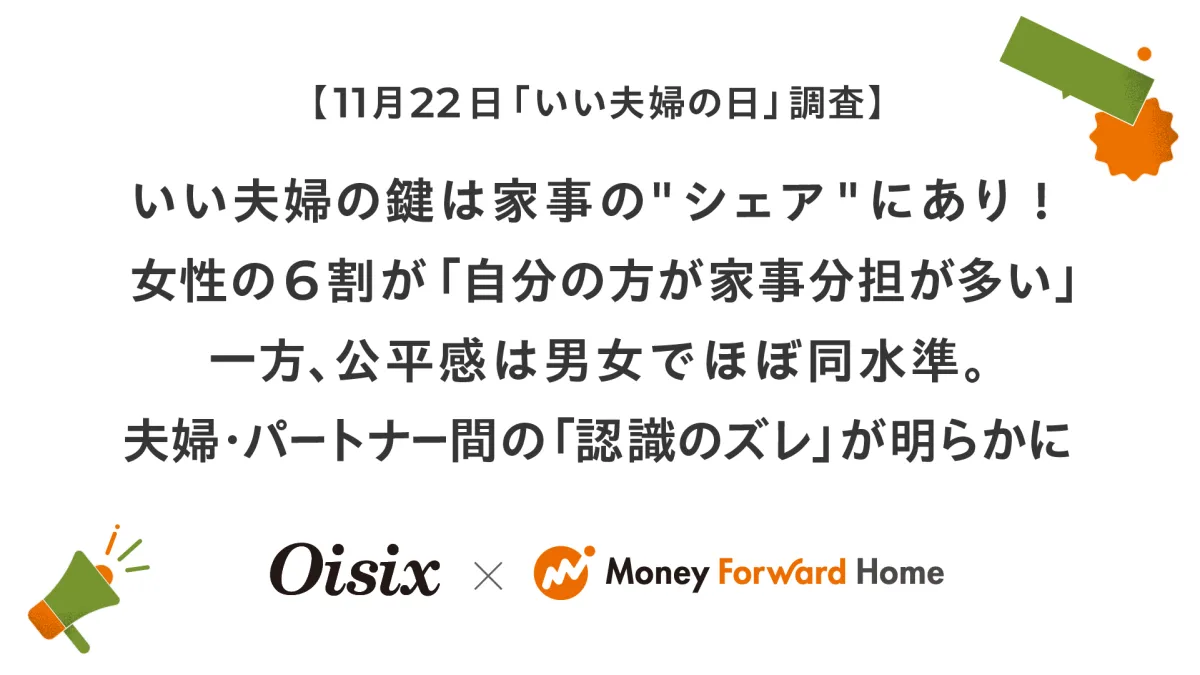
Key to Happy Couples: The Importance of Domestic Task Sharing Revealed in Survey
Understanding Domestic Responsibilities in Couple Relationships
On November 22, the day designated as "Good Couples Day," a collaborative survey between Money Forward Home Co., known for their budget visualization service, and Oisix, a subscription food service provider, revealed significant insights into household responsibilities among couples. Conducted among 906 individuals aged 20 to 40 across Japan, the survey aimed to shed light on how couples perceive task sharing, especially when it comes to managing finances and domestic chores.
The Divide in Perception of Task Distribution
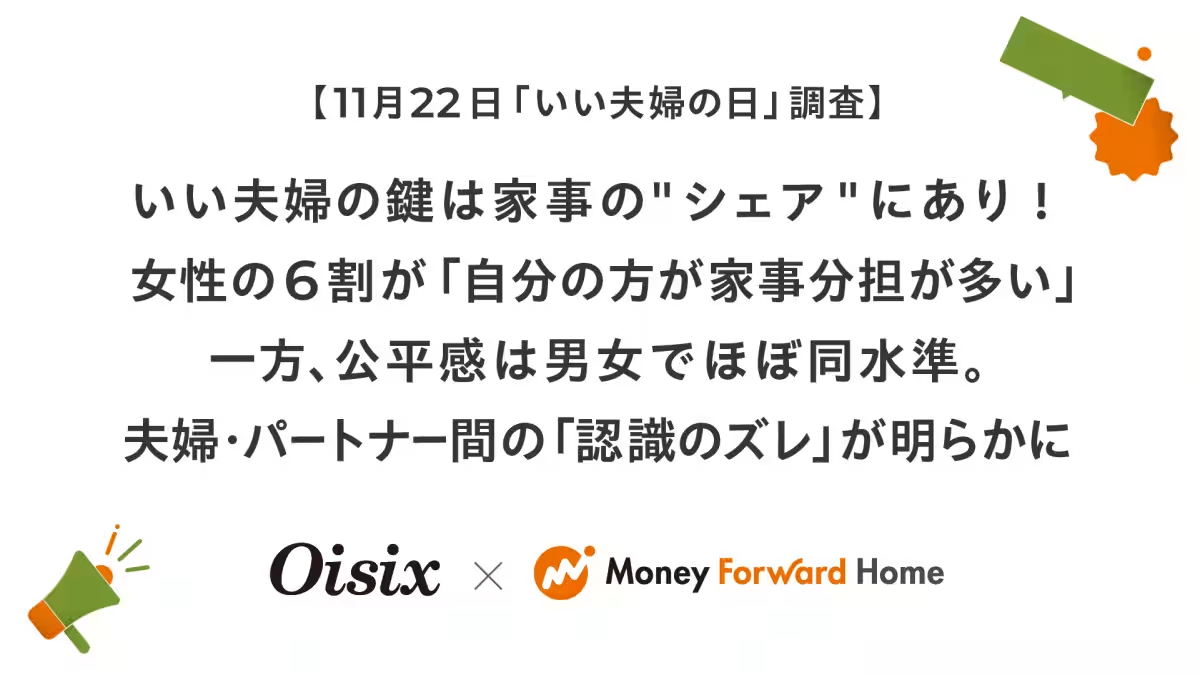
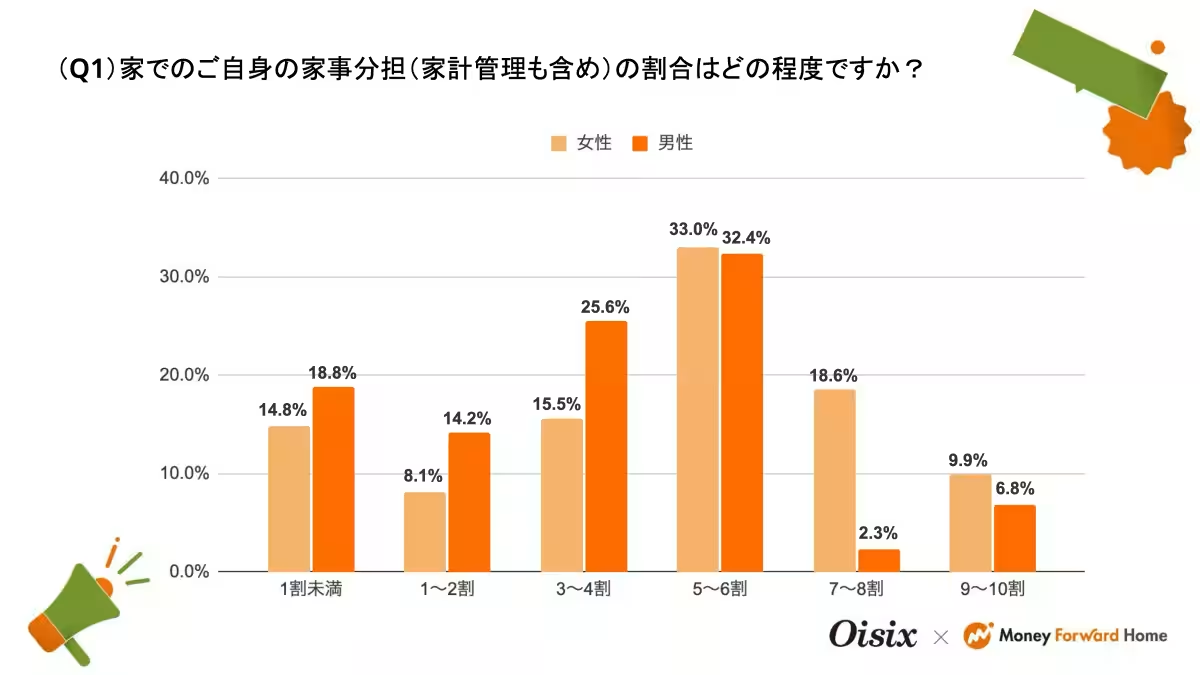
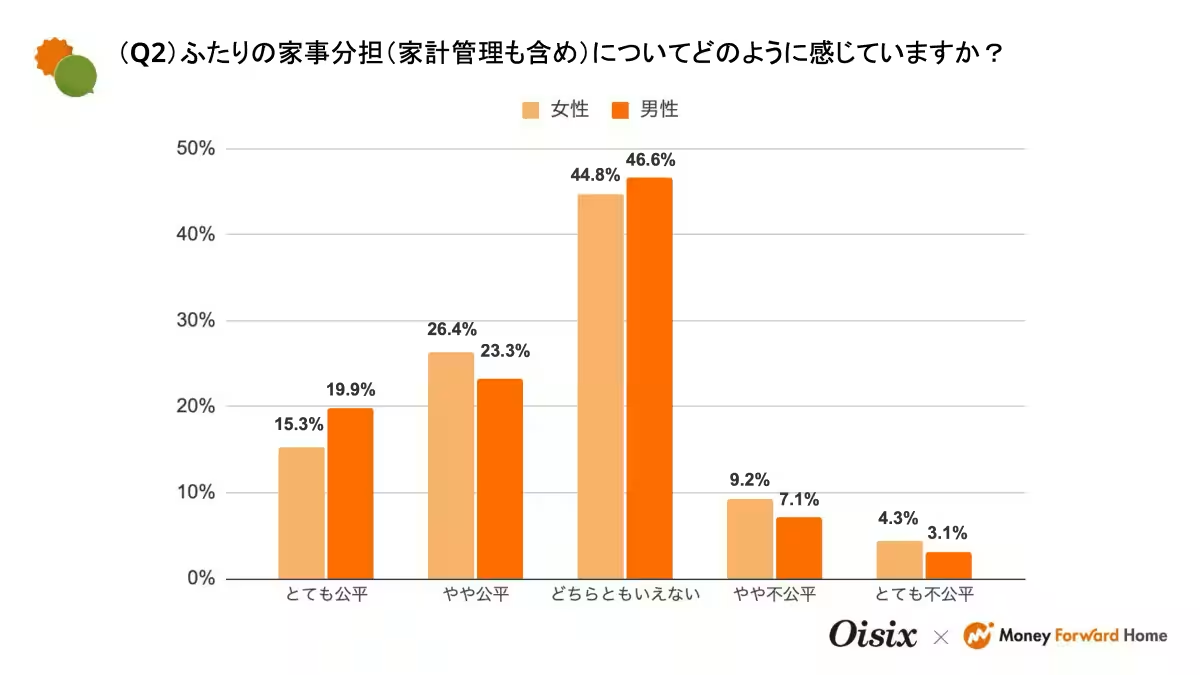
The survey highlighted a striking disparity in how men and women view the division of household tasks. Approximately 62% of women felt they managed more than half of the domestic responsibilities, including financial management, compared to 42% of men who reported the same. Despite this significant difference, both groups rated their household task distribution as "fair" at nearly identical rates, with 42% of women and 43% of men considering it equitable. This finding indicates a clear disconnect in the perception of home responsibilities and highlights the subtle tensions that can accumulate over time.
The middle ground, or the "neither agree nor disagree" responses, featured prominently from both genders, suggesting an underlying discomfort that hasn't been explicitly voiced. This hints at an unexpressed dissatisfaction, as both partners silently accumulate their feelings of inequity over time.
Understanding Fairness in Task Sharing
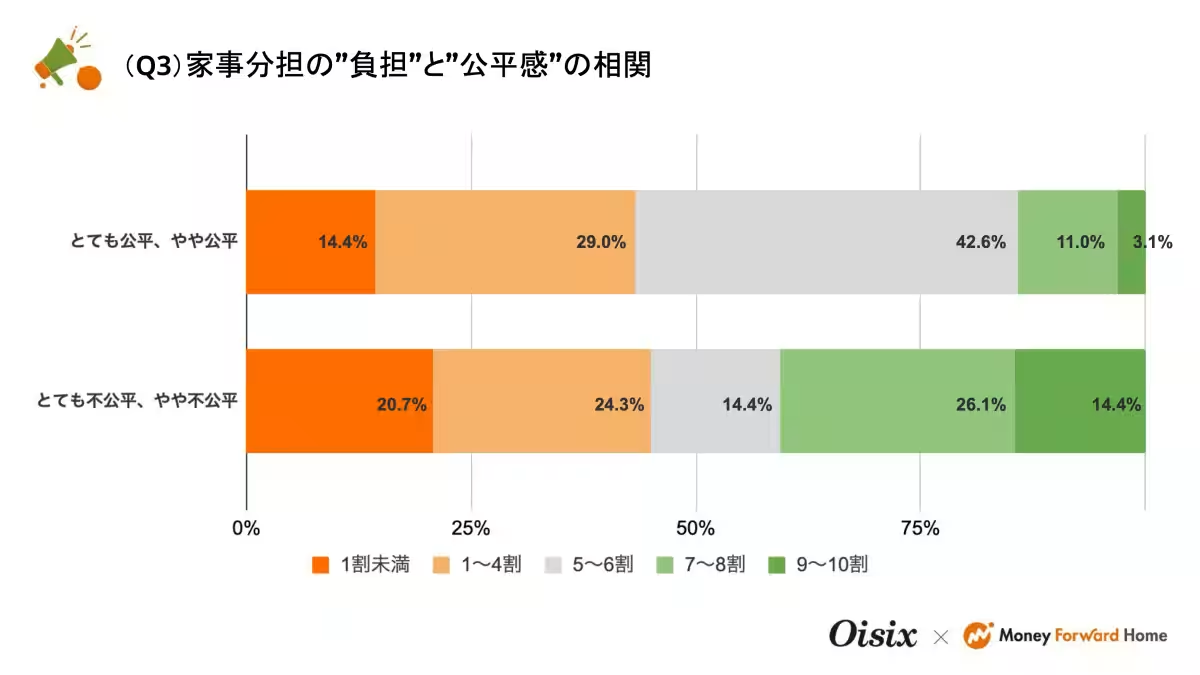
Interestingly, the analysis went further to explore the correlation between perceiving fairness and the actual workload. Among those who reported their situation as "very fair" or "somewhat fair", a staggering 86% indicated they were responsible for less than 60% of the household tasks. Comments from respondents mentioned they felt satisfied because they could agree on their roles and share responsibilities aligned with their strengths, illustrating that fairness is not strictly about equal division.
Conversely, respondents viewing their arrangement as "very unfair" or "somewhat unfair" tended to have extreme distributions of responsibilities, with 21% claiming to handle less than 10% of the chores and around 40% claiming to manage over 70%. This stark difference in contributions supports the notion that balanced sharing fosters a sense of equality within couples.
Common Sources of Frustration: Food and Finances
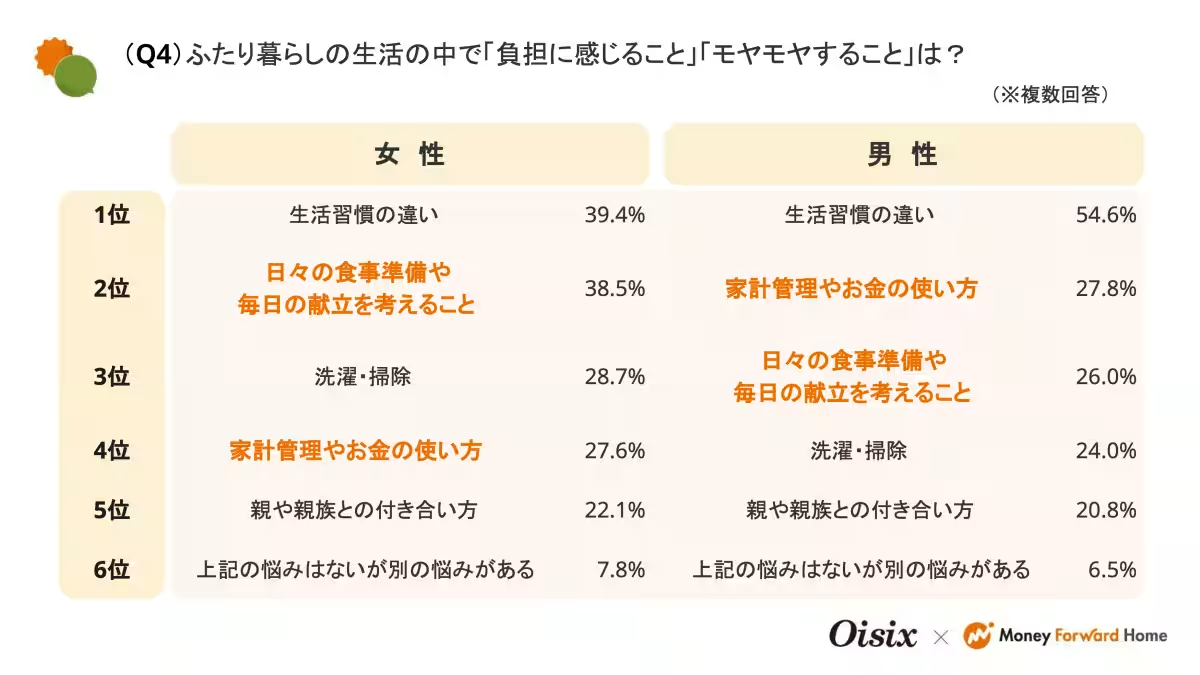
When asked about common sources of frustration within their shared lives, couples pointed to differences in living habits, dietary preferences, and financial management. Notably, the preparation and planning of meals emerged as significant areas of concern. Many couples expressed the desire for equal contribution in cooking, citing challenges related to meal preparation and nutritional balance.
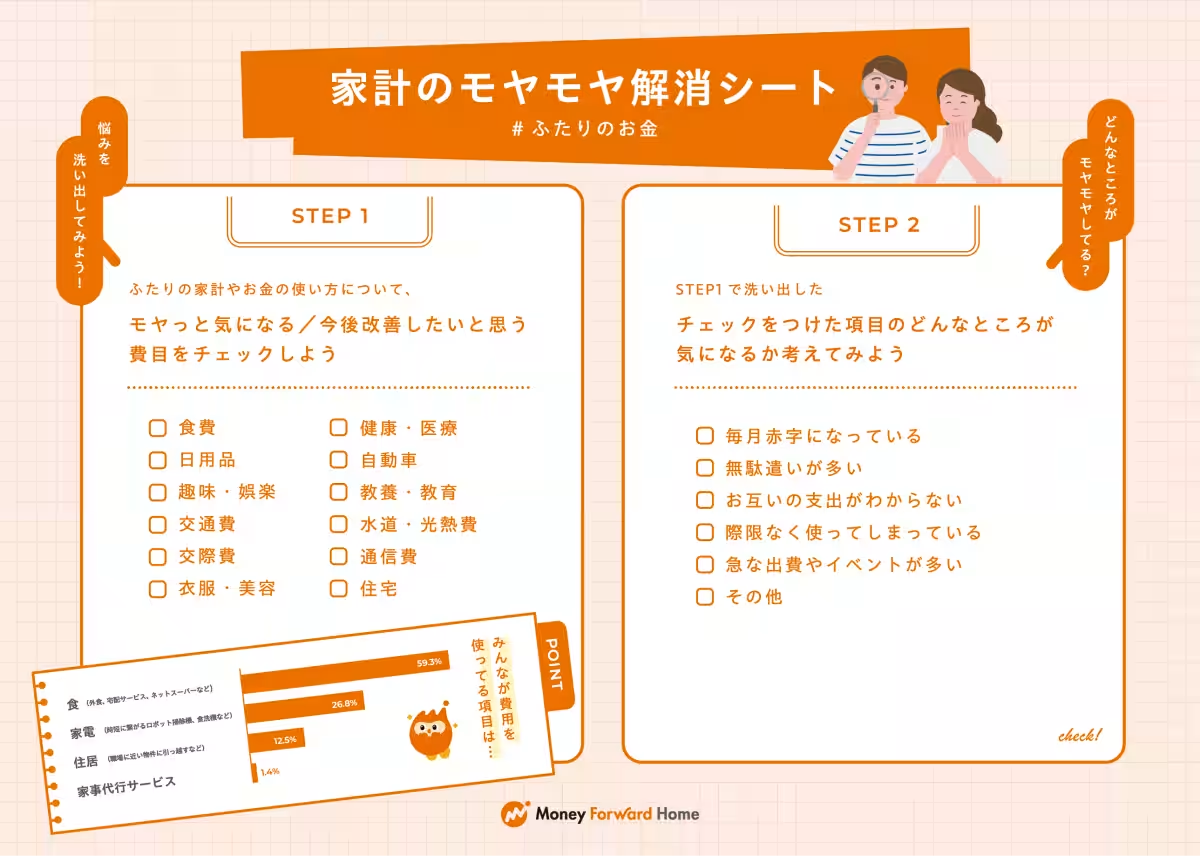
Financial management was another hurdle. Couples reported discrepancies in spending priorities and the difficulty of managing shared finances, exacerbated by different income levels. As couples transition from managing finances individually to jointly, these differences become pronounced, introducing emotional strain.
Fostering Cooperation: Task Sharing Insights
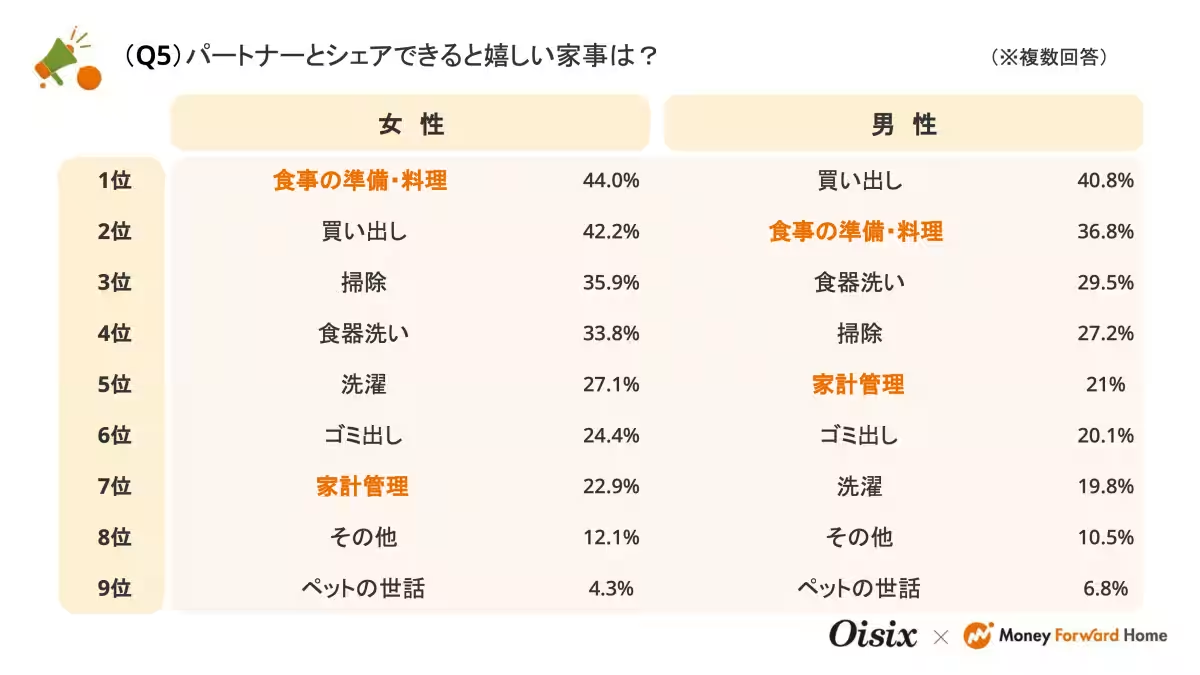
As part of their ongoing collaboration, Oisix has introduced the "Oisix CookBox," a service designed to provide couples with a ready-to-cook meal kit that includes recipes and ingredients. This innovative approach aims to alleviate the pressure of meal planning and allows couples to share the cooking responsibilities more effectively. Likewise, Money Forward Home is enhancing its services with features such as the "Shareboard," which assists couples in managing their finances collaboratively, fostering engagement in budget discussions while alleviating personal stress.
Conclusion: Moving Towards Equitable Sharing
The joint survey reveals that while partners may perceive domestic task sharing differently, an understanding of each other's contributions is crucial for a harmonious relationship. Recognizing the importance of equitable sharing—without rigidly adhering to a strict 50/50 division—can help nurture a supportive atmosphere. As both companies strive to improve their offerings, ongoing communication is encouraged to address the inevitable challenges that arise when managing a shared life.
As couples continue to navigate the complexities of cohabitation, focusing on mutual understanding and flexibility in household responsibilities can help ensure long-term relationship satisfaction.
Topics People & Culture)

【About Using Articles】
You can freely use the title and article content by linking to the page where the article is posted.
※ Images cannot be used.
【About Links】
Links are free to use.