




Exploring Work-Life Balance: Insights from a Social Survey of 1,070 Workers
Exploring Work-Life Balance: Insights from a Social Survey of 1,070 Workers
A recent survey entitled "Social Work-Life Balance" was conducted by Pasona Group, targeting 1,070 working individuals across Japan. The purpose of this study was to assess the factors that lead to satisfaction and fulfillment in the realms of work, daily life, and social interactions. The results shed light on what constitutes true happiness and richness in life through the lens of social work-life balance.
Key Findings from the Survey
1. Satisfaction in Work
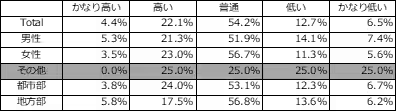
The survey revealed that there are minimal gender and regional discrepancies in the levels of job satisfaction among respondents. Close to 60% of participants indicated that good workplace relationships are of utmost importance for enhancing job satisfaction, surpassing factors like remuneration and manageable work-life balance. Interestingly, the data indicated that men place a higher value on appropriate stress levels while women prioritize a favorable working environment. Urban dwellers reported a greater ability to balance work and life compared to their rural counterparts.
When contrasting individuals who reported 'low' job satisfaction with those who considered their satisfaction 'average', significant differences emerged regarding workplace environment, stress levels, and time management. The gap was pronounced when comparing those who felt 'average' against those who expressed 'high' satisfaction, particularly in areas like finding purpose in work and receiving support from supervisors and colleagues.
Overall, the results suggest that positive interpersonal relationships in the workplace, along with the recognition of one's talents and abilities, are critical for fostering happiness at work.
2. Daily Life Fulfillment
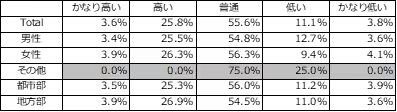
The responses regarding daily life satisfaction did not indicate substantial variances by gender or region. Approximately 80% of the respondents identified personal health as a vital factor in enhancing life satisfaction, overshadowing financial stability. Similarly, about half of the participants also stressed the importance of their family's health.
Those who reported lower levels of life satisfaction showed stark differences in their feelings about personal health and familial relationships. Furthermore, the engagement in hobbies and leisure time was crucial, particularly when comparing those with 'ordinary' and 'high' satisfaction levels.
This reinforces the idea that health—both personal and familial—and the quality of relationships have significant impacts on the perceived quality of life.
3. Social Interactions
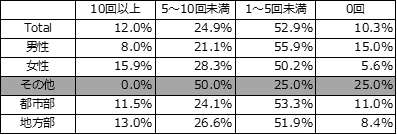
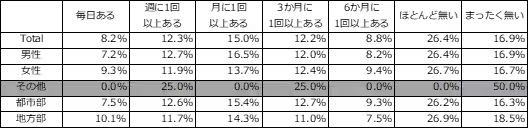
The survey indicated that about 36.9% of participants express gratitude or thanks at least five times a day, with women leading at 44.2% versus men at 29.1%. Individuals who rated their job and life satisfaction as 'high' tended to express gratitude more frequently compared to those who rated it as 'low'.
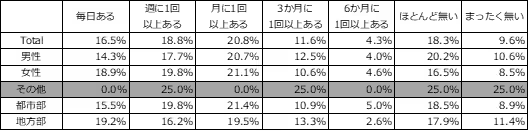
Moreover, there was a marked difference in the frequency of social interactions, with higher satisfaction correlating with more opportunities to share moments with people outside of family and work environments. Relationships that blend professional and personal interactions also demonstrated a positive correlation with overall satisfaction levels.
Conclusion
The findings from this comprehensive survey highlight a universal sentiment—the necessity for good relationships and a supportive environment where one's abilities can be utilized meaningfully. Balancing work, personal life, and social engagements is pivotal for crafting a rich and fulfilling life. The concept of 'Social Work-Life Balance' emerges as a key framework to navigate these dimensions effectively.
Survey Overview
- - Survey Name: Pasona Shadow Cabinet "Social Work-Life Balance Study"
- - Survey Duration: January 21, 2025 - March 1, 2025
- - Participants: 1,070 Japanese workers aged 20 to 84
- - Methodology: Online questionnaire
- - Organized by: Pasona Shadow Cabinet, established in 2007 to address societal issues.
Pasona Group Initiatives
Since 2016, Pasona Group has been supporting employees' work-life balance through the cultivation of internal 'Work-Life Facilitators' capable of addressing diverse career and life challenges. In 2022, they established the 'Work-Life Facilitators Association', creating a private qualification to empower around 300 certified professionals in the field. Additionally, they offer support services aimed at fostering a thriving work environment for employees.


















Topics People & Culture)


【About Using Articles】
You can freely use the title and article content by linking to the page where the article is posted.
※ Images cannot be used.
【About Links】
Links are free to use.