




Transforming Customer Engagement: The Success of MOBI BOT AI Vector Search at FANCL
Transforming Customer Engagement: The Success of MOBI BOT AI Vector Search at FANCL
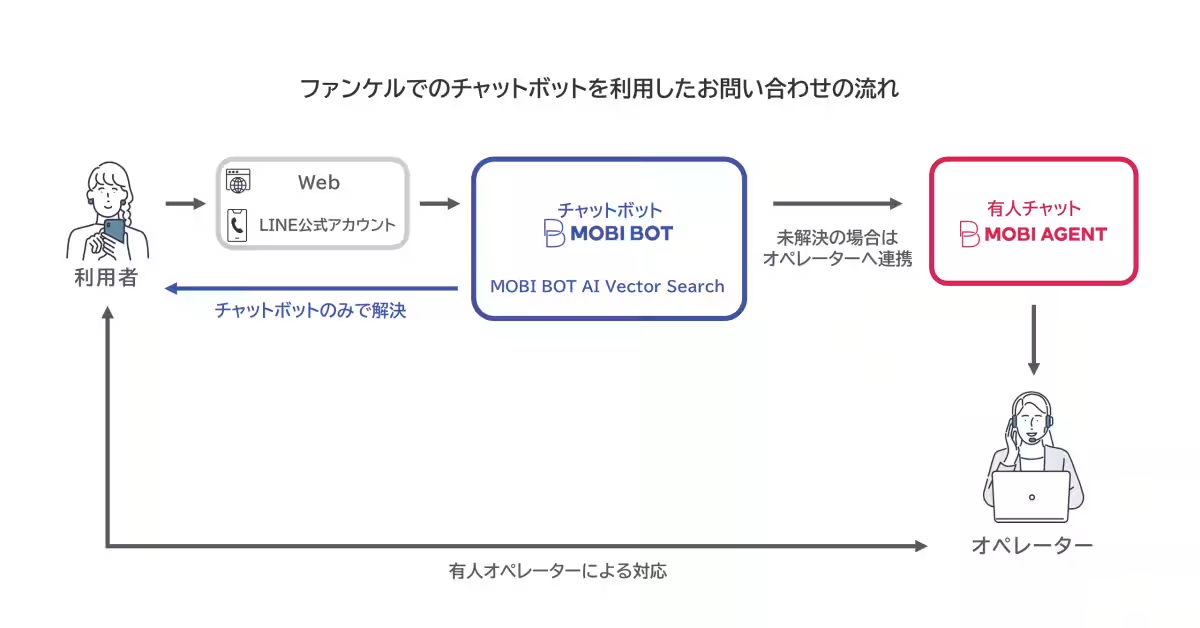
In a significant advancement in customer service, Mobilus Corporation has successfully implemented its AI-driven chatbot, MOBI BOT AI Vector Search, at FANCL, a leading brand in the cosmetics and health supplements industry. This chatbot marks a strategic move towards enhancing customer experience (CX) by significantly improving the efficiency and effectiveness of how inquiries are handled.
Background of the Implementation
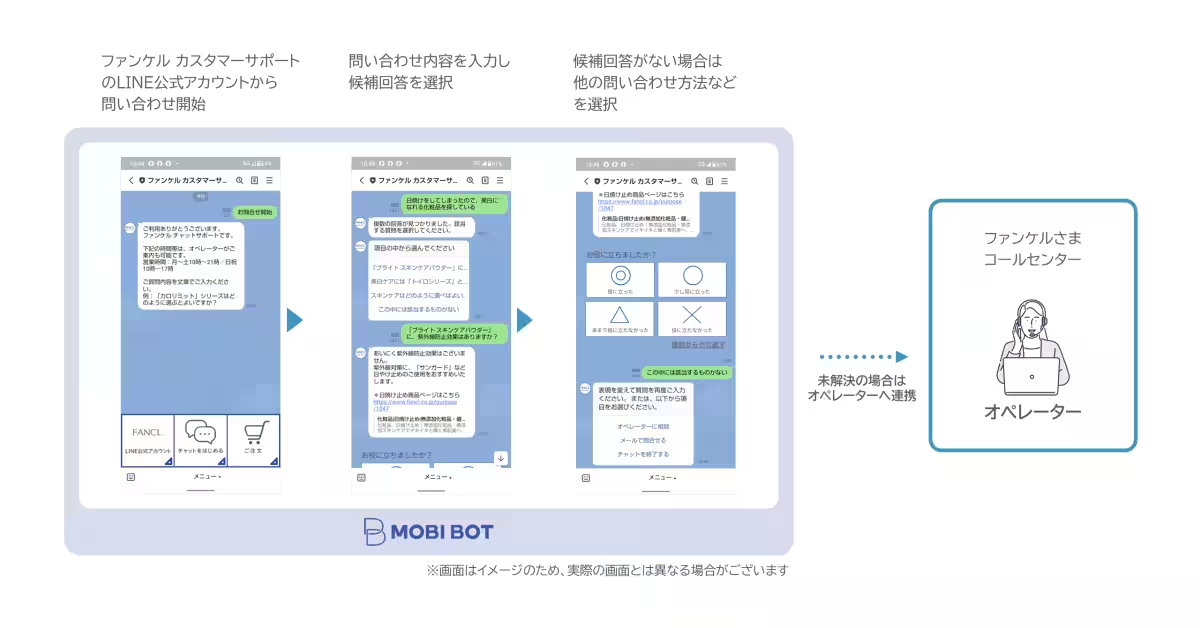
FANCL's commitment to delivering exceptional customer experiences is evident in its vision to provide the highest value of interaction for each customer. Regularly responding to a broad age demographic, particularly individuals over 40 who may feel uneasy with digital interfaces, FANCL has diversified its customer support channels to include telephone, email, web chat, FAQs, and LINE official accounts.
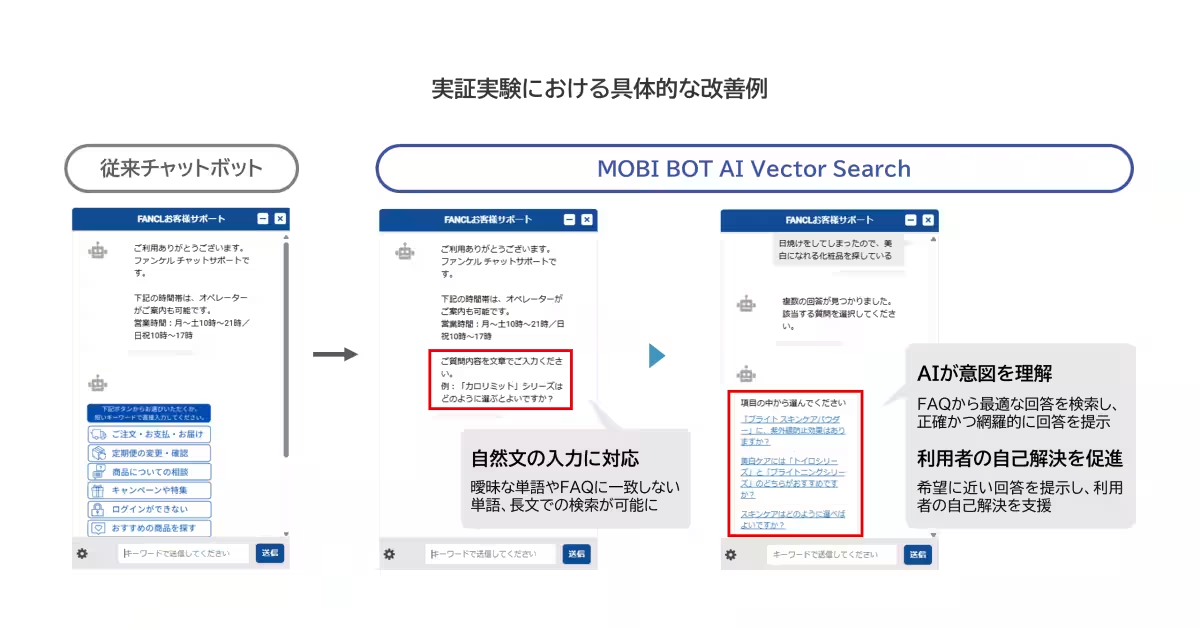
Historically, FANCL deployed a conventional chatbot model that relied heavily on keyword matching. This often led to inaccuracies, especially when customers input complex queries or used non-standard phrases. Consequently, many users found themselves directed to phone or live chat options, thereby increasing the load on human operators and hindering the efficiency of the overall customer support service.
To address these challenges, FANCL and Mobilus engaged in a proof of concept (PoC) trial in December 2025, introducing MOBI BOT AI Vector Search to the FAQ support on FANCL Online and the LINE official support account. The compelling results demonstrated a nearly 20% increase in inquiry completions compared to the previous chatbot model, coupled with a notable reduction in the need for human intervention.
Features and Improvements Offered by MOBI BOT
MOBI BOT AI Vector Search utilizes sophisticated vector search technology, allowing it to comprehend ambiguous phrases and synonyms, thus providing precise answers to customer inquiries. This technology marks a departure from traditional models that struggled under more complex user inputs. By understanding natural language, it allows users to express their needs freely and receive relevant responses, thereby enhancing the likelihood of self-resolution of inquiries.
In practice, if a user were to input a query like, 'I got sunburned and am looking for a whitening skincare product,' MOBI BOT AI Vector Search could accurately interpret their needs and present related FAQs, such as:
- - Does the Bright Skin Care Powder have UV protection?
- - Which is more recommended for whitening, the Toriro Series or the Brightening Series?
- - How should I choose my skincare products?
The bot's ability to manage long-form natural language queries and identify user intent means a decrease in misalignments that were common with older models. As a result, customers benefit from faster and more accurate service.
Key Outcomes from the PoC
The impressive results from the trial phase prompted FANCL to officially implement the MOBI BOT AI Vector Search beginning January 1, 2026. Key outcomes from the initiative include:
1. Reduction in Human Operator Load: With the increased self-resolution rate, the number of inquiries requiring human operator intervention dropped, allowing staff to focus on more complex customer needs and improving overall service efficiency.
2. Increased Inquiry Completion: Customers reported a seamless experience, resulting in approximately 20% more inquiries being successfully resolved through the chatbot.
3. High Accuracy and Trustworthy Responses: Unlike generative AI models that can produce hallucinations or inaccuracies, MOBI BOT solely relies on established FAQs to provide clear and reliable answers, fostering trust and satisfaction among users.
Future Implications
As part of its ongoing commitment to enhancing customer interactions, Mobilus plans to extend the benefits of MOBI BOT AI Vector Search to other FANCL brands such as Atenea within the coming year. The continuous evolution of customer service technologies remains a strategic focus for both FANCL and Mobilus, aiming for a progressive CX enhancement for all users.
In a closing comment, Junko Kawasaki from FANCL emphasized the transformation in querying capabilities: 'The nature of inquiries can now be more descriptive, enabling better responses. We've seen marked improvements in resolution rates, and the ease of analysis is allowing us to adjust our approach further for optimization.'
In conclusion, the collaboration between Mobilus and FANCL underscores a critical industry shift towards advanced customer engagement strategies, leveraging AI technologies to meet the demands of modern consumers worldwide.

Topics Consumer Products & Retail)
【About Using Articles】
You can freely use the title and article content by linking to the page where the article is posted.
※ Images cannot be used.
【About Links】
Links are free to use.