



Transforming Office Spaces: The Impact of Green and Digital Transition on SMEs
Introduction
In recent years, the relevance of office spaces has evolved significantly, especially for Small and Medium-sized Enterprises (SMEs). As organizations strive for greater productivity and employee engagement, they are increasingly investing in the improvement of their office environments. This shift has been notably influenced by the COVID-19 pandemic, which has prompted many businesses to rethink their workspaces to enhance employee motivation and performance.
The Foval GDX Research Institute, led by Director Manabu Taira, in collaboration with Foval Real Straight, has conducted a comprehensive study examining the current state and needs of office environments within SMEs in Japan. This research, conducted between March and May 2025, focused on understanding the transformations happening within these spaces and their implications for business growth.
Key Findings from the Survey
1. Office Environment Reforms
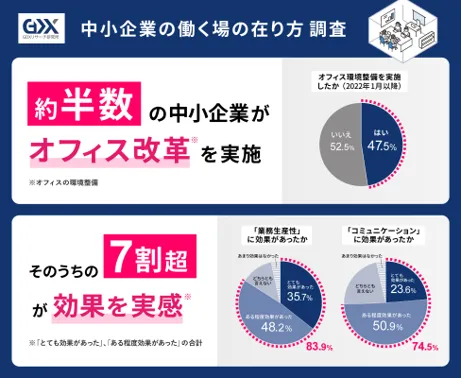
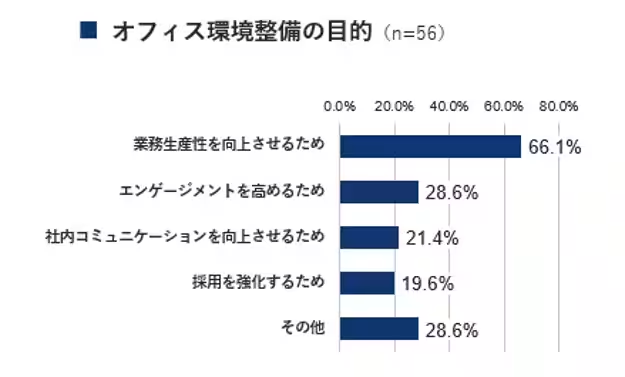
The survey indicated that approximately 47.5% of SMEs are actively implementing reforms to enhance their office environments. This improvement is not merely about aesthetic changes but is focused on creating a workspace that supports business objectives. In fact, the most cited goal for these reforms is to enhance operational productivity, with 66.1% of respondents indicating this as their primary motivation.
2. Positive Impacts of Office Overhauls
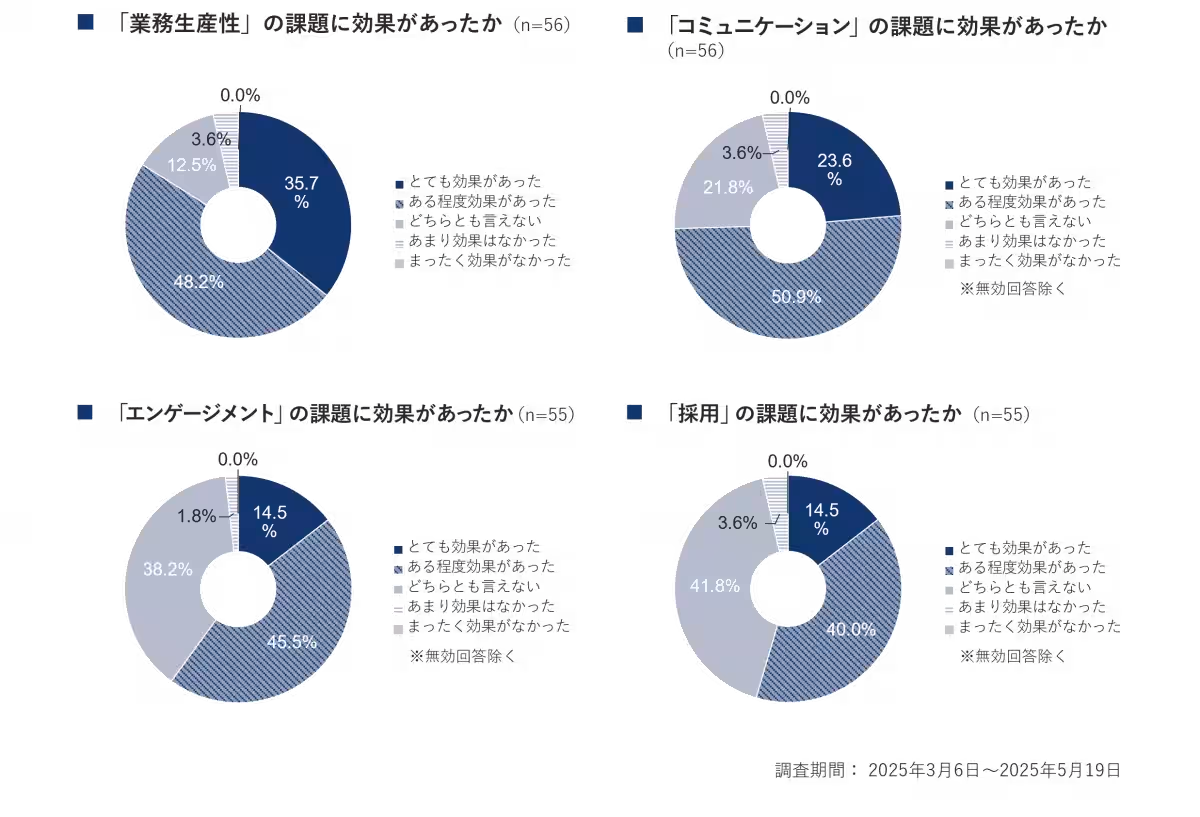
Among the enterprises that have undertaken renovations, more than 70% reported significant improvements in productivity and communication within their teams. The overall sentiment indicates that enhancing the office space is not just beneficial but essential for addressing various business challenges faced by SMEs today.
3. Advancements in Office Design
Recent trends show a shift towards more flexible work environments, moving away from traditional fixed seating arrangements to free-address systems. Many enterprises are redesigning their layouts to include distinct areas for collaboration and concentration, helping to facilitate better engagement and teamwork among employees.
The Role of Leadership in Office Transformation
Business leaders play a crucial role in driving the transformation of office spaces. According to Taira, creating a conducive work environment goes beyond responding to aesthetic preferences; it's about significantly impacting employee productivity and communication. Companies that invest in improving their workspaces are likely to experience higher employee retention rates and effective hiring practices.
In interviews conducted as part of this research, numerous company leaders expressed their hopes that enhancing their office environments would yield positive returns in terms of employee engagement, communication improvement, and overall team dynamics.
Organizational Insights
The study further categorized the challenges faced by these SMEs into four primary areas: operational productivity, employee engagement, communication barriers, and hiring difficulties. The findings suggested that addressing these areas through improved office environments could lead to substantial benefits. Notably, 83.9% of the surveyed companies acknowledged that environment improvements significantly influenced their operational productivity levels.
Conclusion and Recommendations
In conclusion, the research outlines that transforming office spaces is a strategic move for SMEs to thrive amid today's evolving business landscape. The importance of an effective workplace cannot be understated, as it significantly impacts productivity, employee satisfaction, and company culture. Taira emphasizes that SMEs facing challenges related to their work environments should seriously contemplate necessary enhancements to realize these potential benefits.
As the world continues to adapt, the need for innovative, adaptable office spaces becomes increasingly crucial. Organizations looking to elevate their work environments are encouraged to embrace the principles of Green and Digital Transformation, ensuring that their workplaces not only support business operations but also nurture the talents and well-being of their employees.
About Foval GDX Research Institute
With over 99% of businesses in Japan classified as SMEs, the growth of these organizations is vital for the nation’s economy. The mission of the Foval GDX Research Institute is to investigate and advocate for the Green Digital Transformation (GDX) of these enterprises, producing valuable reports and insights to support their evolution.
For more information on our research and findings, please visit: Foval GDX Research
Survey Overview
- - Conducted by: Foval Real Straight Co., Ltd.
- - Survey Period: March 6, 2025 - May 19, 2025
- - Participants: Small business leaders in Tokyo
- - Methodology: Online questionnaire with analysis of responses
- - Valid Responses: 118







Topics Business Technology)
【About Using Articles】
You can freely use the title and article content by linking to the page where the article is posted.
※ Images cannot be used.
【About Links】
Links are free to use.