



Work-Life New Balance: A New Era for Professionals' Priorities
Work-Life New Balance in Modern Professional Life
As professionals increasingly navigate the dual demands of work and personal life, a new survey sheds light on the priorities that shape their experiences. Conducted by Shikigaku Inc., a Tokyo-based consulting firm utilizing the innovative organizational method known as the 'Shikigaku' model, the survey targets 1,000 individuals across a spectrum of age groups from 20s to 50s. The findings reveal intriguing insights about how these professionals balance their commitments, aligning with the company's latest online service, HYO-SHIKI, launched on July 1st this year.
Background of HYO-SHIKI
The launch of HYO-SHIKI marks a significant milestone for Shikigaku, celebrating ten years of enhancing organizational operations through unique consulting processes. Within just one month of its launch, HYO-SHIKI attracted over 1,500 registrations, indicating a growing interest in understanding the balance between work and personal life. This service introduces a novel concept dubbed 'Work-Life New Balance', addressing the perpetual challenge many professionals face when trying to prioritize their duties.
Research Objectives
The primary objective behind Shikigaku's survey was to evaluate how individuals interpret their priorities concerning work and personal life. The 'Work-Life New Balance Promotion Team' established hypotheses prior to conducting the research, acknowledging a prevailing belief that younger generations tend to prioritize personal life more than their seasoned counterparts. Moreover, the team posited that work does not inherently oppose personal life; rather, it plays a fundamental role in enriching one's personal experiences.
Survey Insights
The research, conducted between May 23rd and May 27th, 2025, scrutinized various aspects of work-life dynamics through an online questionnaire. Here are some of the key findings:
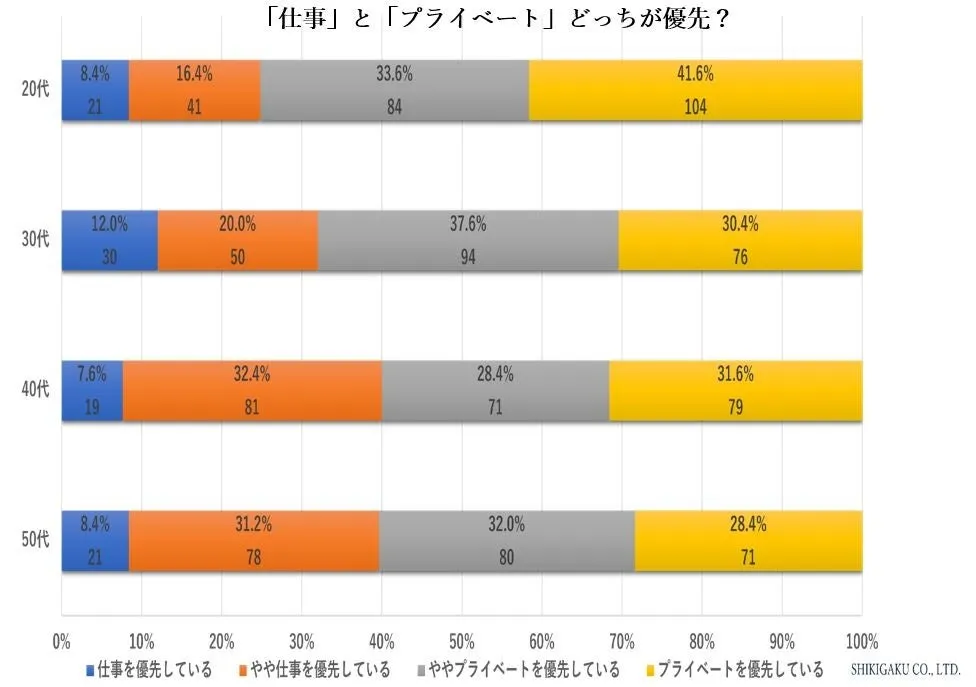
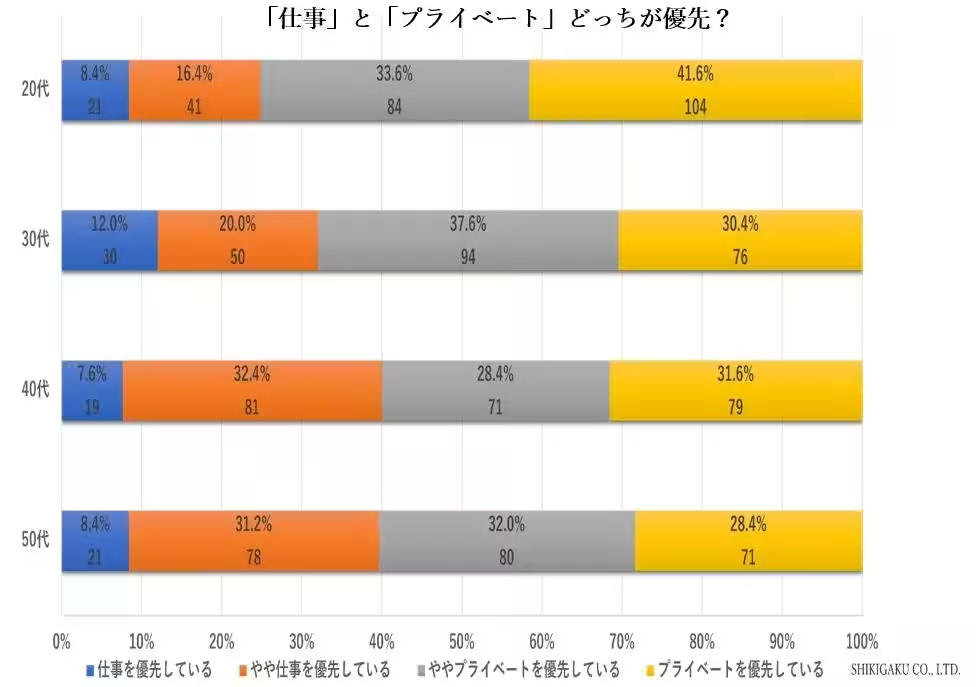
1. Preference for Personal Life: Of the participants, a resounding 659 out of 1,000 indicated they prioritize personal life, comprising approximately 65.9% of respondents. Among the age groups surveyed, younger individuals in their 20s showcased the highest tendency to prioritize personal life, while 50s respondents showed the least inclination towards this approach.
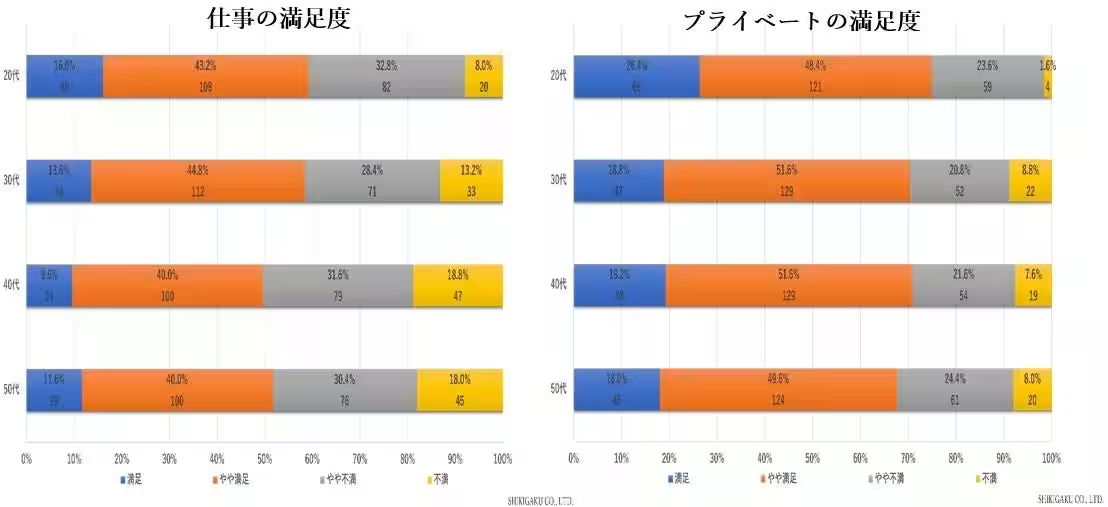
2. Satisfaction Levels: When assessing the satisfaction levels associated with work and personal life, over half of the respondents expressed satisfaction with their work, while a notable 70% found satisfaction in their personal lives. These figures suggest a complementary relationship between the two aspects, implying that improvements in one area could influence positivity in the other.
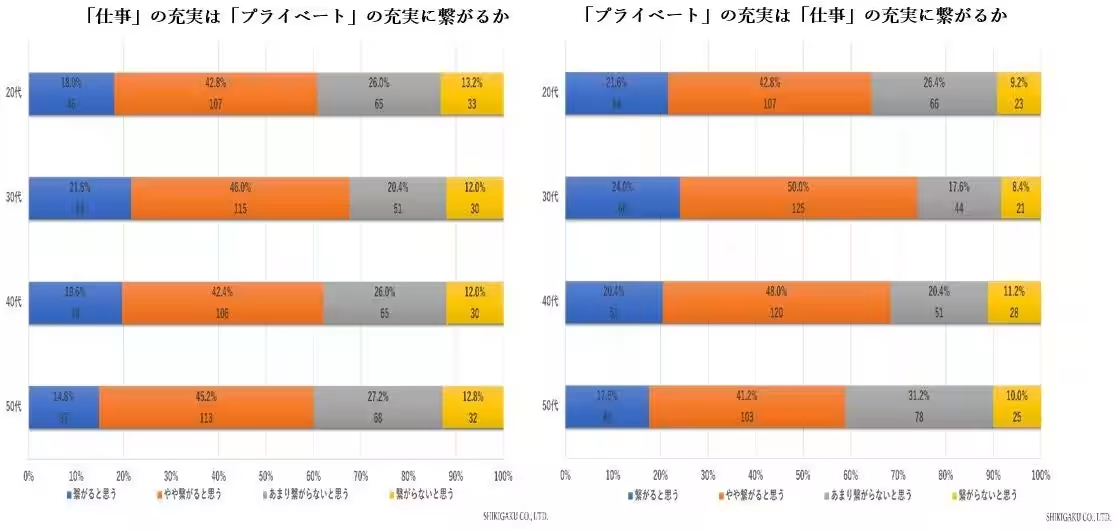
3. Interdependency of Work and Personal Life: The inquiry regarding whether enhancing work life enriches personal life—and vice versa—showed that over 60% of respondents recognized this mutual benefit. This emphasizes the idea that personal fulfillment can significantly stem from professional accomplishments.
4. Boundary Setting: Interestingly, when asked about maintaining boundaries between work and personal life, around 80% of all ages affirmed that they prefer to keep these aspects separate. This highlights a clear understanding of preserving distinct identities between work and home life, despite their interrelated impact.
5. On Forgiveness of Mistakes: Participants were also asked if they could overlook mistakes made by colleagues in either setting. Findings indicated a strong inclination (over 70%) towards being more forgiving in personal scenarios compared to the workplace.
6. Enhancing Personal Life: Many respondents identified that a key component for enriching personal life includes financial flexibility, rated at 55.7%, followed by 32.9% for flexible work arrangements. This strongly reflects the reciprocal ties between workplace conditions and personal satisfaction.
Conclusion
The development of HYO-SHIKI emerges from a conscious awareness of work-related attitudes and their significant impact on productivity. As labor hours continue to decline, so too does productivity, prompting a full-fledged reevaluation of how work and lifestyle intersect in contemporary society. The outdated notion of a simple work-life balance—where one must negate the other—is under increasing scrutiny.
Shikigaku's findings demonstrate a clear need for a shift in perspective. The data suggests that professionals today value personal fulfillment, affirming that neglecting work in favor of personal time does not offer a sustainable solution. Instead, achieving satisfaction in both areas appears pivotal for overall well-being. During this era of transformation, embracing a holistic approach to work and life, where both can thrive, is essential for paving the way for future generations of professionals.
Through HYO-SHIKI, Shikigaku aims to redefine this balance, fostering a community where professionals recognize that excellence at work can coalesce with personal growth, paving the way for a rewarding, enriched life.

Topics People & Culture)

【About Using Articles】
You can freely use the title and article content by linking to the page where the article is posted.
※ Images cannot be used.
【About Links】
Links are free to use.