



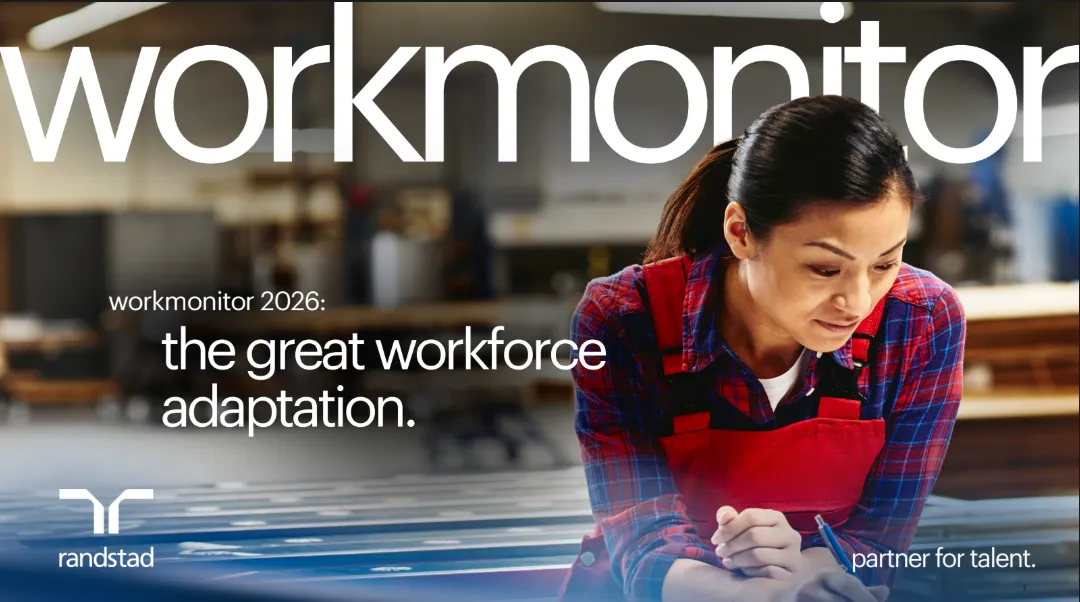
Confidence Gap Emerges: While Companies Expect Growth, Workers Remain Skeptical
The Confidence Gap: Companies vs. Workers
In a recent report by Randstad, the world's largest staffing firm, a significant disparity has emerged between employer optimism and worker confidence. While an astounding 95% of businesses anticipate growth in 2026, only 51% of the workforce shares this sentiment, leading to concerns regarding the ongoing pressures faced by employees amidst global uncertainties.
Randstad's 2026 WorkMonitor survey, which sampled over 27,000 workers across 35 markets, along with insights from 1,225 employers and over 3 million job postings, highlights the critical shifts shaping the labor force today. The findings underscore large-scale adaptations driven by the rise of artificial intelligence (AI), the transition to more portfolio-oriented careers, and the increasing importance of strong managerial relationships.
AI as an Opportunity, Not a Threat
One of the primary insights from the report is the contrasting views on AI's impact on jobs. While 21% of workers believe their tasks will remain unaffected by AI advancements, companies are accelerating integration, showcasing a vital misunderstanding. Jobs requiring 'AI agent' skills have seen an astonishing 1,587% increase in demand throughout 2025, with the rise of 'AI trainer' roles increasing by 247%. Additionally, skills in 'prompt engineering' are emerging as essential across all sectors, reflecting a massive rise of 403% in demand.
Rather than replacing jobs, AI is seen as a tool for augmenting existing roles. Notably, 65% of workers recognize the need for skills enhancement, and over half (52%) are proactively seeking opportunities to develop their competencies for the future.
Shift from Linear to Portfolio Careers
The notion of traditional career advancement is fading. Many workers are rejecting linear climb ideas, as merely 41% of employees still hope for traditional promotions. In contrast, 72% of employers consider these hierarchical systems outdated. Workers are opting for diversified career paths, often advocating for work that holds less emphasis on title elevation and more on varied experiences.
This change is reflected in contemporary work-life choices, with 40% of respondents currently holding side jobs to manage rising costs, and over a third (36%) planning to increase their working hours.
While salary is still a crucial motivator for 81% of employees, the key to retention is shifting towards achieving a balanced work-life dynamic; in fact, about 46% of respondents indicated this balance as paramount compared to 23% who highlighted compensation as a retention factor.
Strengthening Manager Relationships Amidst Uncertainty
Trust in executive leadership has declined from 77% to 72%, with even lower sentiments among Generation Z, which now stands at 67%. Workers are instead seeking assurance from their immediate managers, with 60% expressing hope for stronger ties to navigate through uncertain financial times. The percentage of employees feeling closely connected to their managers increased to 72%, signifying an evolving emphasis on these relationships in the workplace.
Intergenerational collaboration stands out as a prized asset in today’s labor market, especially in environments influenced by AI. Notably, 78% of workers learn soft skills from older colleagues, whereas 72% are acquiring tech and AI skills from Generation Z and Millennials.
Insights from Randstad's CEO
Sander van 't Noordende, Randstad's CEO, reflected on these shifts, stating: "The labor market faces unimaginable pressures, and only those capable of adaptation will thrive. AI should be framed as a means to enhance tasks and highlight roles that only humans can fulfill. The objectives of careers are evolving, prompting both talent and organizations to rethink what success means. Nonetheless, human connections remain the heart of any organization. Only when companies and talent align will true growth be unleashed."
In conclusion, the labor market is witnessing a significant transition, characterized by a notable confidence gap that highlights the need for robust communication between employers and workers. The insights from Randstad’s report not only reflect current trends but also suggest a roadmap for navigating the future of work in a rapidly changing global landscape. For detailed results, visit Randstad’s official website to download the English version of the WorkMonitor 2026 report.
About Randstad
Founded in 1960, Randstad N.V. operates in over 39 countries and is the leader in the staffing industry, aiming to create a world of meaningful work through quality staffing solutions and support for individuals in developing their careers. To learn more, visit Randstad's website.
Topics People & Culture)
【About Using Articles】
You can freely use the title and article content by linking to the page where the article is posted.
※ Images cannot be used.
【About Links】
Links are free to use.