



Investigation of Investment Scam Trends: Young Adults at Greater Risk
Overview of Investment Scams Among Young Adults
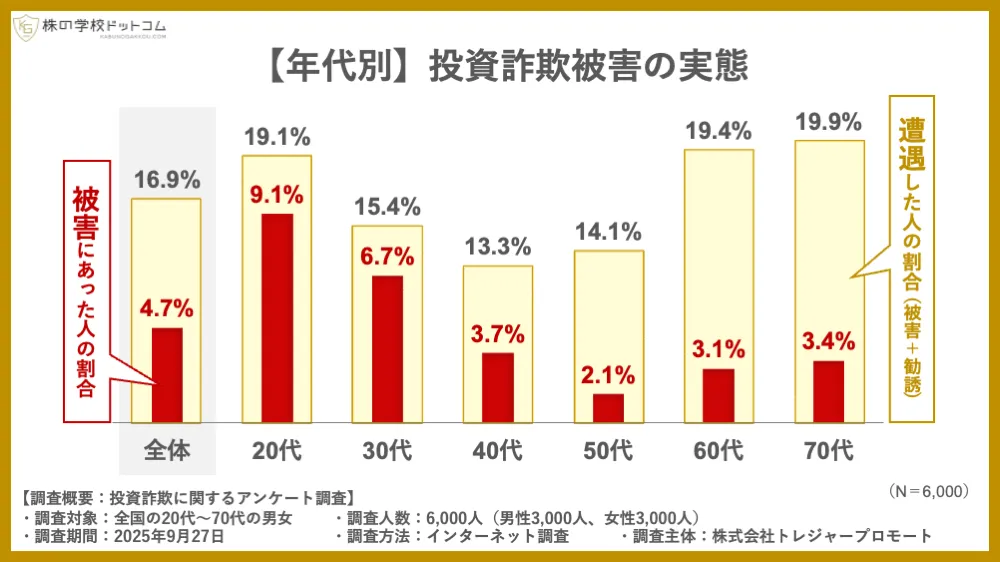
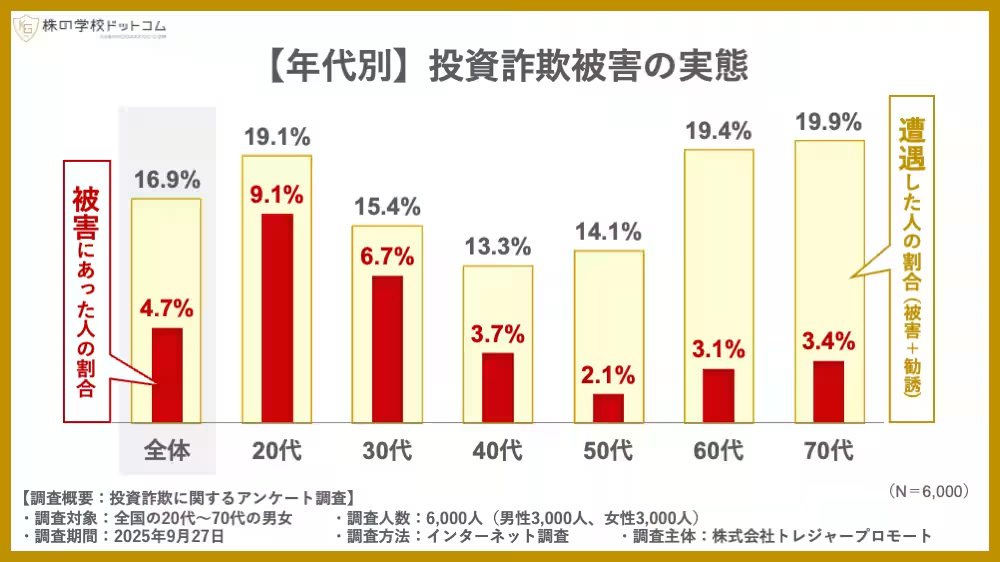
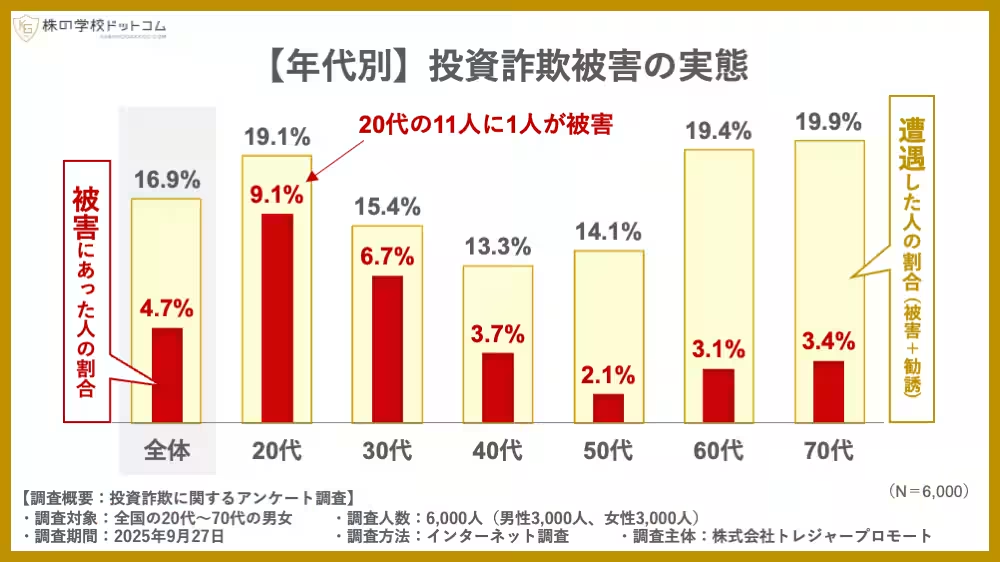
In a recent survey conducted by the online stock education platform 'Kabunogakkou.com', operated by Treasure Promote Co., a concerning trend has emerged regarding investment scams. The survey, which involved 6,000 participants aged between their 20s and 70s, revealed that individuals in their 20s are disproportionately affected by investment fraud, with a reported victimization rate of 9.1%. This figure notably surpasses that of older generations, illustrating a shift in the demographics of scam victims where younger individuals are increasingly targeted.
Victimization Rates of Investment Scams
The findings indicate that approximately 1 in 11 individuals in their 20s have experienced investment scams, compared to just 3.1% of 60-somethings and 3.4% of those in their 70s. This is particularly alarming as the cumulative encounter rate of scams (those who have either been victims or have received solicitation) stands at 19.1% for the younger demographic, akin to the 19.9% of individuals in their 70s. This suggests that nearly one-fifth of young adults face investment fraud attempts, with almost half falling victim to them, revealing the seriousness of the situation.
Trends in Scam Encounters Over Time
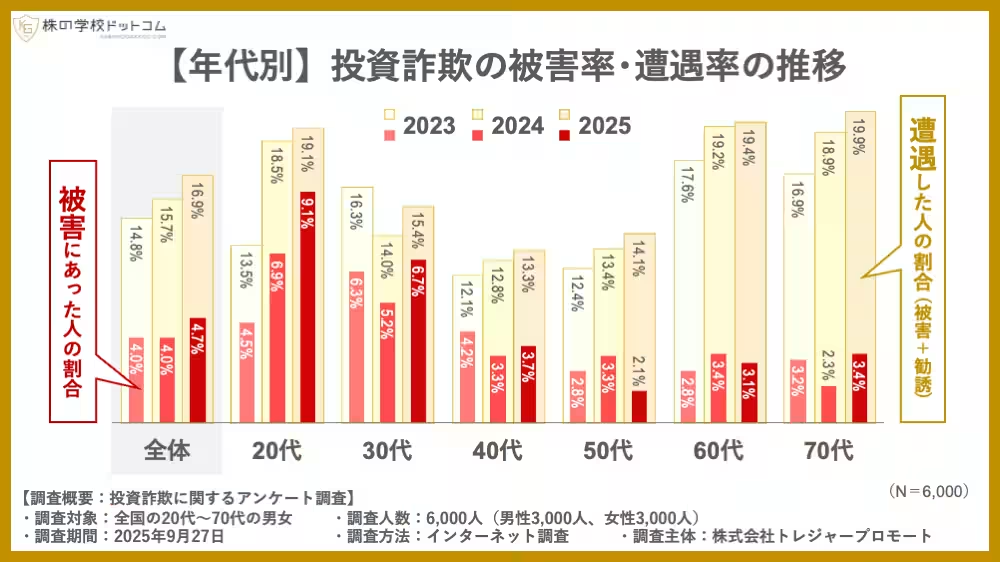
From 2023 to 2025, the encounter rate for investment scams among the 20s demographic has increased by 5.6 percentage points. Prior surveys conducted by Kabunogakkou.com show that this trend is not just confined to the younger audience; nearly all age groups, with the exception of the 30s, are seeing a rise in encounters with investment fraud. However, the growth rate for the younger population remains the highest, highlighting an urgent need for increased awareness and prevention strategies.
Methods of Encountering Scams
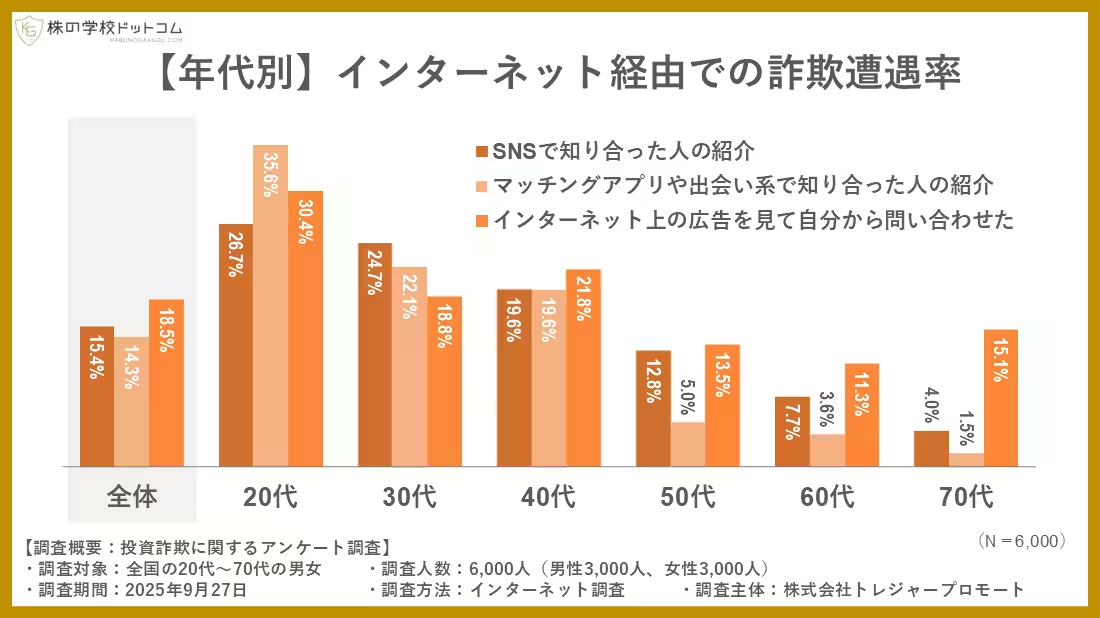
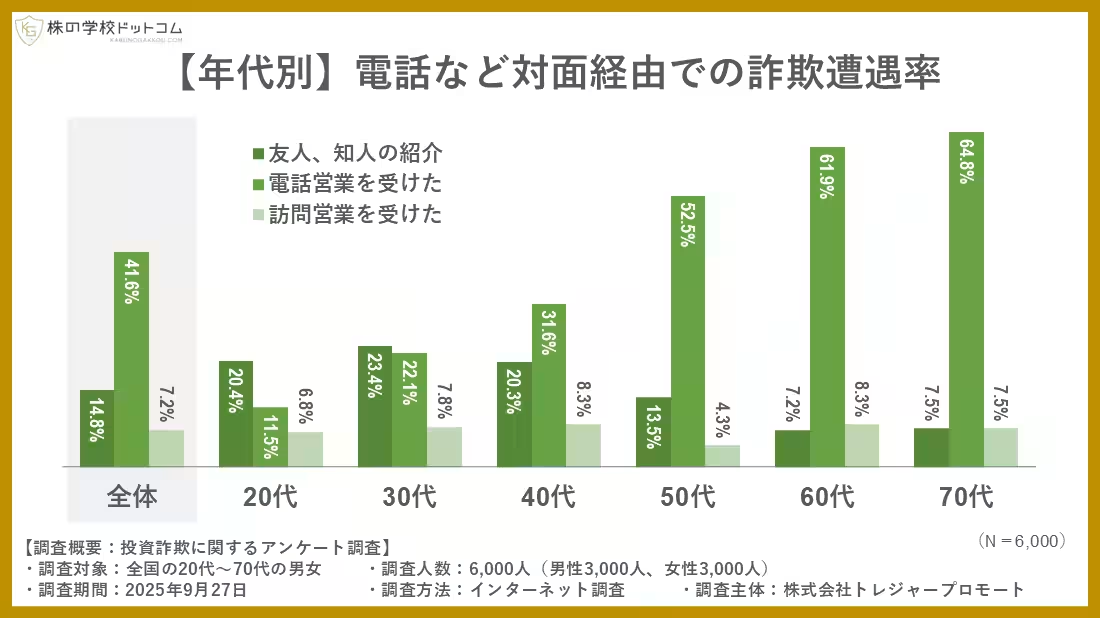
The survey results also reveal how scams have penetrated different age groups. For younger individuals, platforms such as dating apps, online advertisements, and social media serve as conduits for scamming attempts. Specifically, 35.6% of young victims reported meeting scammers through dating apps, followed closely by 30.4% who engaged after seeing advertisements online. In contrast, for those aged 50 and older, telemarketing calls are the predominant method of contact, with over 60% reporting incidents through this channel.
The Need for Increased Awareness Among Youth
The consistent findings from the three consecutive surveys indicate a continual rise in victim rates among young adults. Public perception often targets older individuals as the prime victims of financial scams, associating them with vulnerability. However, it is crucial to recognize that young adults are uniquely exposed to modern scamming tactics primarily occurring online. It is imperative for educational initiatives to address and inform younger individuals about the risks they face in the digital age.
Future Directions and Educational Efforts
Kabunogakkou.com commits itself to educating individuals about stock investment while providing resources to protect them from fraudulent schemes. With the landscape of investment scams shifting towards online channels, continuous research and awareness campaigns are essential. Moreover, investment educators will emphasize the significance of understanding common scamming techniques as a preventative measure against manipulation and deceit.
Final Thoughts
As Kabunogakkou.com’s instructor, Tsuyoshi Kubota, expresses, engaging with stock investment is transformative; it empowers individuals to take control of their finances. He emphasizes the necessity for comprehensive knowledge regarding investments and scams alike, illustrating that vigilance is a crucial component in fostering a financially literate society. Through ongoing educational programs and comprehensive resources, Kabunogakkou.com aims to create a safer environment for aspiring investors, ensuring that financial literacy is accessible and effective.
For more details about Kabunogakkou.com and their findings, visit Kabunogakkou.com.
Topics Other)
【About Using Articles】
You can freely use the title and article content by linking to the page where the article is posted.
※ Images cannot be used.
【About Links】
Links are free to use.