



Spot Work Market Report: Rising Job Availability and Wages in Japan
Introduction
The labor landscape in Japan is undergoing remarkable changes, particularly in the realm of spot work, characterized by short-term and temporary jobs. The Spot Work Market Data Report, published monthly by the Tunagu Work Style Research Institute, provides insights into this evolving sector. As of July 2025, the latest findings reveal key trends in job availability and average wages for spot workers.
Key Findings
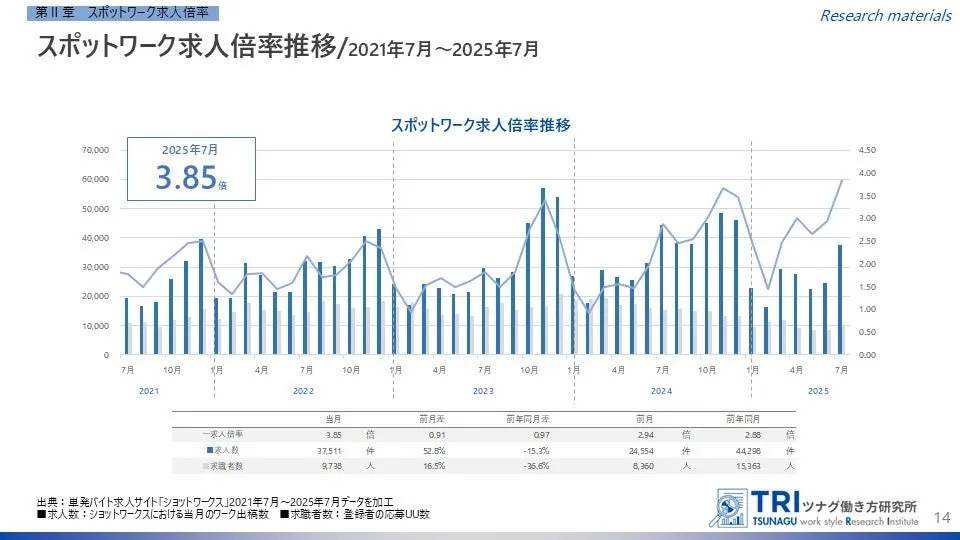
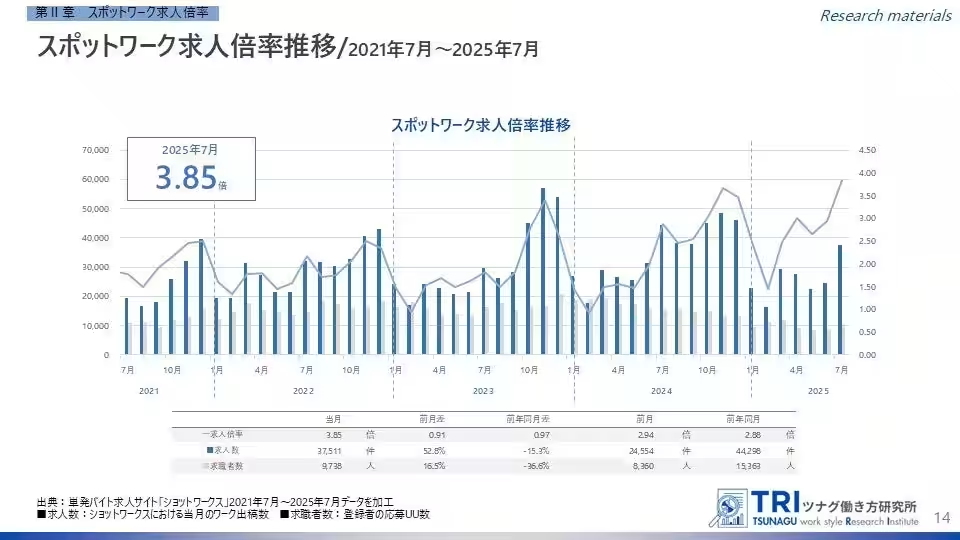
1. Job Availability: A notable rise in the spot work job availability ratio, currently at 3.85.
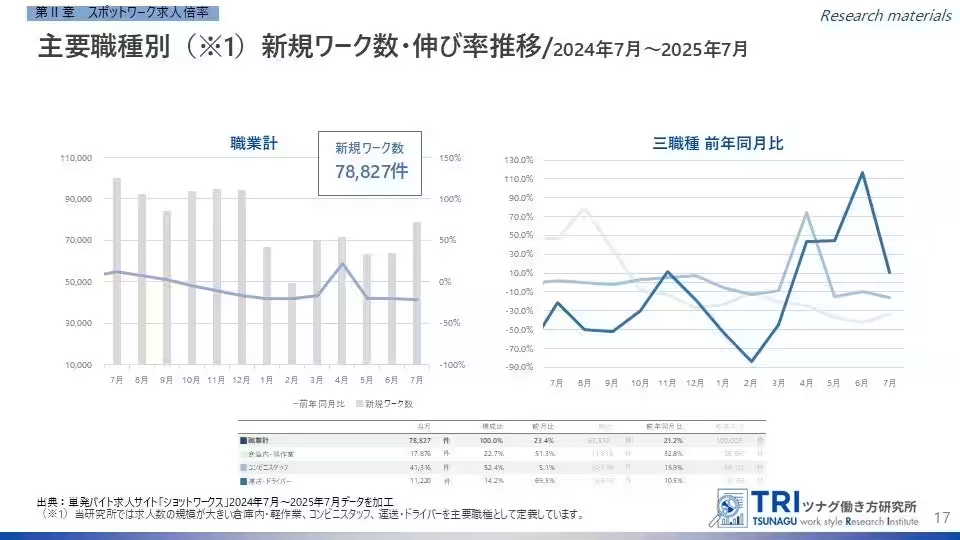
2. New Work Opportunities: New job postings stand at 78,827, reflecting a 21.2% decrease year-on-year.
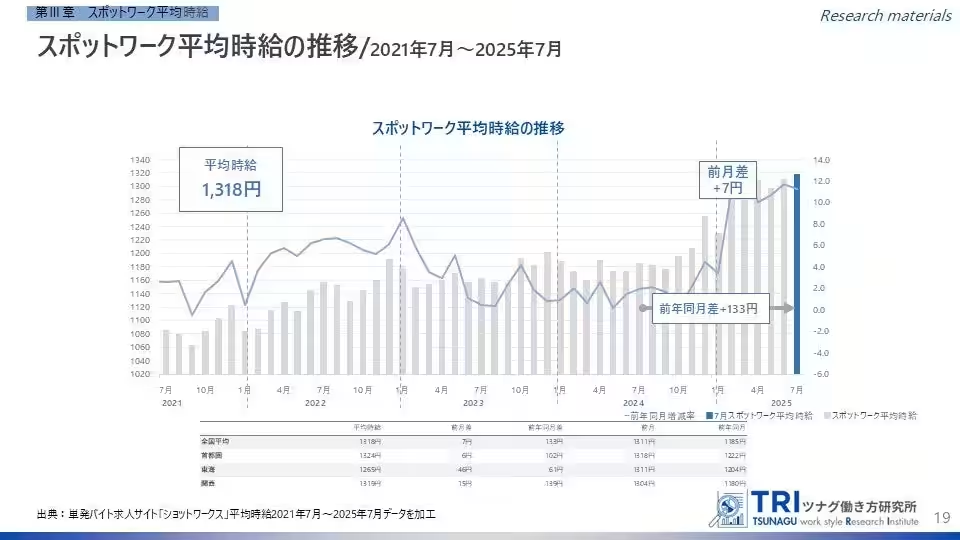
3. Wage Trends: The average hourly wage for spot work is 1,318 yen, consistently surpassing standard part-time wage rates.
Job Availability Ratio
In July 2025, the job availability ratio for spot work reached 3.85, marking a significant increase from the previous month and the same month last year. This represents a rise of 0.91 points compared to June and 0.97 points year-on-year. This upward trend has persisted for 14 consecutive months, indicating a robust demand for short-term workers in the Japanese labor market.
Decrease in New Work Opportunities
Despite the favorable job availability ratio, the number of new job postings in July 2025 was 78,827—a decrease of 21.2% compared to the previous year. This marks the third consecutive month of year-on-year decline. Notably, among the top three job categories, the transportation and driver sector saw a 10.5% increase from the same month last year, highlighting a unique growth area amidst a generally contracting job market.
Average Wage Trends
The average hourly wage for spot work as of July 2025 is 1,318 yen, reflecting a nominal increase of 7 yen from the previous month and a robust 133 yen climb from last year. In comparison, the average hourly wage for standard part-time jobs stands at 1,268 yen, positioning spot work wages 50 yen higher than traditional roles. This consistent wage advantage illustrates the growing appeal of spot work positions.
Understanding Spot Work
Spot work is defined as employment that involves working short hours on a temporary basis without a sustained employment relationship. It encompasses two main categories: gig work, which does not involve a formal employment contract, and one-time jobs, which are based on fixed-term employment agreements. A prevalent example of gig work includes individuals working as delivery personnel for services like Uber Eats.
Current Market Dynamics
The market for spot work has expanded significantly, particularly following the impact of the COVID-19 pandemic. This growth is expected to continue for several reasons:
- - Worker Perspectives: There is an increasing desire for supplemental work due to changes in labor regulations limiting overtime and reduced work hours caused by the pandemic.
- - Corporate Strategies: Businesses are shifting towards optimized staffing models that deploy necessary personnel only when required, enhancing productivity.
- - Technological Advancements: New entrants in the spot job marketplace are leveraging technology to provide timely and on-demand matching, facilitating a more efficient hiring process.
Importance of Monitoring this Market
The Ministry of Internal Affairs and Communications has introduced the 'unused labor indicator' based on ILO standards, which includes a category for workers wishing for additional employment. Spot work serves as an opportunity for many to boost their income and improve their economic stability, subsequently influencing the broader unemployment metrics. From a macroeconomic perspective, tapping into this latent labor force contributes to the overall strength of the nation's economy.
About Tunagu Work Style Research Institute
Founded in 2015, the Tunagu Work Style Research Institute is a research organization under the Tunagu Group Holdings. The institute conducts studies on diverse working styles, collaborating with experts in human resources and labor law to provide insights into labor regulations and optimal employment strategies—aiming to shape the future of work in Japan.
For more detailed insights, visit the Tunagu Group's website.

Topics People & Culture)


【About Using Articles】
You can freely use the title and article content by linking to the page where the article is posted.
※ Images cannot be used.
【About Links】
Links are free to use.