



Spot Work Market in Japan Shows Increasing Trends Despite Job Declines and Competitive Pay Rates
Latest Report on the Spot Work Market in Japan
The Tuna Group Holdings, a leading research organization focusing on diverse working styles, has released its latest findings on the spot work market, and the results contain interesting insights into the trends within this rapidly changing sector.
1. Job Offer Ratio and Growth
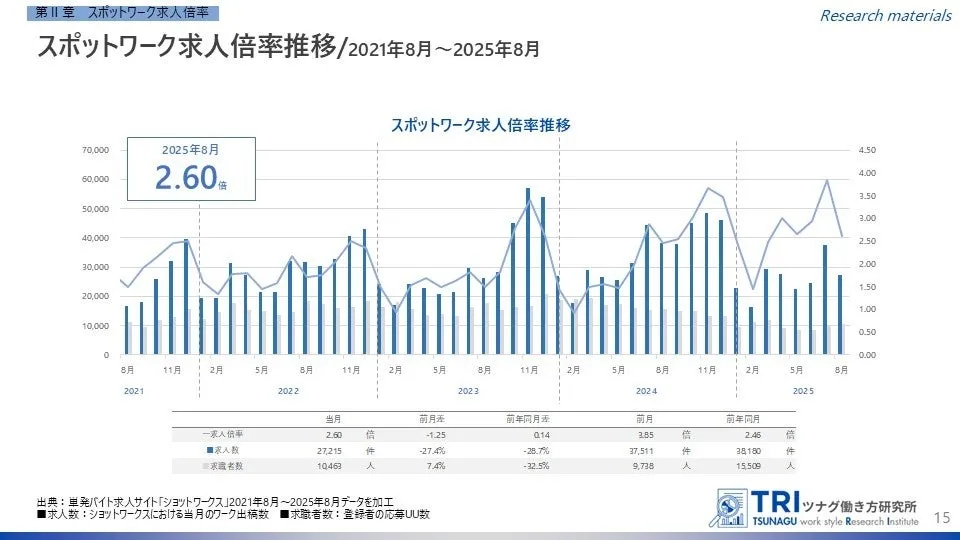
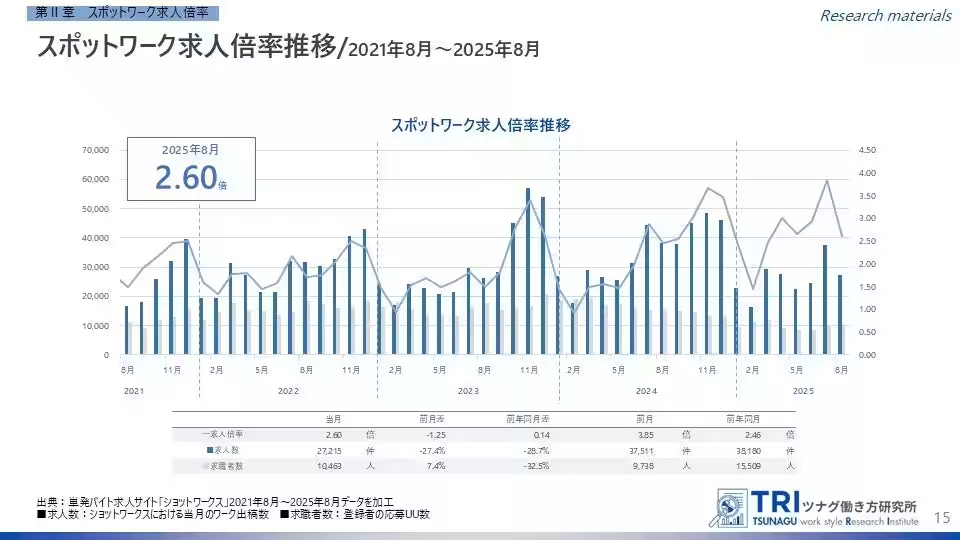
In the August 2025 report, the job offer ratio for spot work was 2.60, showing an increase of 0.14 points from the same month last year, despite a decrease of 1.25 points from the previous month. This number reflects a continuous growth trend, being up for 15 consecutive months compared to the previous year's figures. The competitive advantage of having more job offers than applicants is enticing many individuals to consider gig and spot work opportunities.
2. Decline in New Job Offers
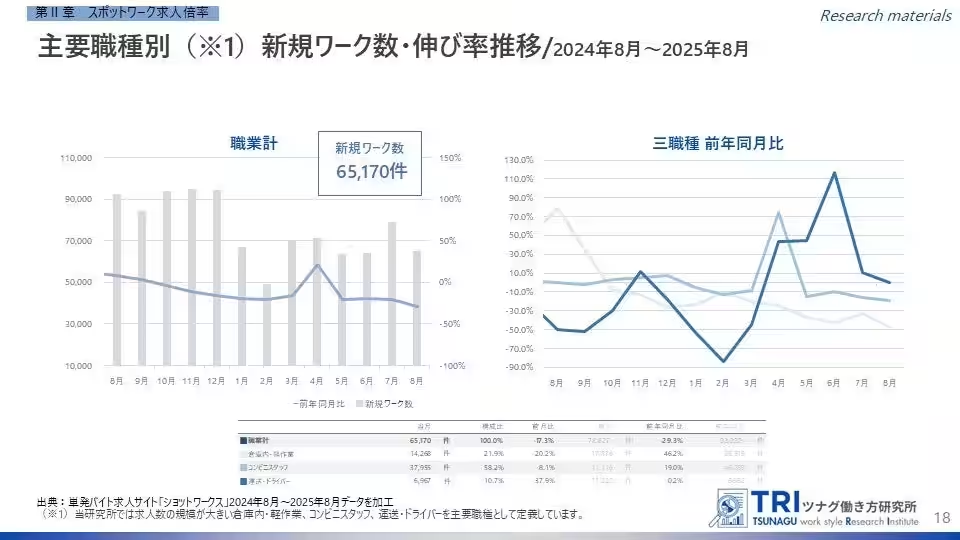
Although the job offer ratio is favorable, the report revealed that the number of new job listings has decreased significantly, reaching only 65,170 jobs in August 2025. This is a decline of 29.3% compared to the same month the previous year and marks the fourth consecutive month of fewer new job offers year-over-year. Only the transportation and driver roles experienced a slight increase of 0.2%, showcasing how customer demands fluctuate across different job sectors within the gig economy.
3. Hourly Wage Trends
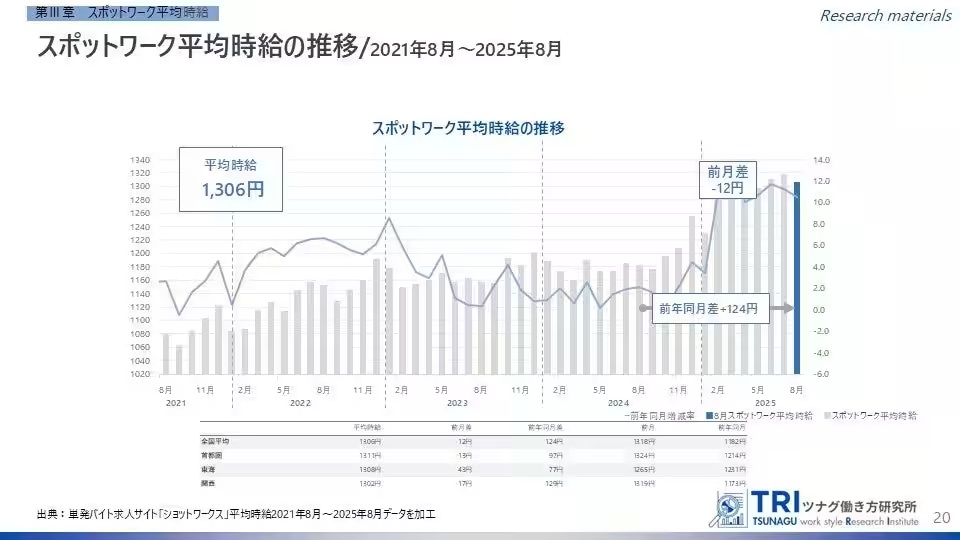
A noteworthy aspect of the latest report is the average hourly wage for spot workers, which stands at 1,306 yen. This figure is 124 yen higher than the same month last year and exceeds the average hourly wage for regular part-time staff, pegged at 1,268 yen. The competitive edge remains clear as the spot work average wage has been higher than regular part-time wages for nine months in a row, making it an appealing option for many seeking flexibility and better pay.
The Significance of Spot Work Trends
Spot work, which encompasses both gig work without ongoing employment contracts and short-term jobs with limited contracts, has become increasingly popular in response to the need for flexible working arrangements. Factors pushing individuals towards these jobs include the COVID-19 pandemic, which prompted many companies to opt for optimized staffing solutions and encouraged employees to pursue additional work opportunities to supplement their income. This growing pattern clearly points to a shift in the labor market, with more individuals looking for part-time or short-term work that aligns with their lifestyle or financial needs.
Monitoring Market Conditions
The continued collection and analysis of spot work market data is vital. The Japanese Ministry of Internal Affairs and Communications has recognized the importance of these insights by incorporating broad indicators of unused labor into their labor force statistics. By providing relevant data about spot work, the Tuna Group's research helps understand market dynamics and offers projections for future trends. This is not only beneficial for individuals seeking employment but also for companies looking to optimize their labor costs while maintaining productivity.
Conclusion
The latest issue of the Spot Work Market Data Report highlights the complex landscape of the gig economy in Japan. As both job seekers and employers navigate new work arrangements, the evolving data suggests that despite challenges, the spot work market may continue to thrive, offering opportunities that cater to both flexibility and competitive pay. The Tuna Group remains at the forefront of this subject matter, pushing for further research and understanding of the potential economic implications of this transitioning work culture.
About Tuna Group
Founded in 2015, the Tuna Group Holdings aims to solve Japan's labor supply and demand gap through innovative solutions, offering insights to future employment standards and regulations. Their commitment to studying diverse work styles positions them as a leader in labor market research, making valuable contributions to related public policies and industry development.

Topics People & Culture)


【About Using Articles】
You can freely use the title and article content by linking to the page where the article is posted.
※ Images cannot be used.
【About Links】
Links are free to use.