



Transforming Public Facilities with Science Centers in Japan
A New Era in Public, Private Partnerships: Science Centers in Japan
The Galileo Project is advocating for the introduction of science centers as vital public functions alongside libraries and museums in Japan. This proposal is part of a broader effort to enhance existing public facilities by integrating modern educational environments that align with international standards.
Understanding the Science Center Concept
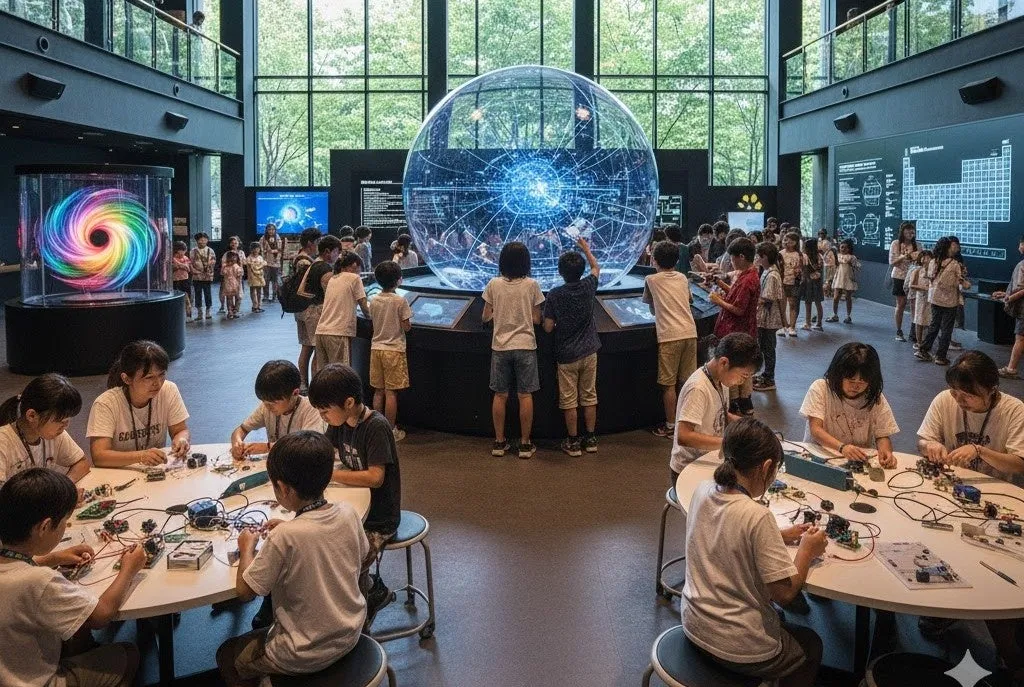
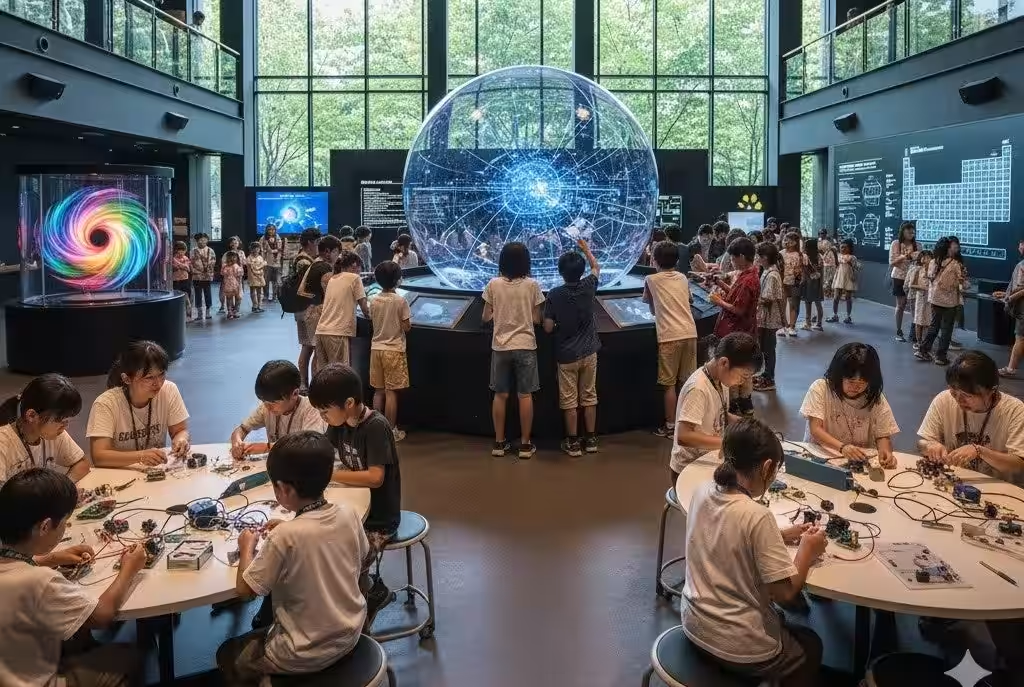
Science centers, established primarily in STEM-leading nations like Singapore, differ greatly from traditional science museums. They are designed not just for passive observation but as active learning spaces featuring experiential and participatory content. The focus on engaging educational experiences is essential to foster a lasting thirst for knowledge in the community.
In Japan, public facilities are increasingly organized around events designed to attract visitors temporarily. Unfortunately, these events often lack continuity, making it difficult for these spaces to become regular learning destinations. Education, which naturally encourages ongoing participation, can significantly elevate the perceived value of public facilities. Thus, the need for an evolution toward science centers is clear.
The Need for Science Centers in Japan Now
Recently, the influx of multicultural populations has accentuated the necessity for educational programs that transcend language and cultural barriers. STEM education serves as a powerful vehicle for promoting learning that is universally comprehensible. This demand for inclusivity, coupled with the urgency to revamp existing public facilities, makes the establishment of science centers crucial at this moment.
Redesigning Public Facility Value: The Japanese Science Center Initiative
The Galileo Project aims to redesign the value of existing public facilities through innovative updates in content and educational offerings. By utilizing underutilized spaces and systematically testing new ideas, public facilities can evolve without compromising their integrity or increasing initial investments. This phased implementation can enhance both the social utility and educational value of the facilities.
Five Zones of Learning
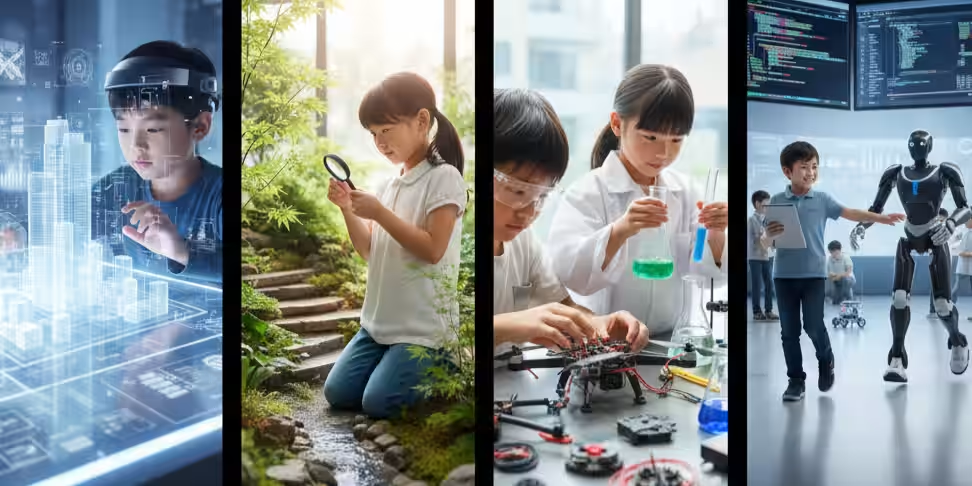
The proposed science center education package comprises five distinct zones where learning seamlessly transitions between the real and virtual worlds:
1. Virtual Learning Zone: Utilizing digital resources to design urban planning, disaster preparedness, and local industries in a virtual context.
2. Natural Learning Zone: Focusing on Japan's unique climate, geology, and natural environments to teach locally relevant science.
3. Engineering Zone: Encouraging hands-on understanding of manufacturing processes and structural mechanics.
4. Experiment Lab Zone: Promoting scientific thinking through hypothesis testing and experimentation in a hands-on lab setting.
5. Robotics Zone: Providing exposure to future technologies through control systems, automation, and programming.
This structured approach allows children to link their play and interests to deeper learning experiences, fostering a natural inquiry-based mindset.
Three Core Values of the Educational Package
The science center concept is about more than just displays and events; it aims to deliver three essential values:
- - Sustainable Learning Environments: Transition from one-time events to a core commitment to ongoing STEM education that grows with participants.
- - Community-Centric Content: Leverage regional characteristics, such as Japan’s climate and geology, to create relevant educational experiences that could even attract inbound tourists.
- - Core PPP/PFI Facility Enhancement: Position educational initiatives as fundamental to the facility's function, transforming it into a vibrant
Topics People & Culture)

【About Using Articles】
You can freely use the title and article content by linking to the page where the article is posted.
※ Images cannot be used.
【About Links】
Links are free to use.