




A Shocking 88.2% of Managers Struggles with Employee Development
A Shocking 88.2% of Managers Struggles with Employee Development
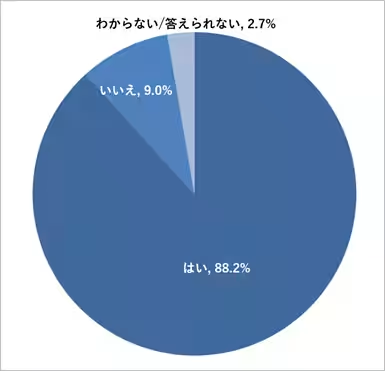
In a recent survey conducted by NTT Data Business Brains, a staggering 88.2% of managers reported facing challenges in developing their employees. This research sampled 221 accounting professionals, shedding light on the difficulties managers encounter in nurturing talent within their teams.
The rapidly changing business landscape, driven by digitalization and globalization, forces companies to continuously adapt. For organizations to thrive, investing in talent development—especially for younger and mid-level employees—is crucial. Despite this recognition, many managers find themselves ill-equipped to implement effective development strategies.
Key Findings of the Survey
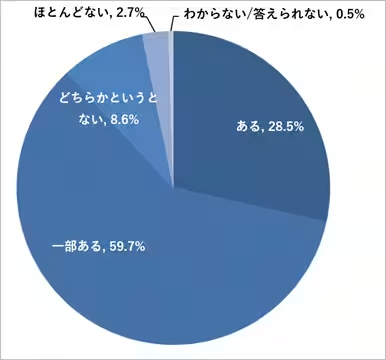
The survey revealed that while around 88% of respondents believe they have some form of strategy for employee development, a significant proportion reported that these strategies are partial or lacking in detail. Specifically, 28.5% indicated they have a clear strategy, and 59.7% claimed they have some elements of a strategy. This disparity suggests that while the importance of development is acknowledged, detailed and comprehensive plans are often not in place.
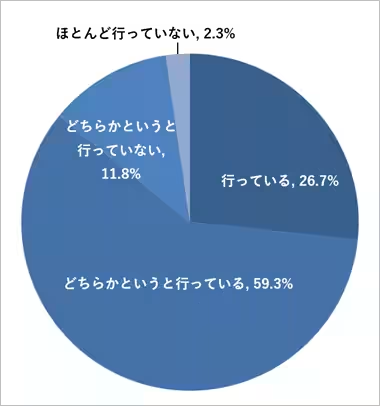
When asked about measures to counteract the personalization of tasks within their teams, only 26.7% of managers reported actively working to address this issue. An alarming 59.3% said they were somewhat engaged in such efforts. This indicates a recognition of the problems associated with reliance on individual performance, yet a lack of rigorous or effective methodologies to tackle these challenges.
Motivational Concerns Among Younger Employees
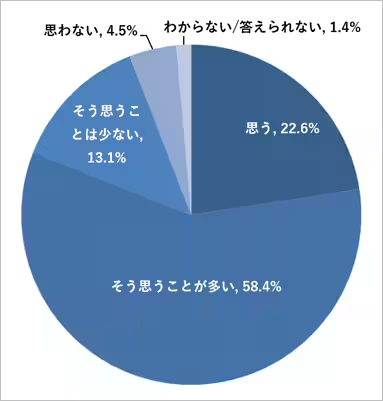
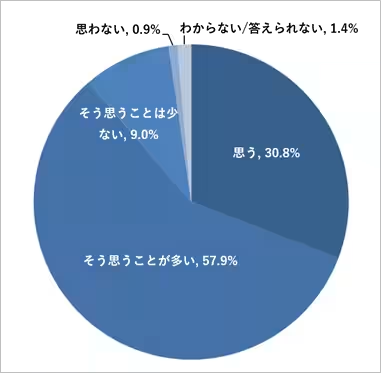
Another critical area explored in the survey was the motivation levels of younger and mid-career employees. Nearly 81% of managers expressed a belief that their subordinates were highly motivated in their work. However, when asked if they faced challenges in employee development, a remarkable 88.2% admitted to experiencing difficulties. This contradiction raises questions about the difference between day-to-day motivation and the desire for personal growth and skill advancement, indicating potential gaps that could hinder long-term engagement.
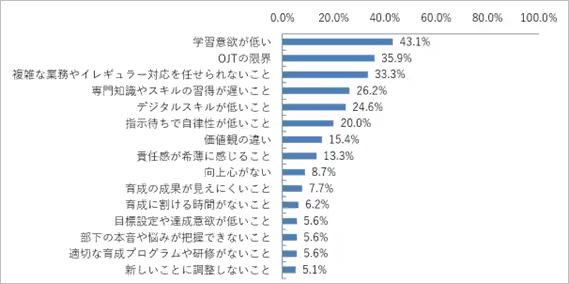
The most significant worry for many managers was that of low self-motivation among employees—43.1% cited this as their primary concern. This suggests that while employees may be accomplishing their assigned tasks, there is a lack of initiative for independent learning and development. Furthermore, 56.8% indicated the limitations of on-the-job training (OJT), highlighting a critical flaw in traditional training models, which may not suffice in today’s dynamic business environment.
The State of New Employee Training Programs
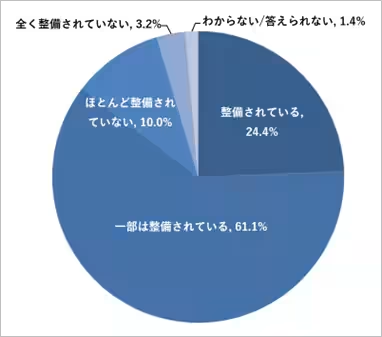
Regarding the preparedness of training programs for new hires, 85% of managers reported that their departments have some form of program in place. However, the majority indicated that these programs were incomplete or lacking in continuity, posing risks to new employees' ability to integrate fully into the company culture and operations early on, potentially leading to increased turnover.
Digital Skills: A Double-Edged Sword
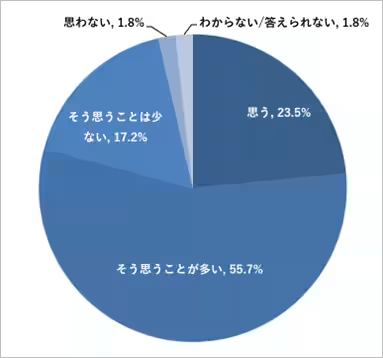
When asked about their employees’ digital skills, 79% of managers believed their teams possessed adequate abilities. Yet, a disconcerting 89% acknowledged the pressing need for improvement in this area to keep pace with ongoing digital transformations. This highlights a disconnect between perceived current capabilities and the future readiness required for successful adaptation to new technologies.
Conclusion
The findings from this survey illuminate that a vast majority of organizations are grappling with systemic challenges related to employee development, digital skills enhancement, and the personalization of tasks. The high percentage of managers facing difficulties signifies a pressing need for structured support systems that address employee development comprehensively. Resolving these issues is not merely a matter of improving individual performance but is crucial for enhancing overall organizational productivity and maintaining competitive edge in a fast-evolving business landscape.
Businesses must move beyond partial solutions to adopt systematic and strategic approaches that foster talent development, leverage digital tools effectively, and cultivate an environment conducive to continuous learning and growth. Only then can they ensure sustainable growth and remain relevant in today's dynamic market.
For further insights from the complete survey, visit the full report here.

Topics People & Culture)

【About Using Articles】
You can freely use the title and article content by linking to the page where the article is posted.
※ Images cannot be used.
【About Links】
Links are free to use.