



The Perception Gap of Harassment Standards Between Management and Non-Management Positions
Perception Disparities in Harassment Among Employees
A recent study conducted by MENTAGRAPH Inc., a fully-owned subsidiary of Japan Tobacco, surveyed 1,800 business professionals across Japan ranging from 22 to 65 years of age. This survey aimed to explore the ambiguous boundaries surrounding harassment in the workplace.
The findings indicated that non-managerial employees tend to have a more stringent view on what constitutes harassment compared to their managerial counterparts. Notably, actions considered borderline in a professional context were evaluated by participants who were tasked with defining what they believe fits the criterion of harassment.
Key Findings
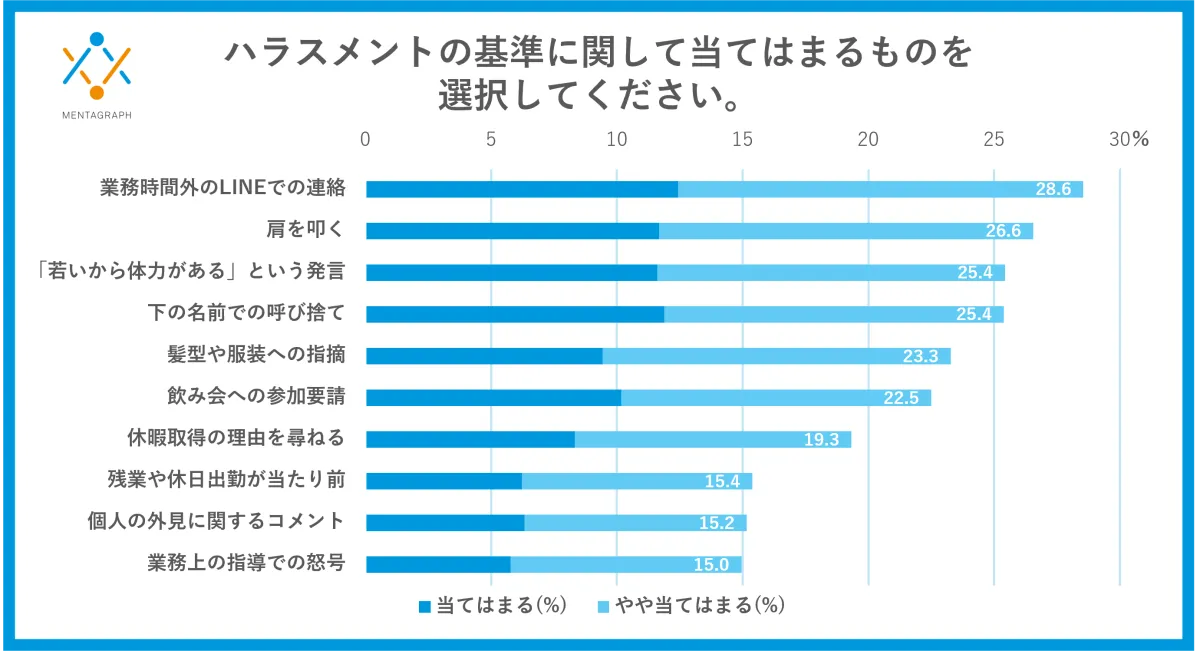
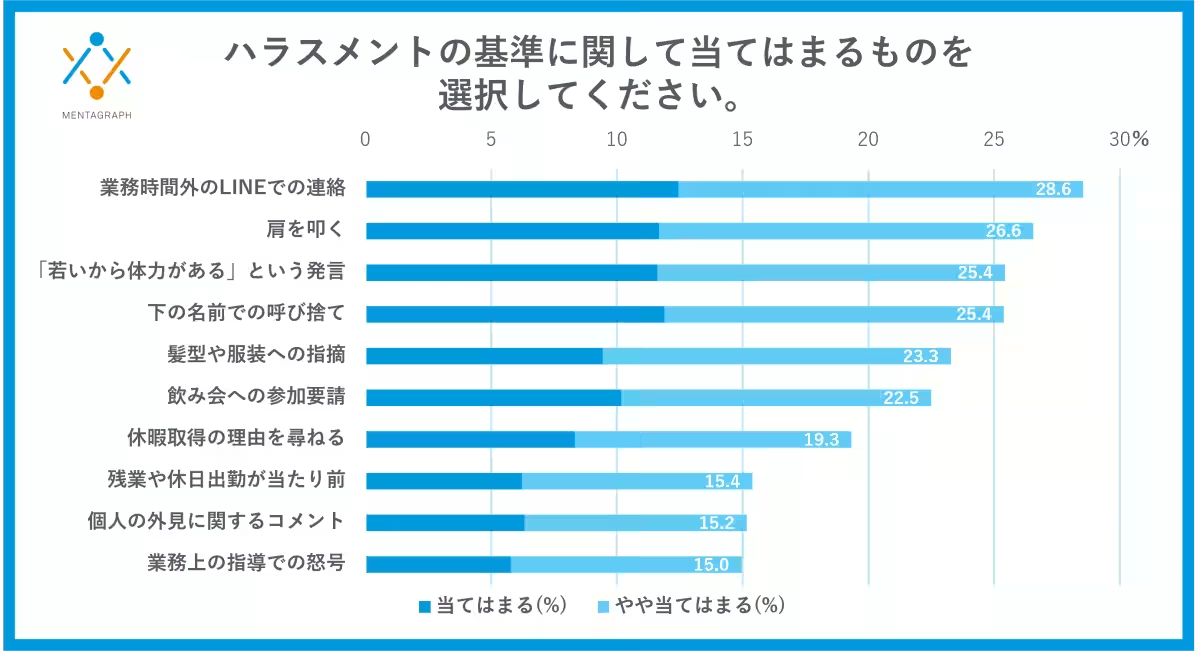
Among the actions evaluated, the most frequently viewed as harassment was “contact via LINE after working hours,” which garnered a response of 28.6% overall (30.6% for non-management and 26.6% for management). Following this were physical contact behaviors such as “patting someone on the shoulder” at 26.6%, and comments reflecting youth like “You’re strong because you’re young,” along with using first names without honorifics, each at 25.4%. In contrast, directorial behaviors such as “yelling during performance reviews” were perceived as harassment by only 14.9% of participants, indicating a greater sensitivity to physical and personal contact rather than vocal expressions of discontent.
Disparity in Recognition of Harassment
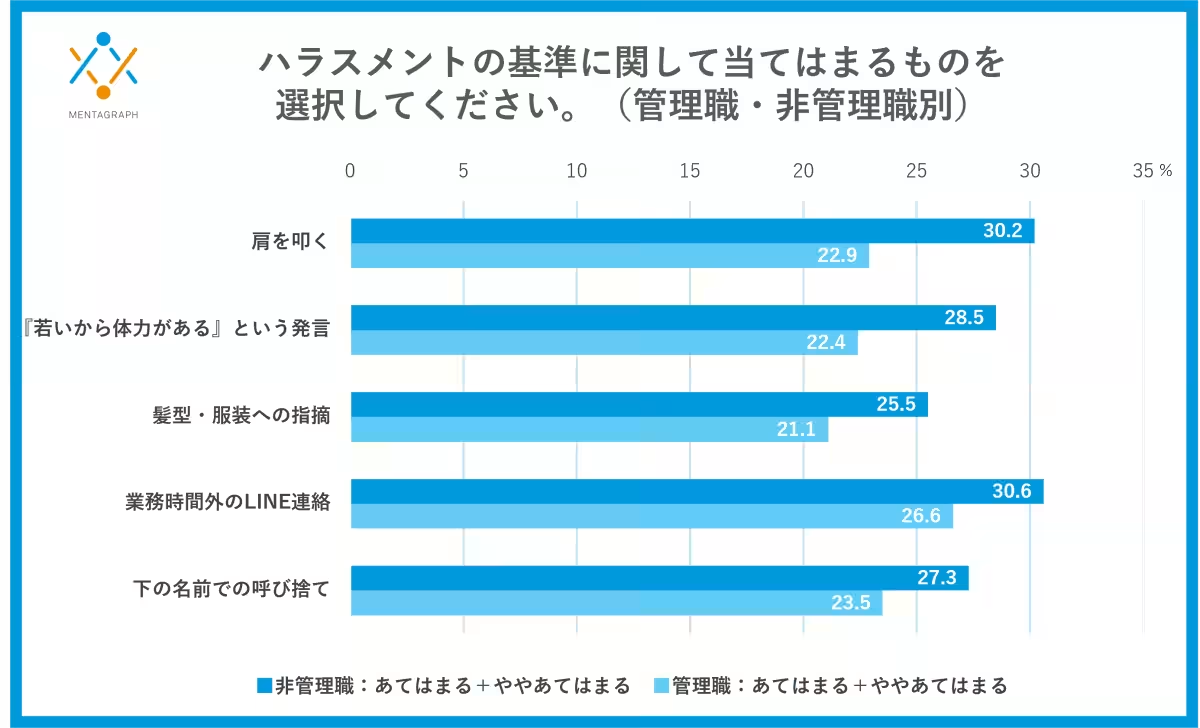
The most pronounced discrepancy between management and non-management perceptions of harassment was the “pat on the shoulder,” where non-management employees acknowledged it as harassment at a rate of 30.2%, against 22.9% for management, resulting in a 7.3-point gap. Other significant gaps included comments correlating youth to physical strength (+6.0 pts), critiques of personal appearance (+4.3 pts), and after-hours communication through LINE (+4.0 pts). These disparities suggest that non-managers are more sensitive to actions that tread the line of personal boundaries while managers view them as forms of communication or mentorship, leading to a potential underestimation of their impact.
Harassment Assessment Rankings
The top five actions deemed most likely to be harassment by employees overall are:
1. LINE contact after hours (28.6%)
2. Patting someone on the shoulder (26.6%)
3. Comments on youth strength (25.4%)
4. Addressing by first name without honorifics (25.4%)
5. Comments on hairstyle or attire (23.3%)
When examining further, the study results indicated that when management was asked if their intentions were misinterpreted, the most common scenario was “understanding employees' interests and traits” at 57%. This was followed by a 12.2% misunderstanding in communicating company policy and 10.7% from project oversight. The findings underscore a danger that supportive intentions could be perceived as intrusive, emphasizing the need for clear communication and mutual understanding to prevent misinterpretations of intent in workplace dynamics.
Recommendations for Organizations
The rankings reflect more stringent norms held by non-management regarding personal interactions, including private time communication and personal contact. To bridge the perceptual gap, companies should consider visualizing these differences and creating platforms where expectations can be clarified between managers and their teams. This would not only foster better workplace relationships but could significantly improve management and overall organizational culture.
Conclusion
The disparities in how harassment is perceived between management and non-management roles highlight a critical need for workplace education on interpersonal boundaries. MENTAGRAPH’s ongoing commitment to mental health and productive workplace relationships can facilitate better understanding, potentially leading to improved management environments and employee satisfaction.
About MENTAGRAPH Inc.
MENTAGRAPH is dedicated to visualizing mental well-being in the workplace, supporting appropriate break-taking, and promoting optimal management practices. Originating from Japan Tobacco's Corporate R&D organization, D-LAB, MENTAGRAPH focuses on mental well-being through the Real-Time Stress Management services, utilizing wearable technology and an application for organizational stress monitoring. They aim to normalize taking breaks within corporate cultures, enhancing employee satisfaction and operational efficiency.
Topics People & Culture)

【About Using Articles】
You can freely use the title and article content by linking to the page where the article is posted.
※ Images cannot be used.
【About Links】
Links are free to use.