



Exploring the Future of HR Strategies in the AI Era with '2030 Human Resources Department'
The Future of HR: A Deep Dive into '2030 Human Resources Department'
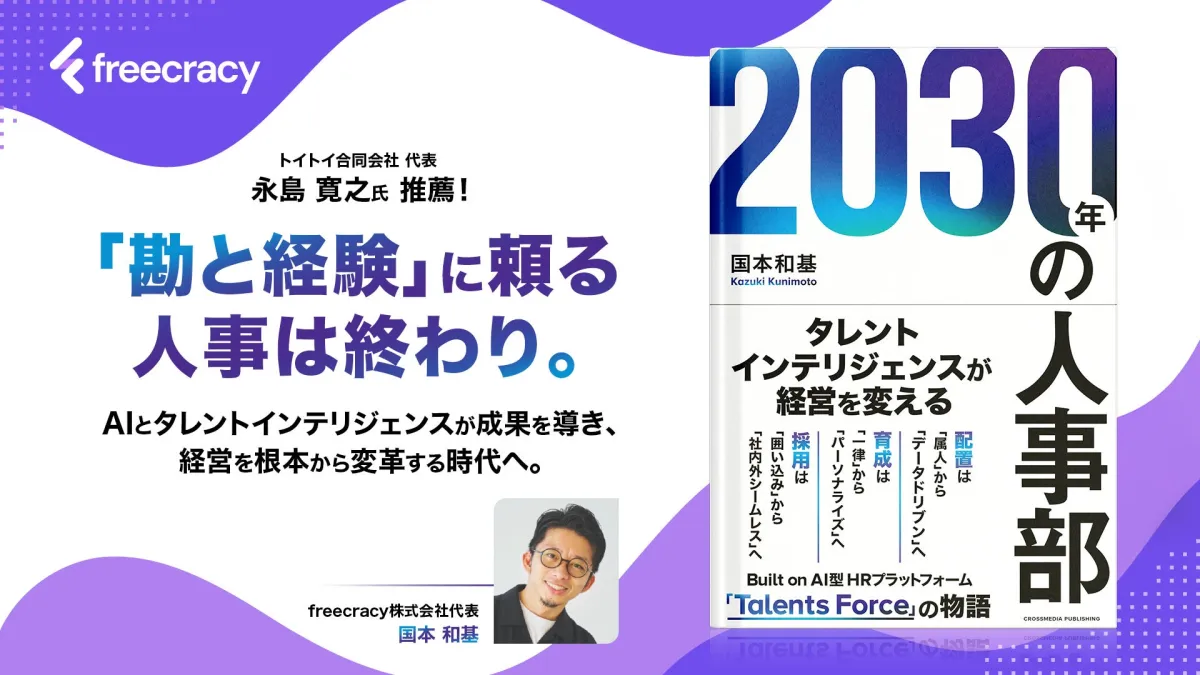
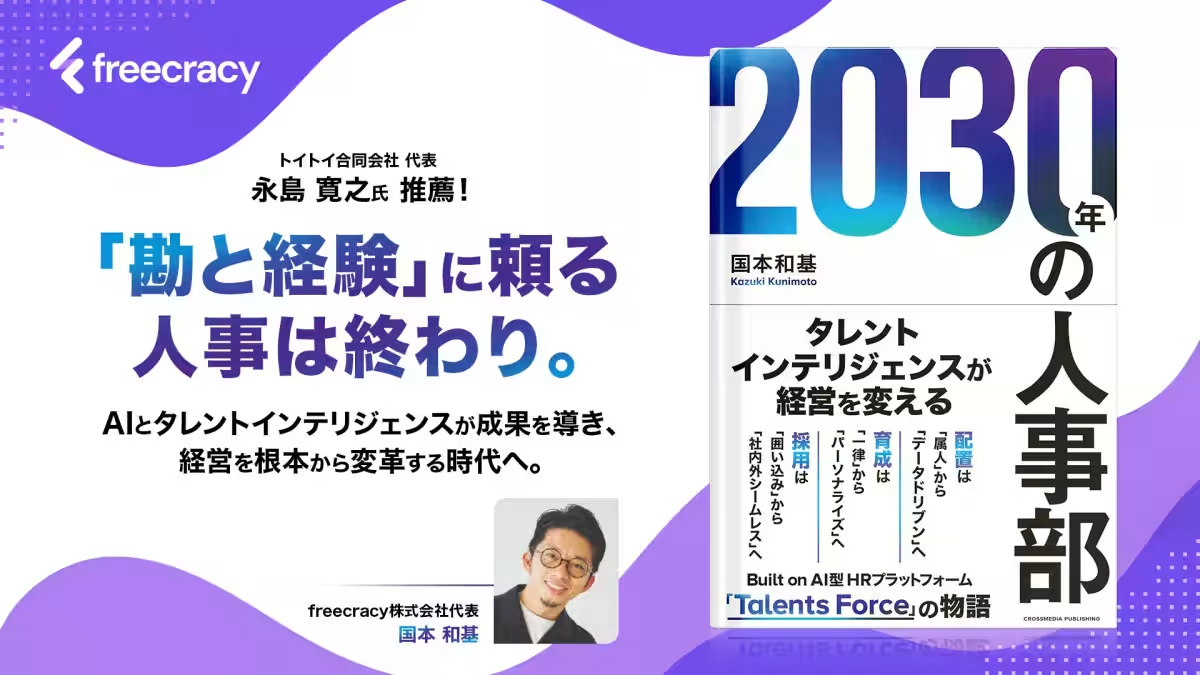
On October 31, 2025, Freecracy Co., based in Tokyo, Japan, will release a groundbreaking book titled "2030 Human Resources Department." This publication aims to chart the future of human resources (HR) amid the rapid evolution of artificial intelligence (AI) and human capital management. As the workplace landscape shifts, the role of HR must transform from a management function to a decision-making entity that supports business operations through data and AI.
The Background of the Book
The inspiration for this book stems from the recent HR Technology Conference held in Las Vegas in September 2025. Discussions at the event revolved around integrating AI within HR practices and how companies can effectively work alongside AI technologies. While the United States is already witnessing both successful and unsuccessful applications of AI in HR, Japan is still grappling with a limited understanding of Talent Intelligence—a key concept that combines AI with HR functions. As Japan faces unprecedented changes, such as mandatory disclosure of human capital, a declining labor force, and the growing importance of aligned career development and learning, the traditional view of HR as merely an administrative department is rapidly becoming obsolete.
The author of the book, Kazuki Kunimoto, emphasizes the pressing need for Japanese companies to adapt to these changes. The book explores the essence and application of Talent Intelligence, offering practical examples and case studies to illustrate its relevance in the evolving HR landscape. Kunimoto seeks to present these complex ideas in a clear and accessible way, making it easier for readers to envision the future of HR.
Key Themes of the Book
"2030 Human Resources Department" serves as an enlightening guide that depicts the HR revolution brought about by AI. The book outlines two potential futures:
- - Scenario A: In this optimistic outcome, leading companies will utilize AI agents and Talent Intelligence to optimize recruitment, placement, and development processes, thereby enhancing employee engagement and fostering overall corporate growth.
- - Scenario B: Conversely, if companies maintain the status quo, they face stagnation; HR departments may experience manpower shortages leading to talent mismatches and decreased competitiveness.
The message conveyed is that if Japanese businesses can embrace Scenario A, they have the potential to close the growing gap in development and growth compared to their global counterparts. Throughout the book, the first two chapters are crafted as narratives, drawing readers into a parallel world to experience the transformative impact of AI in HR. Subsequent chapters provide detailed explanations and feature interviews with industry leaders, showcasing Freecracy's HR solutions and unveiling the infinite possibilities of AI in the HR domain.
Insights from Industry Leaders
In the fourth chapter, readers will find interviews with exemplary figures in various areas of HR:
- - Hiroyuki Nagashima, Representative of Toitoi, discusses the importance of "translation ability" in HR for navigating the AI era.
- - Shin Amano, Senior Vice President at Fujitsu, paints a vision of a future where AI coexists with human talent.
- - Tomoki Iida, Executive Officer at Benesse Corporation, outlines a blueprint for the learning frameworks required in the AI-driven landscape.
- - Yuta Tsuji, Chief Information and Digital Officer at Persol Holdings, elaborates on the future where the value of talent and productivity are significantly enhanced.
Author’s Perspective
Kazuki Kunimoto, the founder of Freecracy, reflects on the challenges faced in traditional HR practices, noting that it has been practically impossible to analyze the vast amounts of data—such as employee backgrounds, career aspirations, and learning histories—to inform HR strategies. However, the rise of generative AI is creating opportunities to harness this data effectively. While achieving these possibilities will not be easy, the potential outcomes are immense. Kunimoto lays out the content across four chapters featuring a storyline to help readers personally connect with future scenarios.
He expresses hope that this book will serve as a valuable resource for shaping future management and HR strategies. Kunimoto invites dialogues with professionals in HR and management planning, emphasizing that his goal is to make connections that foster growth and collaboration.
For book previews, visit Amazon.
Book Details
- - Title:

Topics People & Culture)

【About Using Articles】
You can freely use the title and article content by linking to the page where the article is posted.
※ Images cannot be used.
【About Links】
Links are free to use.