



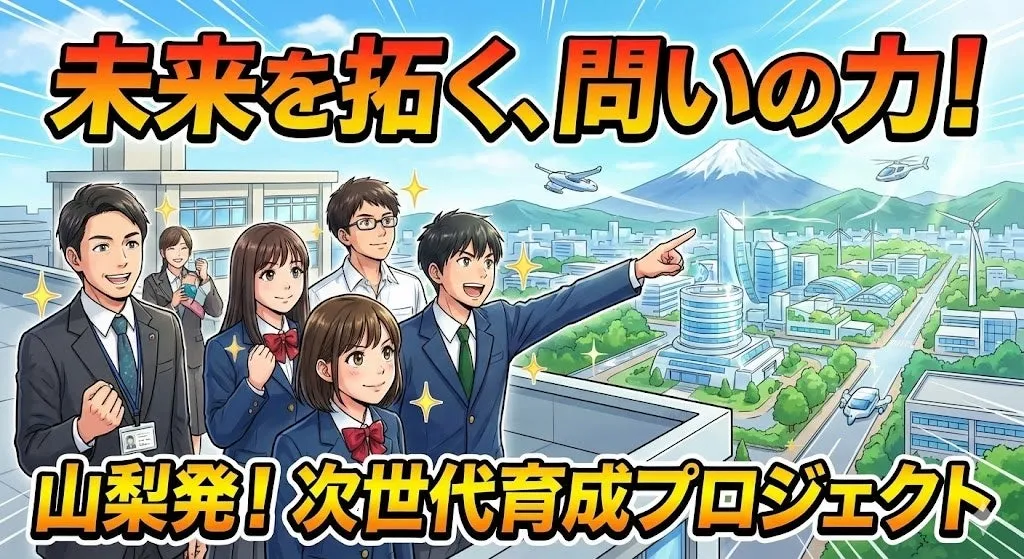
Empowering the Next Generation: Hydrogen and Media Literacy Initiative at Kofu Higashi High
Empowering the Next Generation: Hydrogen and Media Literacy Initiative at Kofu Higashi High
On November 26, 2025, Kofu Higashi High School in Yamanashi Prefecture hosted the first session of a unique educational initiative organized by IMAJINA, a consulting firm based in Tokyo. This project aimed to deepen the understanding of media literacy while addressing the topic of hydrogen energy, in a quest to empower students with critical thinking skills necessary for navigating today's complex information landscape.
Background of the Initiative: Transitioning from Learner to Educator
In local governments, the continuous development of public employees' skills is paramount. This innovative project allows participants, who recently underwent media literacy training, to translate their newfound insights into practical teaching experiences. By conducting lessons at their alma mater, these officials can reinforce their knowledge and instill a sense of pride in contributing to their community.
Yohei Miyasaka, a Kofu Higashi High alumnus and the session's lead instructor, reflected on his own learning during the August training. He recognized that he had fallen into the traps of information bias and conventional thinking in his daily work. Miyasaka was determined to impart the significance of questioning the essence of issues to the students he once sat beside.
Class Report: Unexpected Lessons at Kofu Higashi High
Stepping back into the halls of his high school for the first time in 15 years, Miyasaka set two primary goals: to instill the importance of critical thinking and to generate interest in hydrogen energy, a key policy focus of the prefectural government.
The Thought-Provoking Lesson Plan
In the first part of the session, Miyasaka introduced media literacy through his own experiences, discussing how algorithms curate the YouTube viewing history he engages with. By addressing his audience directly and relating personal anecdotes, Miyasaka captured students' attention, as evidenced by their frequent nods and high levels of engagement.
This perspective on how to decode information resonated with the students, who, as digital natives, found the content both enlightening and relevant.
Realization from Communication Barriers
However, as the lesson transitioned to discussing hydrogen energy, Miyasaka encountered an unexpected hurdle. The use of technical jargon intended for professional audiences caused students to disengage momentarily. Rather than viewing this as a setback, Miyasaka recognized it as an opportunity to reevaluate his communication methods: the key to successful knowledge transfer lies in tailoring information to meet the audience's diverse interests and backgrounds.
Through this experience, he internalized a fundamental truth — effective communication is an essential skill for public servants. The practical teaching setting highlighted the limitations of traditional training, revealing the crucial need for authentic interactions.
Unlocking Students' Critical Thinking Potential
In the final 15 minutes, Miyasaka presented a challenge: students were to frame questions addressing the obstacles to realizing a hydrogen-based society. They quickly applied the critical thinking methods discussed earlier, unveiling innovative solutions to issues surrounding infrastructure development and business integration that exceeded Miyasaka's expectations.
This experience demonstrated that instead of merely memorizing factual information, equipping students with the capacity to think critically could lead them to arrive at solutions independently. This breakthrough moment showcased the bright potential of future generations.
Reflections from Instructor Miyasaka: A Message for the Future
After the class, Miyasaka reflected on his personal growth and aspirations moving forward. “In an age of overwhelming information, the ability to expand one’s potential hinges on cultivating the capacity for independent thought. I learned the challenges and joys of effective communication during this experience. By furthering this initiative and empowering more public officials to teach at their former schools, we can inspire the young leaders of Yamanashi's future. This, in turn, will invigorate our governmental organization,
Topics Consumer Products & Retail)
【About Using Articles】
You can freely use the title and article content by linking to the page where the article is posted.
※ Images cannot be used.
【About Links】
Links are free to use.