



The March Issue of Seiron: A Deep Dive into Japan's Political Future
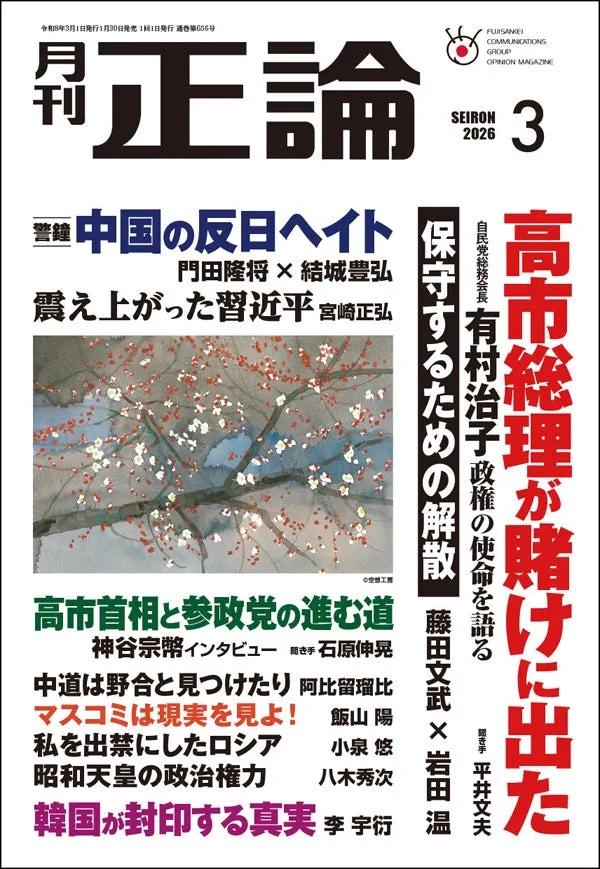
The March issue of the monthly magazine Seiron, published by Sankei Shimbun, hit the shelves on January 30, and it is already generating considerable excitement among readers. With a focus on the impending general election scheduled for February 8, this edition delivers in-depth analyses and perspectives on the future of conservative politics in Japan.
One of the strongest highlights of this issue is an interview with Chiko Arimura, the General Secretary of the Liberal Democratic Party (LDP), who articulates her hopes for a lasting administration led by Prime Minister Sanae Takii. She emphasizes the importance of stability and continuity in leadership during these uncertain times. Readers will find insight into how Takii's administration plans to navigate the complexities of Japanese politics while retaining the support of conservative factions.
Additionally, the magazine features a compelling dialogue between Fumitaka Fujita, co-representative of the Japan Innovation Party, and Kazuhiro Iwata, who discusses the necessity of a snap general election to preserve conservative values. This exchange underscores the urgent need for a unified conservative front in the face of evolving political dynamics.
In the interview with Munehira Kamiya, the leader of the Reiwa Shinsengumi Party, readers will uncover whether the path paved by Prime Minister Takii aligns with the aspirations of emerging political factions. This provides a fascinating perspective on inter-party relationships and future collaborations within Japan's political landscape.
A critical feature of this edition is a discussion led by Takahiro Kadota and Toyohiro Yuki, who scrutinize Japan's media narrative regarding China’s anti-Japanese education. Their analysis questions why such crucial discussions about historical grievances often go underreported by mainstream media.
The economic framework known as Sanae Nomics receives special attention through a dialogue involving Takeshi Kataoka and Kazuaki Oba. They present a historical perspective that hints at the strategies used by the late Edo period statesman Matsudaira Sadanobu, exploring how these may inform current economic policy.
Former government official Hiroshi Iiyama raises alarms about the disintegration of the international order, urging readers and officials alike to confront the realities that media and government institutions appear to ignore. This stark warning reflects a growing sense of urgency around global stability and Japan’s role in the shifting geopolitical landscape.
Moreover, the edition features pieces by Yoshihisa Komori, discussing the possibility of the United States easing restrictions on Japan's nuclear armament discussions, alongside an examination by Yuki Koizumi on Russia's ongoing military capabilities in light of restrictions against him.
Seiron serves as a platform for diverse voices, examining pressing issues like the implications of COVID-19 on Japan's strategic interests, and its effectiveness in communicating Japan’s political narrative. Edited by Shintaro Sugahara, the magazine continues to promote thoughtful dialogue among its readers.
The editorial team, including publisher Hiroshi Hori and printer Dai Nippon Printing Co., Ltd., ensures that Seiron remains an influential voice in the discourse surrounding Japan's political and cultural climate.
This edition of Seiron is priced at 950 yen (864 yen plus tax) and can be purchased at bookstores or through subscriptions. Regular subscriptions are available for 10,080 yen per year with free shipping, facilitated by Fuji Mountain Magazine Service. Orders can be placed via their toll-free number: 0120-223-223.
For more information, visit the official Seiron website here.
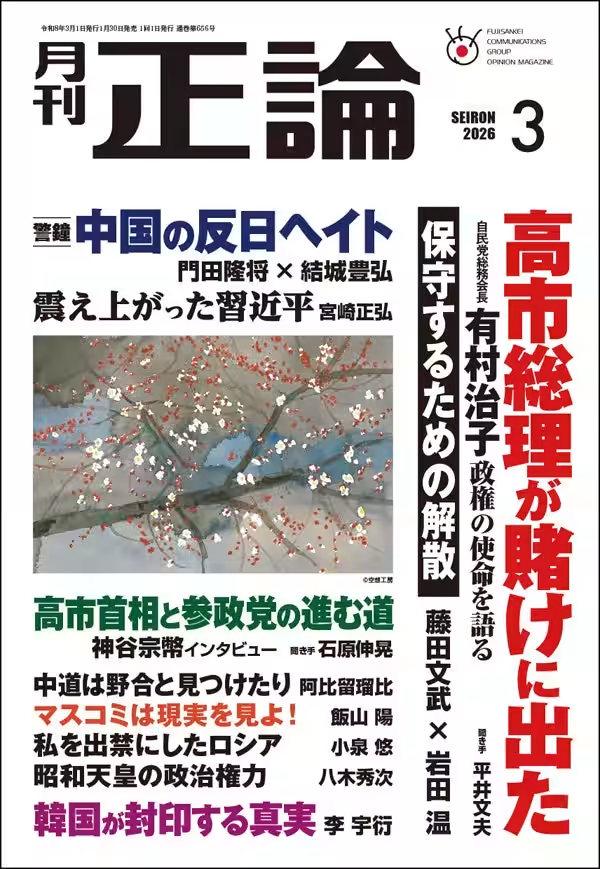
One of the strongest highlights of this issue is an interview with Chiko Arimura, the General Secretary of the Liberal Democratic Party (LDP), who articulates her hopes for a lasting administration led by Prime Minister Sanae Takii. She emphasizes the importance of stability and continuity in leadership during these uncertain times. Readers will find insight into how Takii's administration plans to navigate the complexities of Japanese politics while retaining the support of conservative factions.
Additionally, the magazine features a compelling dialogue between Fumitaka Fujita, co-representative of the Japan Innovation Party, and Kazuhiro Iwata, who discusses the necessity of a snap general election to preserve conservative values. This exchange underscores the urgent need for a unified conservative front in the face of evolving political dynamics.
In the interview with Munehira Kamiya, the leader of the Reiwa Shinsengumi Party, readers will uncover whether the path paved by Prime Minister Takii aligns with the aspirations of emerging political factions. This provides a fascinating perspective on inter-party relationships and future collaborations within Japan's political landscape.
A critical feature of this edition is a discussion led by Takahiro Kadota and Toyohiro Yuki, who scrutinize Japan's media narrative regarding China’s anti-Japanese education. Their analysis questions why such crucial discussions about historical grievances often go underreported by mainstream media.
The economic framework known as Sanae Nomics receives special attention through a dialogue involving Takeshi Kataoka and Kazuaki Oba. They present a historical perspective that hints at the strategies used by the late Edo period statesman Matsudaira Sadanobu, exploring how these may inform current economic policy.
Former government official Hiroshi Iiyama raises alarms about the disintegration of the international order, urging readers and officials alike to confront the realities that media and government institutions appear to ignore. This stark warning reflects a growing sense of urgency around global stability and Japan’s role in the shifting geopolitical landscape.
Moreover, the edition features pieces by Yoshihisa Komori, discussing the possibility of the United States easing restrictions on Japan's nuclear armament discussions, alongside an examination by Yuki Koizumi on Russia's ongoing military capabilities in light of restrictions against him.
Seiron serves as a platform for diverse voices, examining pressing issues like the implications of COVID-19 on Japan's strategic interests, and its effectiveness in communicating Japan’s political narrative. Edited by Shintaro Sugahara, the magazine continues to promote thoughtful dialogue among its readers.
The editorial team, including publisher Hiroshi Hori and printer Dai Nippon Printing Co., Ltd., ensures that Seiron remains an influential voice in the discourse surrounding Japan's political and cultural climate.
This edition of Seiron is priced at 950 yen (864 yen plus tax) and can be purchased at bookstores or through subscriptions. Regular subscriptions are available for 10,080 yen per year with free shipping, facilitated by Fuji Mountain Magazine Service. Orders can be placed via their toll-free number: 0120-223-223.
For more information, visit the official Seiron website here.
Topics People & Culture)
【About Using Articles】
You can freely use the title and article content by linking to the page where the article is posted.
※ Images cannot be used.
【About Links】
Links are free to use.