



New Organizational Well-Being Metric Developed to Enhance Workplace Productivity and Engagement
New Organizational Well-Being Metric Developed
In today's fast-paced business landscape, the well-being of employees is more crucial than ever. The Japan Productivity Center, under the leadership of its chairman Kazutake Maeda, has made significant strides in this area. Recently, they introduced a new metric called the Organizational Workplace Individual (OWI) Well-Being Survey aimed at measuring well-being within organizations.
Purpose and Importance of the Metric
The OWI Well-Being Survey is designed for its unveiling on January 28, 2026, and it serves the vital role of providing businesses with tools to measure well-being at multiple levels: individual, team, and organizational policies. As organizations face increasing demands for transparency in human capital information and diverse working styles, understanding how to enhance employee well-being and connect it to organizational success has emerged as a key management challenge.
Despite this need, a standardized metric for scientifically assessing well-being on an organizational level has been lacking in Japan. This gap has made it difficult to validate the effectiveness of well-being initiatives. To tackle this issue, a working group led by Associate Professor Hiroshi Ikeda from Kyushu University was established. The group focused on developing a robust metric that quantitatively assesses well-being, including individual psychological and social factors, while also examining workplace dynamics such as trust and team morale.
Features of the OWI Well-Being Survey
1. Multi-dimensional Measurement: The survey measures workplace well-being from three perspectives: positive emotions, trust, and shared goals and achievements. By assessing these factors, organizations can quantitatively evaluate aspects of teamwork and trust that were previously difficult to measure. Statistical analysis confirms that differences between workplaces can now be quantified, guiding HR professionals in determining which teams require prioritized support.
2. Multi-layered Structure: The well-being metric takes a multi-faceted view that encompasses individual conditions, team dynamics, and organizational policies. It allows organizations to analyze interactions at various levels and how they affect overall productivity. Research indicates that individual and workplace well-being influence each other, and the presence of supportive organizational policies can enhance these relations, ultimately improving productivity.
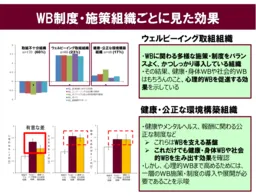
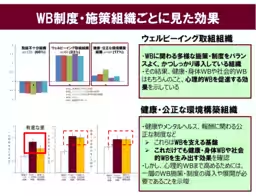
3. Impact of Organizational Policies: The survey categorizes organizations into three types based on their well-being policies, such as employee investment, engaging work opportunities, and organizational support. Findings reveal that organizations with comprehensive well-being initiatives tend to enjoy higher levels of psychological, social, and physical well-being among employees. Conversely, organizations with fewer initiatives show lower levels of all aspects of well-being. This data offers baseline information to identify key areas for improvement in organizational policies aimed at boosting employee well-being.
Relationship Between Team Well-Being and Performance
The evidence is clear: the well-being of teams directly correlates with productivity and the achievement of organizational goals. Findings demonstrate that positive emotions and trust in the workplace are significantly related to improved productivity six months after the implementation of well-being measures. Organizations with better well-being initiatives report a stronger connection between team well-being and the success of performance targets.
Public Access and Future Developments
In a move towards fostering widespread use of the OWI Well-Being Survey metric, it will be made available to organizations free of charge. A survey environment allowing employees to respond anonymously will be provided to participating organizations, allowing for the accumulation of valuable data over time. This dataset will be instrumental in understanding long-term trends and variances across diverse employee demographics.
As a culmination of this initiative, a hybrid seminar featuring researchers involved in the development of the metric will be held on February 18, 2026. This event will provide clarity on how organizations can effectively utilize the newly developed well-being metric. Interested organizations and stakeholders are encouraged to attend to explore the implications and applications of this groundbreaking work.
With the introduction of this new metric, organizations have an exceptional opportunity to advance the conversation around well-being and drive significant improvements in workplace health and productivity.
Topics People & Culture)
【About Using Articles】
You can freely use the title and article content by linking to the page where the article is posted.
※ Images cannot be used.
【About Links】
Links are free to use.