



ABEJA Collaborates with JAXA to Implement AI Systems in Space
ABEJA and JAXA Team Up in Space Innovation
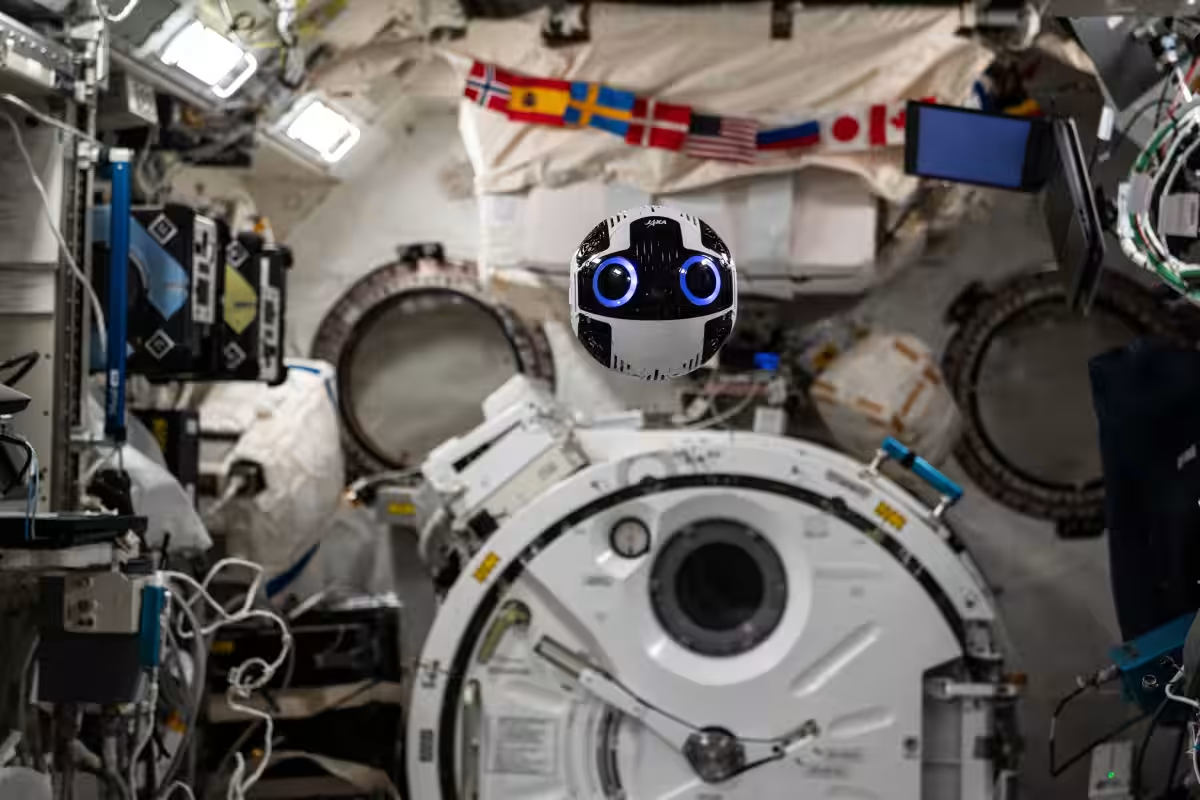
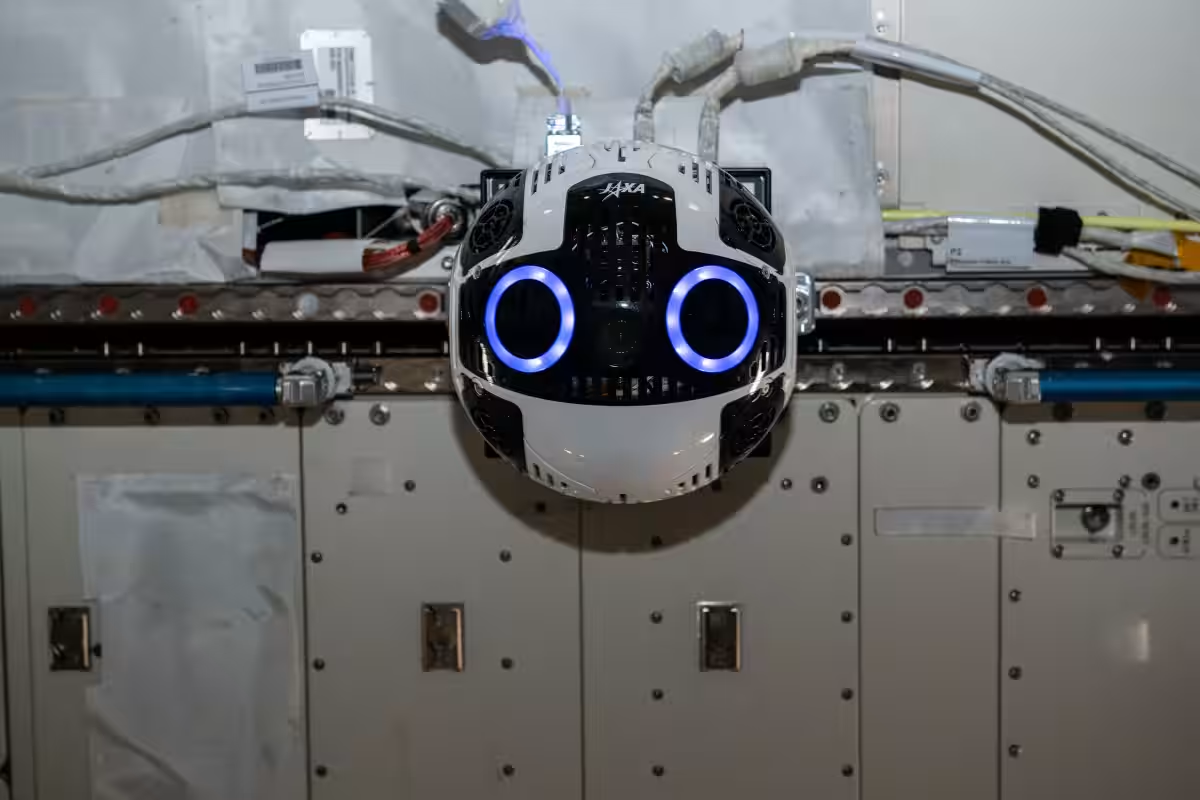
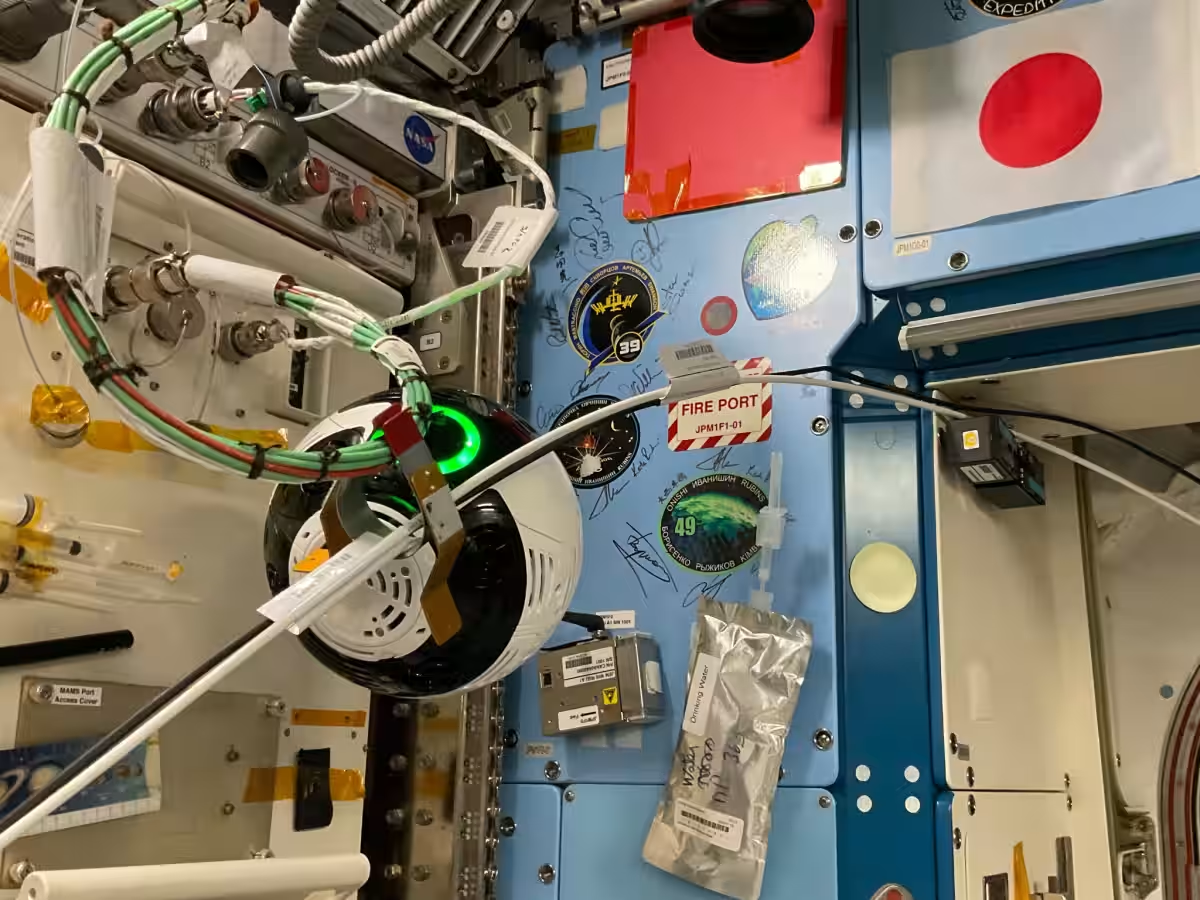
In a groundbreaking collaboration, ABEJA, headquartered in Tokyo, has been commissioned by the Japan Aerospace Exploration Agency (JAXA) to advance the implementation of Physical AI within the unique environment of space. As part of this initiative, ABEJA has successfully developed a voice recognition system for the autonomous flying camera robot, known as the Internal Ball Camera2 (Int-Ball2), slated for operational tests in May 2025.
The mission focuses on the International Space Station (ISS), specifically within the Japanese Experiment Module, Kibo. Recently, JAXA has conducted successful flight demonstrations of the Int-Ball2 equipped with the newly developed voice recognition technology. Astronauts operating within the constraints of a real space environment have effectively communicated voice commands, showcasing the system's capability to interpret instructions and control the robot fluidly.
The Int-Ball2 serves multiple functions: not only does it assist astronauts in capturing photos, but it also operates as a platform for running various programs within Kibo. The voice recognition system built by ABEJA stands out for its high precision and lightweight structure, designed to meet the challenges presented by the confined and noisy conditions of a spacecraft. This past May, ABEJA verified the system's operations by recreating the specific challenges of the spacecraft environment and demonstrating its performance under real-world conditions.
This orbital demonstration aims to confirm that astronauts can conveniently operate Int-Ball2 hands-free, unimpeded by delays or communication disruptions typical in space environments. ABEJA has prioritized optimizing the voice recognition software to accommodate limited hardware resources effective within spacecraft, reflecting a commitment to its ongoing improvement.
During the demonstration, an astronaut spoke specific commands for the Int-Ball2's movement. The robot successfully executed these commands, moving and rotating in multiple directions, further validating the practical potential and effectiveness of hands-free operations in the confined space of a spacecraft.
What's particularly noteworthy is that the AI system is capable of rapidly analyzing the astronaut's voice and translating that into physical movements by Int-Ball2. This signifies a cutting-edge approach to automating operations traditionally conducted by humans, positioning ABEJA at the forefront of Physical AI innovations.
Recognized as a vital use case in the research and development of Physical AI, this initiative not only showcases ABEJA's expertise but also signals a larger shift towards integrating intelligent systems in critical space missions. The company's vision remains steadfast: to support mission-critical applications through its ABEJA Platform, driving transformation across industrial structures through the use of AI.
About ABEJA
Established in 2012, ABEJA revolves around the core philosophy of “Realizing a Richer World.” The company focuses on making AI operational and accessible, continually refining its enterprise platform to support real-world applications. This innovative platform is designed not just for proof of concept but for actual implementation, blending Agentic AI for decision-making with Physical AI for execution, thereby streamlining data management, operational decisions, and workflows.
The architecture embraces a ‘Human in the Loop’ concept, enabling AI's initial deployment to be functional from early stages—effectively achieving ‘Zero PoC’. This ensures ongoing advancements in critical operations as AI becomes a fundamental part of business processes.
For more details about ABEJA and their innovative solutions, visit ABEJA, Inc..
Company Details
- - Headquarters: 2nd Floor, Bizflex Azabu-Juban, 1-1-14 Mita, Minato-ku, Tokyo, Japan
- - Founded: September 10, 2012
- - CEO: Yosuke Okada
- - Business Focus: Enterprise platform services for AI deployment and optimization.
Topics Other)
【About Using Articles】
You can freely use the title and article content by linking to the page where the article is posted.
※ Images cannot be used.
【About Links】
Links are free to use.