



Unpacking the Pros and Cons of Remote Work: Insights from a Recent Survey
Unpacking the Pros and Cons of Remote Work: Insights from a Recent Survey
In the ever-evolving landscape of work, remote work has become a staple for many professionals worldwide. A recent survey conducted by LASSIC, through their web media 'Telework and Remote Work Comprehensive Research Institute', sheds light on the advantages and disadvantages of working remotely, offering valuable insights into the experiences of 1,005 working individuals who have engaged in remote work.
Key Findings on Remote Work Benefits
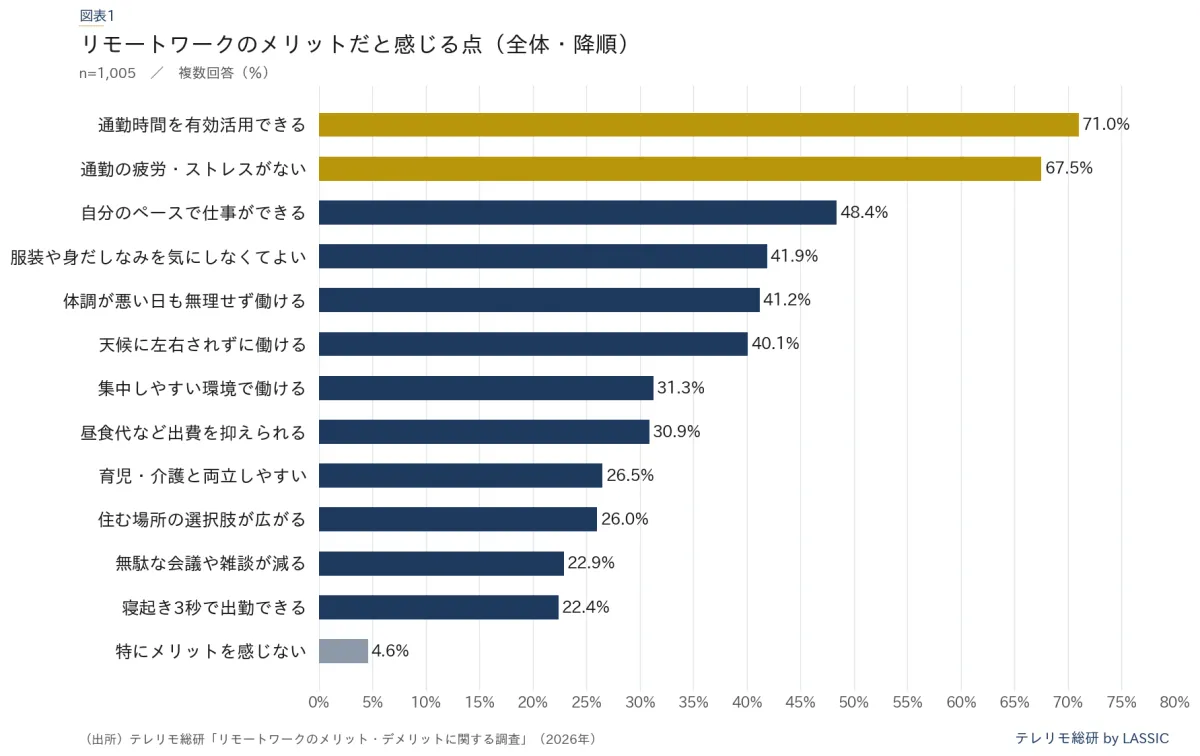
The survey brought to light that the primary benefits of remote work revolve significantly around commuting. The leading advantage cited by a whopping 71.0% of respondents was the ability to effectively utilize commuting time. This was followed closely by 67.5% of participants identifying the absence of commuting fatigue and stress as another major benefit.
Interestingly, the third notable benefit mentioned was the ability to work at one’s own pace, appreciated by 48.4% of those surveyed. This majorly highlights a pertinent shift in work-life adaptability, suggesting that a significant portion of professionals value the flexibility remote work affords.
Breakdown of Additional Benefits
Further down the list, several other positive aspects were noted, all hovering around the 40% range:
- - 41.9% of respondents felt that they didn’t have to worry about attire and appearances.
- - 41.2% noted the convenience of being able to work even on days they felt unwell.
- - 40.1% of respondents expressed satisfaction in being unaffected by adverse weather.
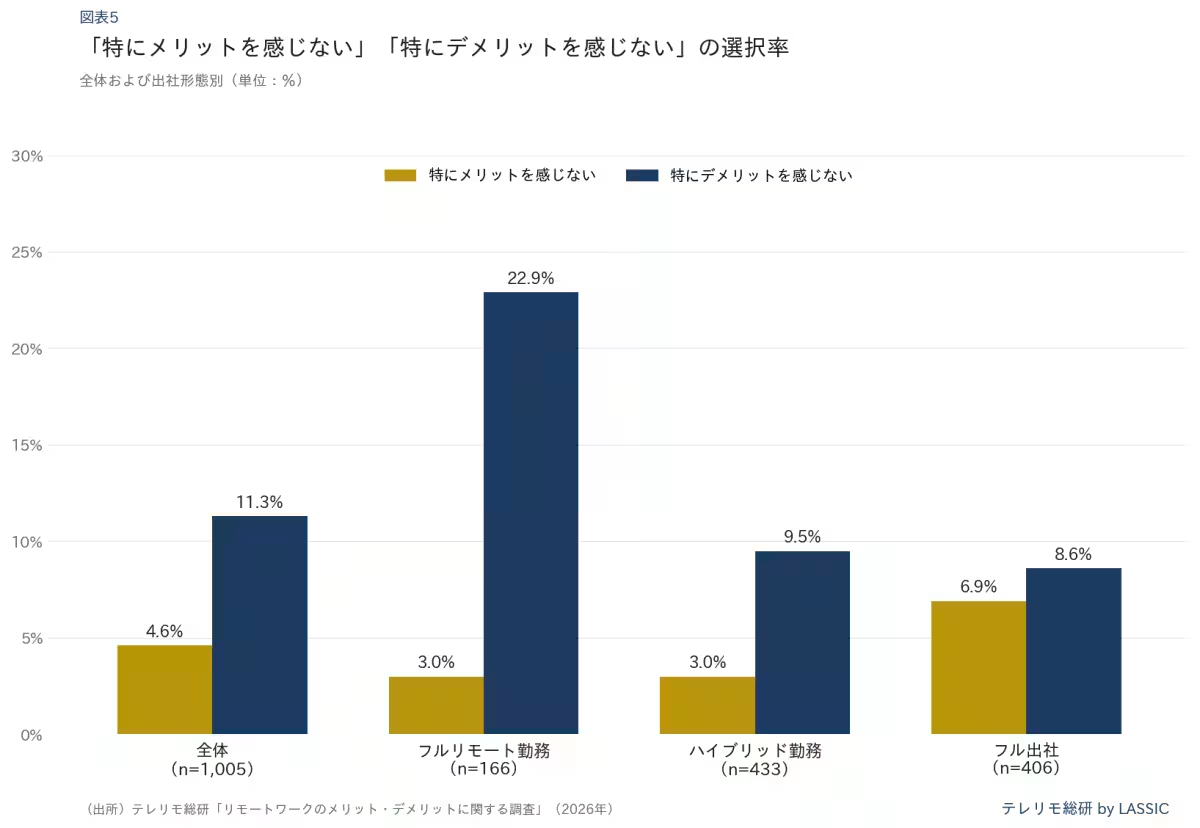
A stark contrast appeared when it came to the minimal percentage of participants, just 4.6%, who felt they did not experience any benefits from remote work.
Challenges of Remote Work: The Drawbacks
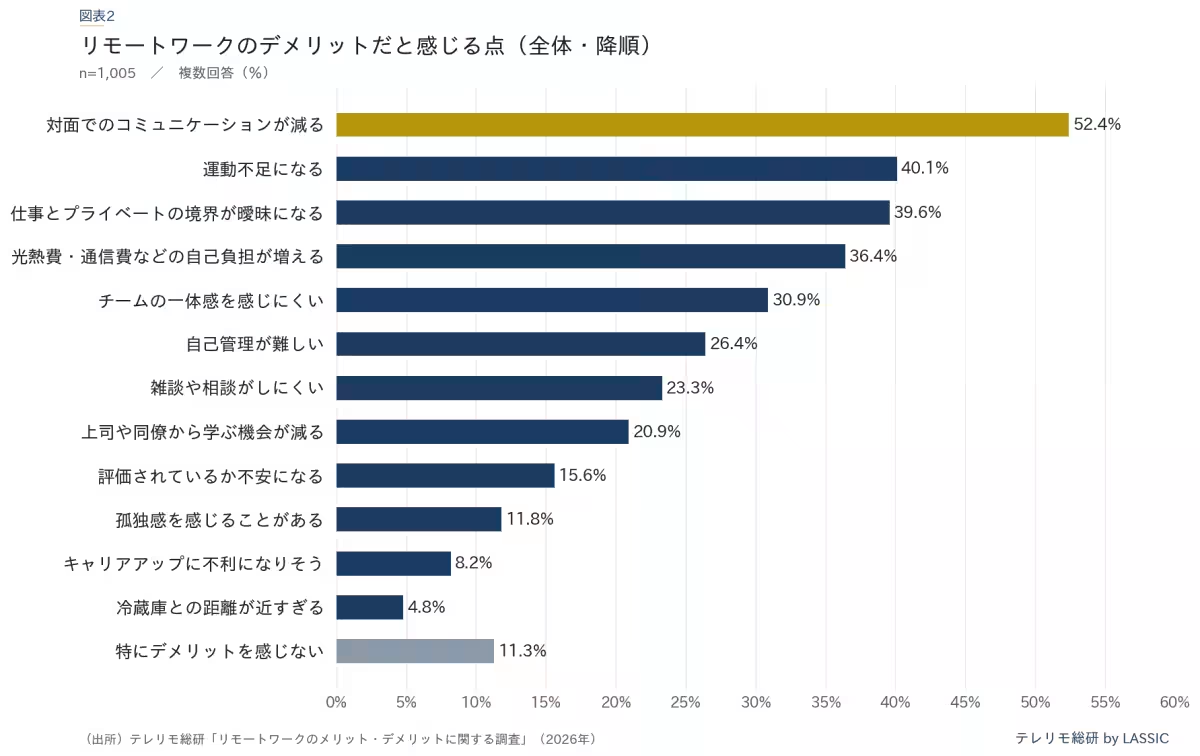
On the flip side, when examining the challenges associated with remote work, the most pressing issue emerged as a significant reduction in face-to-face communication, recognized by 52.4% of respondents. This was the only factor amongst all 13 potential drawbacks to exceed the majority mark, underlining a fundamental concern for remote professionals in maintaining effective communication.
The following challenges included:
- - 40.1% reported issues with potential lack of physical activity.
- - 39.6% felt the boundaries between work and personal life became blurred.
- - 36.4% indicated increased self-burden regarding bills for utilities and communication.
- - 30.9% experienced a decreased sense of team cohesion.
Variability Based on Work Arrangement
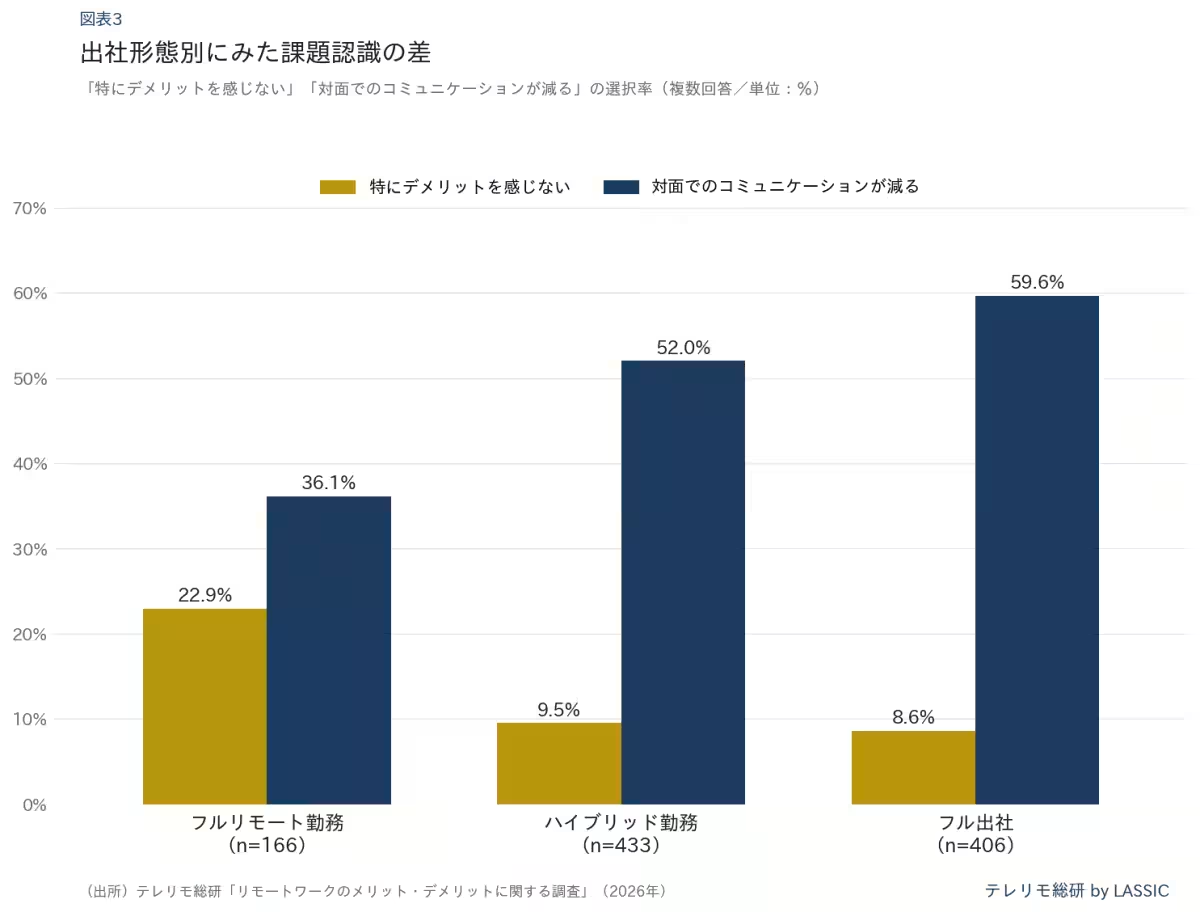
Diving deeper into the statistics, respondents’ perceptions of disadvantages varied significantly based on their work arrangements. Out of those working remotely full-time, 22.9% claimed they particularly didn’t experience drawbacks, contrasting with just 8.6% of full-time office workers—a notable difference indicating that those less frequently in the office tend to recognize fewer downsides.
Conversely, the concern regarding diminished face-to-face communication was substantially higher among full office workers (59.6%) compared to their remote counterparts (36.1%). This stark variance underscores the importance of in-person collaboration in fostering workplace relationships.
Age Impacts on Perception of Benefits
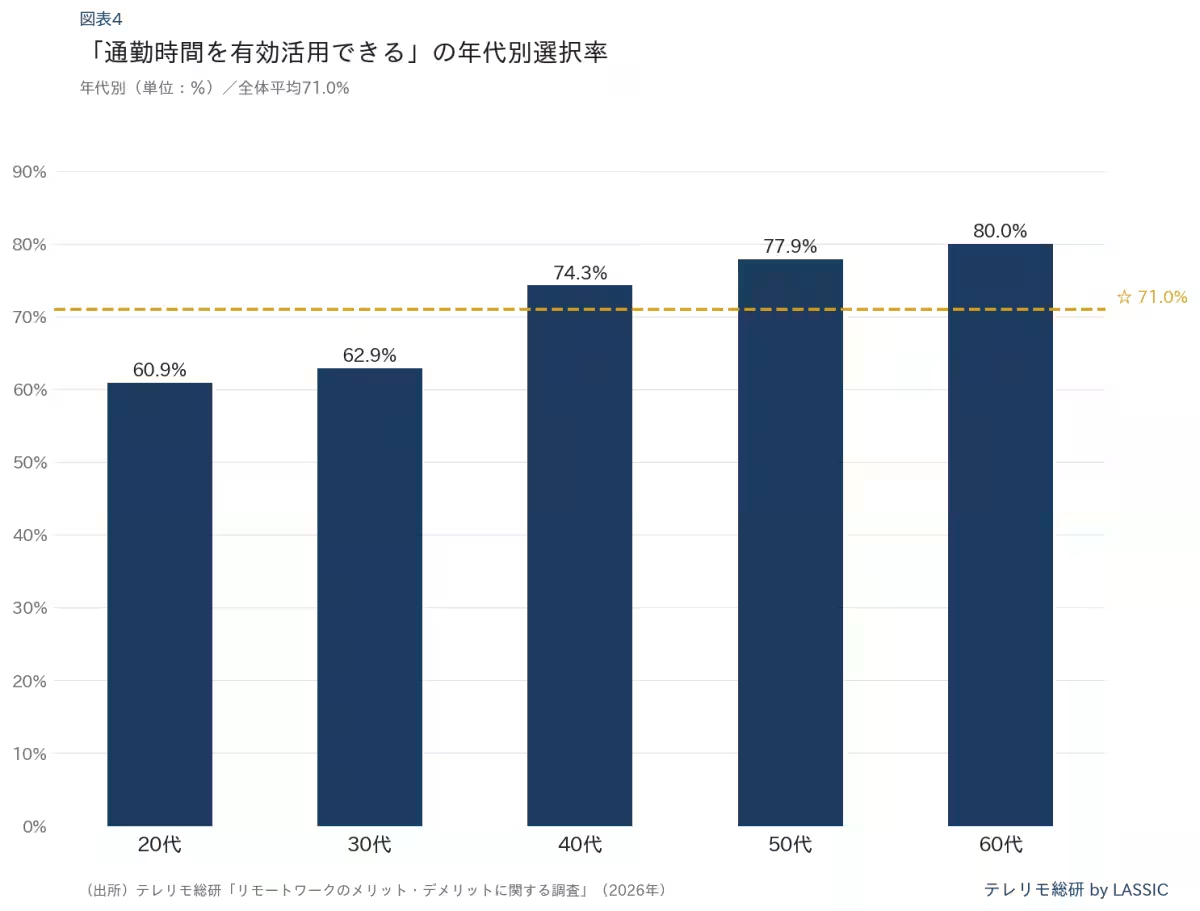
Moreover, the survey revealed a trend indicating that as one’s age increases, the appreciation for utilizing commuting time also rises dramatically. For instance, 60.9% of respondents in their 20s expressed agreement with effectively utilizing commuting time, whereas this number surged to 80.0% among individuals in their 60s.
Summation
In conclusion, while remote work undoubtedly presents clear benefits such as the efficient use of commuting time and a reduction in travel-related stress, the challenges tend to concentrate on issues surrounding decreased interpersonal communication. This survey illuminates a collective recognition among remote workers regarding the importance of adaptation and communication strategies as the workforce continues to shift towards remote arrangements.
For those interested in examining these dynamics further, the full report detailing the survey findings can be accessed here. Additionally, organizations and media outlets may request access to the data regarding this comprehensive study conducted by LASSIC at this link.
This ongoing exploration by the Telework Research Institute at LASSIC seeks to understand more about how work dynamics evolve and to encourage diverse working methods, aiming for a future where remote work becomes an integral part of professional life.



Topics People & Culture)
【About Using Articles】
You can freely use the title and article content by linking to the page where the article is posted.
※ Images cannot be used.
【About Links】
Links are free to use.